RELIEF scheme extended to March 2027 for Gulf war export risk coverage
Synopsis
With drone and missile attacks still threatening the Strait of Hormuz and Houthi forces disrupting Red Sea shipping lanes, India's Commerce Department has extended its RELIEF export risk scheme to March 2027 — offering 95% ECGC cover to exporters on FCL, LCL, and reefer cargo. The move signals that New Delhi sees no quick end to the Gulf crisis and is betting on subsidised insurance to keep trade flows alive.
Key Takeaways
The Department of Commerce extended Component II of RELIEF until 31 March 2027 on 26 October 2026 .
The scheme offers 95% risk coverage via ECGC for export shipments to Gulf-affected regions.
Eligible cargo: FCL , LCL , and reefer containers ; energy shipments are excluded.
Coverage applies to policies obtained on or after 16 March 2026 , with premiums capped at pre-disruption levels.
Claims must be submitted through the ECGC customer portal ; guidance available on ECGC's YouTube channel.
RELIEF was originally launched on 19 March 2026 in response to Gulf maritime disruptions caused by the Middle East conflict .
The Department of Commerce on Monday, 26 October 2026, extended the timeline of Component II of the RELIEF (Resilience & Logistics Intervention for Export Facilitation) scheme until 31 March 2027, providing continued risk coverage to Indian export shipments disrupted by the ongoing Middle East conflict. The extension, announced under the Export Promotion Mission (EPM), responds to persistent geopolitical instability in West Asia and its cascading impact on maritime logistics across the Gulf and adjoining corridors.
What Component II of RELIEF Covers
Component II is designed to encourage Indian exporters to obtain Export Credit Guarantee Corporation of India (ECGC) cover for upcoming shipments to specified regions, offering 95 per cent risk coverage. The benefit applies to standalone policies and whole turnover policies taken on or after 16 March 2026.
Under the scheme, the premium payable by eligible exporters is protected against increases beyond pre-disruption levels for the duration of the eligible period. Covered cargo categories include Full Container Load (FCL), Less than Container Load (LCL), and refrigerated (reefer) containers, with energy shipments explicitly excluded from coverage.
How Exporters Can Access the Scheme
Exporters seeking coverage under RELIEF are required to submit claims and supporting documents through the ECGC customer portal. According to the official statement, guidance on user registration, exporter onboarding, and claim submission is available via dedicated video tutorials on ECGC's official YouTube channel. The process is intended to reduce administrative friction for exporters already navigating elevated freight and insurance costs.
The Gulf Conflict Context
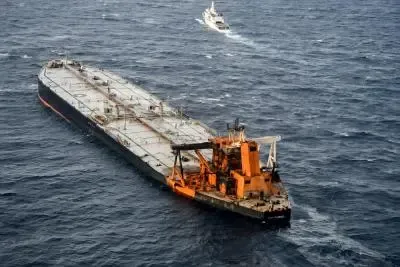
RELIEF was originally launched on 19 March 2026 as a targeted response to extraordinary freight cost escalation, higher war-risk insurance premiums, and export disruptions arising from instability across the Gulf and broader West Asian maritime corridor. Reports indicate that ships have been struck in drone and missile attacks near the Strait of Hormuz, while Houthi forces in Yemen have extended attacks into the Red Sea region, threatening one of the world's most critical commercial shipping lanes.
This is the latest in a series of government interventions to shield export competitiveness from geopolitical shocks. The extension signals that no near-term resolution to the maritime security threat is anticipated.
Government's Stated Position
The official statement described the extension as an affirmation of the government's commitment to strengthening export resilience, sustaining trade flows, and supporting Indian exporters through continued geopolitical and maritime logistics uncertainties. No revised fiscal outlay figure was disclosed in connection with the extension, according to the statement.
With the scheme now running through the end of the next financial quarter, Indian exporters operating in Gulf-linked trade corridors will have access to subsidised risk coverage for at least the next several months — a measure the government argues is critical to maintaining export momentum amid a prolonged external shock.
Point of View
But the exclusion of energy shipments leaves a significant gap given that hydrocarbon logistics represent a large share of India's Gulf-corridor trade exposure. Critically, no revised fiscal outlay has been disclosed, raising questions about whether the scheme's budget is keeping pace with the actual volume of claims. As freight costs and war-risk premiums remain elevated, the test will be whether ECGC's portal infrastructure and claim-processing capacity can scale to match genuine exporter demand — something previous government-backed insurance windows have struggled with.
NationPress
26 Oct 2026
Frequently Asked Questions
What is the RELIEF scheme for Indian exporters?
RELIEF (Resilience & Logistics Intervention for Export Facilitation) is a government scheme launched on 19 March 2026 under the Export Promotion Mission to support Indian exporters facing elevated freight costs, higher war-risk insurance premiums, and export disruptions caused by the ongoing Middle East conflict in Gulf and Red Sea shipping corridors.
What does the RELIEF scheme extension mean for exporters?
The extension pushes the scheme's deadline from its earlier cutoff to 31 March 2027, ensuring that exporters can continue to access 95% ECGC risk coverage and premium protection on eligible Gulf-corridor shipments through the next fiscal quarter.
Which cargo types are covered under RELIEF Component II?
Eligible cargo includes Full Container Load (FCL), Less than Container Load (LCL), and refrigerated (reefer) containers. Energy shipments are explicitly excluded from coverage under the scheme.
How can exporters apply for RELIEF scheme coverage?
Exporters must submit claims and supporting documents through the ECGC customer portal. Step-by-step guidance on user registration, exporter onboarding, and claim filing is available through video tutorials on ECGC's official YouTube channel.
Why has the Gulf conflict affected Indian export shipments?
Reports indicate that ships have been struck in drone and missile attacks near the Strait of Hormuz, while Houthi forces in Yemen have expanded attacks into the Red Sea region — disrupting two of the world's most critical commercial shipping routes and driving up freight costs and war-risk insurance premiums for Indian exporters.