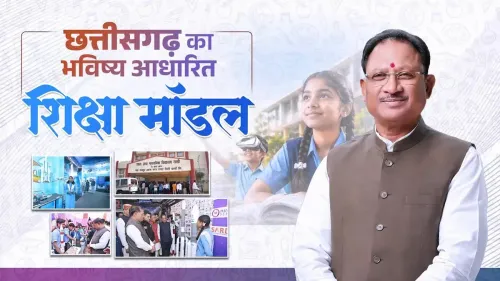
CM Sai Backs Mother-Tongue Education for Chhattisgarh Kids
Synopsis
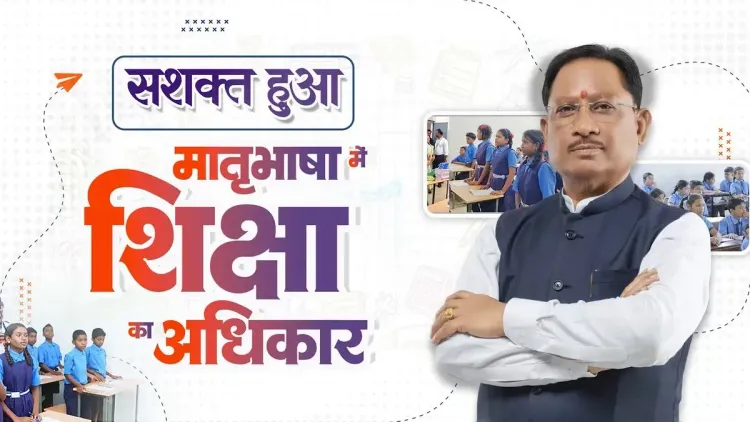
Chhattisgarh CM Vishnu Deo Sai on 21 July 2026 reaffirmed his government's commitment to mother-tongue education, vowing no child will be left behind due to language barriers. The move aligns with NEP 2020 and targets the state's large tribal population speaking Gondi and Halbi.
Key Takeaways
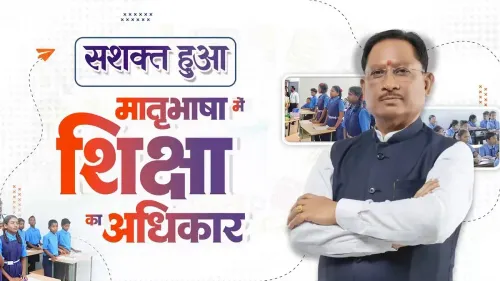
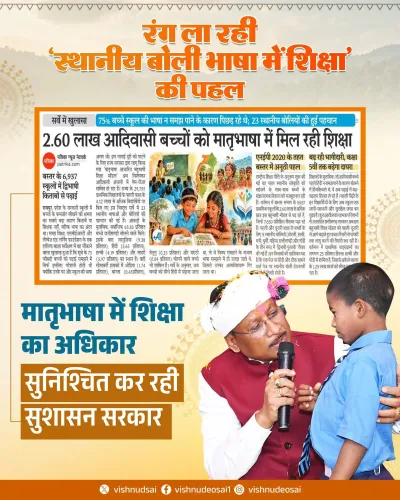
CM Vishnu Deo Sai publicly reaffirmed on 21 July 2026 that the Chhattisgarh government has ensured children's right to education in their mother tongue.
He stated that education is meaningful only when connected to a child's language, culture, and environment.
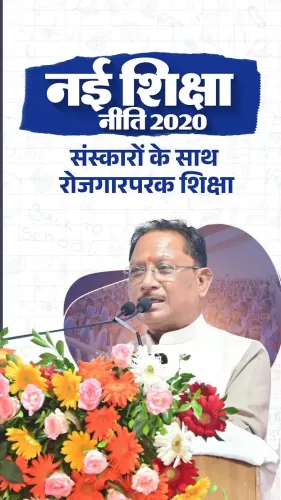
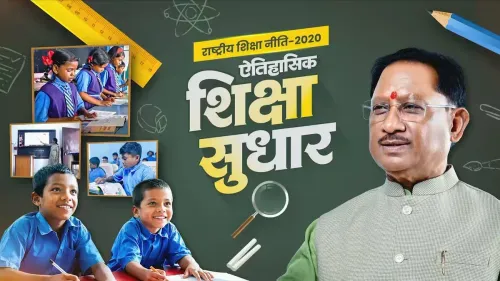
The pledge directly aligns with the National Education Policy 2020 , which recommends mother tongue as the medium of instruction in early grades.
Chhattisgarh's significant tribal communities — speaking languages such as Gondi and Halbi — are the primary intended beneficiaries.
The CM framed mother-tongue education as central to his government's vision of 'good governance' and a 'developed Chhattisgarh'.
Formal policy orders, revised curricula, and teacher training timelines will be the key indicators of on-ground implementation.
Chhattisgarh Chief Minister Vishnu Deo Sai on Tuesday, 21 July 2026, reaffirmed his government's commitment to ensuring every child in the state receives education in their mother tongue, stating that no student should be left behind solely because of language barriers.
Context
In a post on X, CM Sai wrote in Hindi: 'बच्चे अपनी मातृभाषा में सबसे सहज होकर सीखते हैं' ('Children learn most comfortably in their mother tongue'). He declared that his government has 'ensured the right to education in the mother tongue' and pledged that Chhattisgarh will build a foundation where every student gets an equal opportunity to advance according to their talent.
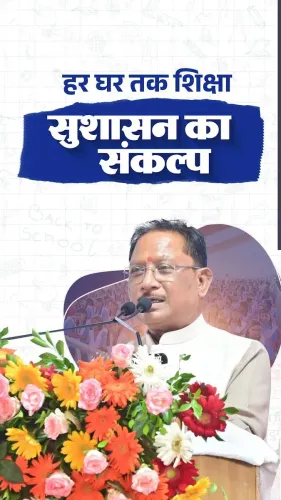
The Chief Minister framed the initiative as a core principle of good governance, calling it the 'strong foundation of a developed Chhattisgarh' — 'यही सुशासन की सोच है, यही विकसित छत्तीसगढ़ की मजबूत नींव है'.
Policy Backdrop
The statement aligns closely with the National Education Policy 2020, which directs states to adopt the mother tongue or home language as the medium of instruction in early grades wherever feasible. The NEP argues that foundational literacy improves significantly when children learn in a familiar language.
Chhattisgarh is home to a large tribal population that speaks languages including Gondi and Halbi, making multilingual instruction a persistent policy priority. Reducing early-grade learning gaps in these communities has been a recurring challenge for successive state administrations.
Stakeholders and Impact
The most direct beneficiaries of such a policy are primary school children, particularly tribal students in rural and forest-belt districts of Chhattisgarh where regional languages dominate daily life. Language mismatch between home and classroom has long been identified as a key driver of dropout rates and low foundational learning outcomes in these areas.
Teachers, textbook developers, and curriculum planners would also be central to implementation, requiring training and new instructional materials in local languages. Similar multilingual education pushes in other states with significant tribal or regional-language populations have underscored the importance of sustained investment in teacher capacity.
What's Next
Observers will watch for formal state-level orders, curriculum revision notifications, and textbook development timelines that translate CM Sai's stated commitment into operational policy. Teacher training schedules for primary schools in mother-tongue instruction are also expected to be a key indicator of the initiative's pace and scale.
If the government follows through with structured implementation, Chhattisgarh could emerge as a reference point for NEP 2020's multilingual provisions among states with comparable linguistic diversity — with outcomes in tribal districts likely to shape the broader national conversation on equitable foundational education.
Point of View
Affirming linguistic rights in schooling carries both pedagogical and electoral weight. The pledge, however, remains aspirational until backed by budget allocations, teacher training mandates, and textbook rollouts in languages like Gondi and Halbi. The broader significance lies in whether Chhattisgarh can convert this rhetorical commitment into a measurable model for other linguistically diverse states navigating NEP 2020 implementation.
NationPress
20 Oct 2026
Frequently Asked Questions
What did Chhattisgarh CM Vishnu Deo Sai say about mother-tongue education?
CM Vishnu Deo Sai stated on 21 July 2026 that his government has ensured children's right to education in their mother tongue, and pledged that no child in Chhattisgarh will be left behind solely because of language barriers.
Which languages are spoken by tribal communities in Chhattisgarh?
Tribal communities in Chhattisgarh speak several regional languages, most notably Gondi and Halbi, which are distinct from Hindi and are central to the case for mother-tongue instruction in early schooling.
How does NEP 2020 relate to mother-tongue education in Indian states?
The National Education Policy 2020 directs all Indian states to adopt the mother tongue or home language as the medium of instruction in early grades wherever possible, citing evidence that children learn foundational skills more effectively in a familiar language.
Who benefits from mother-tongue education in Chhattisgarh?
Primary school children, especially tribal students in rural and forest-belt districts where regional languages dominate, are the main beneficiaries, as language mismatch between home and classroom is a key driver of dropout rates and poor learning outcomes.
What steps are expected next for Chhattisgarh's mother-tongue education policy?
Observers are watching for formal state orders, curriculum revisions, textbook development in local languages like Gondi and Halbi, and teacher training schedules for Chhattisgarh primary schools as concrete follow-through on CM Sai's commitment.