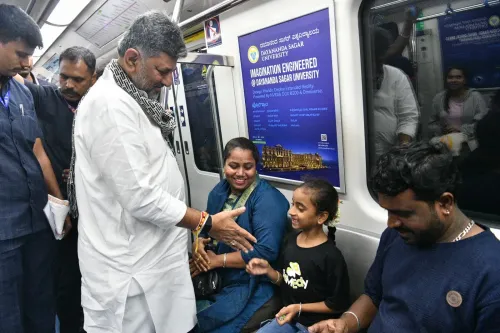
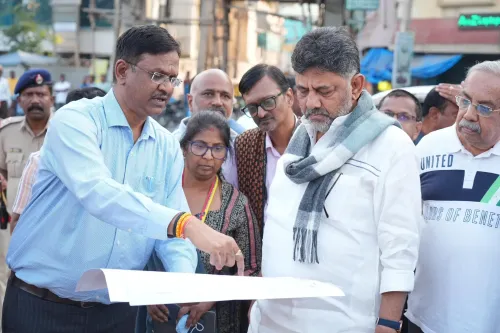
CM Karnataka Marks 15 Years of Namma Metro's Growth
Synopsis
The Chief Minister's Office of Karnataka celebrated 15 years of Namma Metro on 20 October 2026, highlighting the network's growth from a 6.7 km pilot stretch in 2011 to a 96.1 km city-wide system, and reaffirming the state's commitment to sustainable urban mobility.
Key Takeaways
Namma Metro marks 15 years of commercial operations in Bengaluru , with the anniversary noted on 20 October 2026 .
The network has grown from a 6.7 km Purple Line stretch between Baiyappanahalli and M.G.
Road (launched October 2011 ) to 96.1 km of operational track.
BMRCL — the state-owned special purpose vehicle — has managed all phases of planning, construction, and operations.
The project received Government of India in-principle approval in 2004 , with Phase 1 construction beginning in 2007 .
Central government support under urban schemes such as AMRUT has backed Namma Metro's phased expansion.
The CMO reaffirmed commitment to further expansion, sustainable mobility, and multimodal integration for Bengaluru 's growing population.
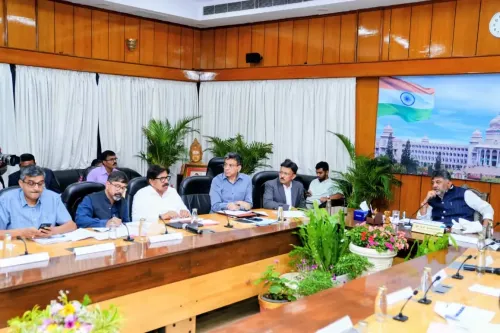
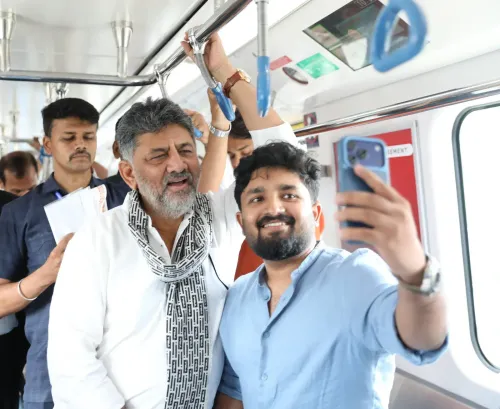
Fifteen years ago, Bengaluru took its first ride on a metro — a modest 6.7 km stretch that few imagined would one day anchor a city of millions. On Tuesday, 20 October 2026, the Chief Minister's Office of Karnataka marked that anniversary by celebrating Namma Metro's expansion into a 96.1 km network weaving across India's tech capital.
From Baiyappanahalli to a city-wide spine
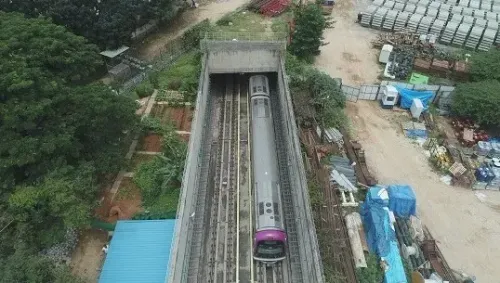
The story of Namma Metro begins in October 2011, when the first revenue services rolled out on the Purple Line between Baiyappanahalli and M.G. Road — six and a half kilometres of track that proved a fast-growing, congestion-choked city could move differently. That approval had come years earlier: the Government of India gave in-principle clearance to the Bangalore Metro Rail Project in 2004, with construction on Phase 1 beginning in 2007.
The operator behind the expansion is the Bangalore Metro Rail Corporation Ltd (BMRCL), a state-owned special purpose vehicle responsible for planning, building, and running every kilometre of the system. What started as a single corridor proof-of-concept has since grown through sequenced phases, drawing on central government support including funding under urban infrastructure programmes such as AMRUT.
Why 96.1 km matters in a city of this scale
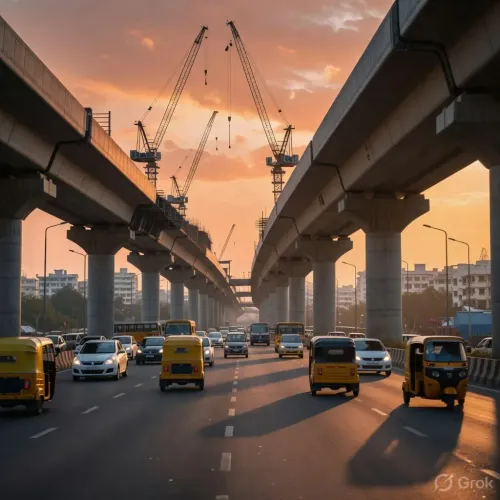
Bengaluru is India's third-most populous city and the country's fastest-growing tech hub — a combination that has made traffic congestion a near-permanent crisis. Metro rail offers what road-widening cannot: high-capacity, time-predictable, lower-emission movement at urban scale. The CMO's post framed the milestone in exactly those human terms — 'thousands of everyday journeys, the time saved and the connections made possible.'
India's metro boom since the 2000s largely traces back to the Delhi Metro template: a semi-autonomous corporation, phased expansion tied to ridership data, and shared central-state funding. Bengaluru followed that model closely, and at 96.1 km, Namma Metro now ranks among the country's larger operational networks.
What Phase 3 planning and suburban rail integration could mean next
The CMO's statement pledged continued commitment to 'better connectivity, sustainable mobility and a higher quality of life for every citizen' — language that points forward to Phase 2 corridor completions and the early contours of Phase 3 planning. Multimodal integration with Bengaluru's suburban rail network, long discussed as the missing link for outer-city commuters, remains the clearest next frontier for BMRCL and the state government.
For a city adding hundreds of thousands of new residents each year, the next fifteen years of Namma Metro may matter even more than the first.
Point of View
Championing Namma Metro lets it claim continuity on a long-running, cross-party urban project while nudging the conversation toward future phases. The emphasis on 'sustainable mobility' also aligns Bengaluru's story with the national and global push to decarbonise urban transport, giving the milestone a policy resonance beyond local pride. The real test of the commitment in the post will come in the speed and funding clarity of Phase 3 planning and suburban rail integration.
NationPress
20 Oct 2026
Frequently Asked Questions
When did Namma Metro first start operations in Bengaluru?
Namma Metro's first commercial services began in October 2011 , on a 6.7 km stretch of the Purple Line between Baiyappanahalli and M.G. Road .
How long is Namma Metro's network today?
As of the 15-year milestone in October 2026 , the Chief Minister's Office of Karnataka states that Namma Metro spans 96.1 km across Bengaluru.
Who operates Namma Metro?
Bangalore Metro Rail Corporation Ltd (BMRCL) , a state-owned special purpose vehicle, is responsible for planning, constructing, and operating all of Namma Metro's lines.
What is the future expansion plan for Namma Metro?
Phase 2 corridor work is ongoing, and the state government has signalled intent to plan Phase 3 and explore multimodal integration with Bengaluru's suburban rail network, though specific timelines have not been officially announced.
How did the central government support Namma Metro's growth?
The Government of India gave in-principle approval for the Bangalore Metro Rail Project in 2004 , and central funding support under urban schemes including AMRUT has backed successive phases of expansion.