CM Shivakumar Rides Namma Metro on Kanakapura Road Line
Synopsis
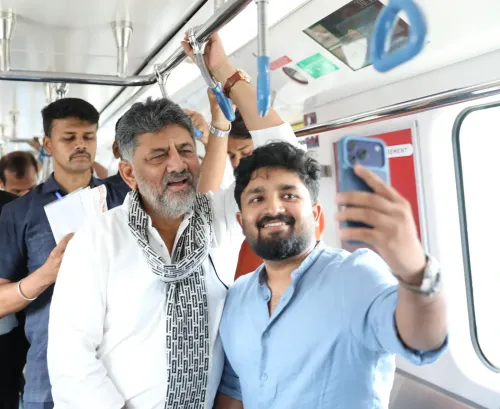
Chief Minister D.K. Shivakumar rode Namma Metro from Vidhana Soudha to the Kanakapura Road terminal on 7 June 2026, signalling Karnataka's intent to accelerate all ongoing metro projects and make mass transit the preferred travel choice in Bengaluru.
Key Takeaways
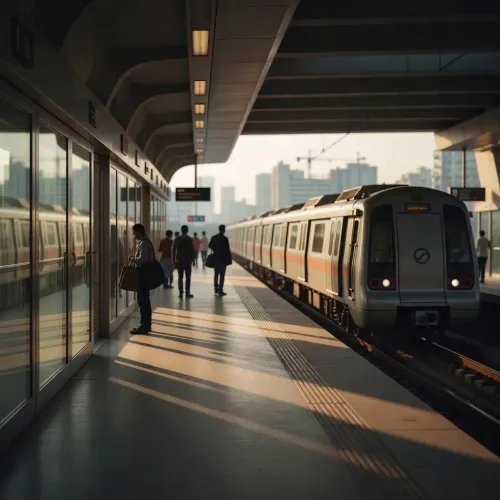
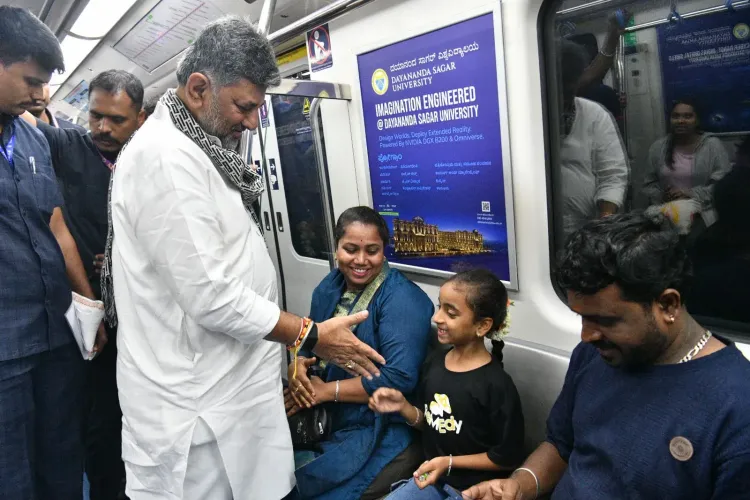
Shivakumar travelled on Namma Metro from Vidhana Soudha to the Kanakapura Road terminal on 7 June 2026 .
The Karnataka Government says it is fast-tracking all ongoing metro projects to improve accessibility and reduce congestion across Bengaluru .
Namma Metro first commenced commercial operations in 2011 ; the Kanakapura Road corridor is part of Phase 2 , approved by the Union Cabinet in 2014 .
Additional funds for accelerating metro works were allocated in the 2022-23 state budget.
Integration with BMTC bus services and suburban rail is flagged as a key next step for last-mile connectivity.
The government's stated goal is to make efficient mass transit the preferred commute choice for Bengaluru's citizens.
The Chief Minister's Office of Karnataka announced on Sunday, 7 June 2026 that Chief Minister D.K. Shivakumar travelled on Namma Metro from Vidhana Soudha to the terminal station on Kanakapura Road, choosing public transport to publicly reaffirm the state government's commitment to sustainable urban mobility in Bengaluru.
Context
The Chief Minister's Office stated that Shivakumar made the journey to signal that the Karnataka Government is 'fast-tracking all ongoing Metro projects to improve accessibility, reduce congestion and provide faster, safer and more reliable connectivity across Bengaluru.' The symbolic use of public transport by a sitting chief minister is a visible gesture aimed at encouraging mass-transit adoption among the city's millions of daily commuters.
Bengaluru, Karnataka's capital, is among India's fastest-growing urban centres and faces chronic traffic congestion driven by rapid population expansion and an overwhelming dependence on private vehicles. The city's metro network — branded Namma Metro — has been positioned as a central pillar of the state's long-term urban mobility strategy.
Policy Backdrop
Namma Metro first entered commercial service in 2011, with its initial corridor connecting key nodes in central Bengaluru. The Union Cabinet approved Phase 2 of the network in 2014, adding several new corridors including the Kanakapura Road alignment that extends the network southward from the city centre toward peripheral growth areas.
State budget allocations in 2022-23 earmarked additional funds to accelerate the ongoing metro works. The expansion is being pursued in the broader context of national urban development programmes, including AMRUT (Atal Mission for Rejuvenation and Urban Transformation) and the Smart Cities Mission, under which Karnataka and other states have progressively scaled up metro and rapid-transit infrastructure.
Vidhana Soudha, the seat of the Karnataka legislature from which the Chief Minister began his journey, sits in central Bengaluru and is a symbolic starting point — connecting the seat of government directly to a corridor that serves densely populated southern neighbourhoods.
Stakeholders and Impact
The primary beneficiaries of an accelerated metro rollout are Bengaluru's estimated 1.4 crore-plus residents, particularly daily commuters who currently endure some of the country's worst urban traffic. Improved metro connectivity along the Kanakapura Road corridor is expected to ease pressure on parallel road arteries and reduce vehicular emissions.
Integration of metro services with BMTC (Bengaluru Metropolitan Transport Corporation) bus routes and planned suburban rail links remains a key variable in determining how effectively the expanded network serves last-mile connectivity needs. Urban planners and commuter groups have consistently flagged seamless inter-modal integration as critical to shifting commuter preference away from private vehicles.
What's Next
The Karnataka Government's stated priority is commissioning the remaining Phase 2 sections at pace. Timelines for individual corridor completions and any formal integration framework with bus and suburban rail services will be closely watched by urban mobility stakeholders and Bengaluru residents alike.
The Chief Minister's office framed the vision as a Bengaluru 'where efficient mass transit becomes the preferred choice, making the city greener, smarter and more connected for every citizen' — a formulation that sets the political benchmark against which the government's infrastructure delivery will be measured in the months ahead.
Point of View
Where metro Phase 2 timelines have stretched over a decade, the optics of a sitting chief minister on the Kanakapura Road line also serve to reassure commuters that the corridor is operationally credible. The real test, however, will be whether the fast-tracking rhetoric translates into firm commissioning dates and integrated last-mile solutions before the next electoral cycle.
NationPress
21 Oct 2026
Frequently Asked Questions
Which metro route did CM Shivakumar travel on?
CM D.K. Shivakumar travelled on Namma Metro from Vidhana Soudha in central Bengaluru to the terminal station on Kanakapura Road on 7 June 2026.
What is the current status of Namma Metro Phase 2?
Namma Metro Phase 2 was approved by the Union Cabinet in 2014 and includes the Kanakapura Road corridor among other new alignments. The Karnataka Government has stated it is fast-tracking all ongoing Phase 2 works, though specific commissioning timelines for remaining sections are yet to be officially confirmed.
Why did CM Shivakumar choose to ride the metro?
According to the Chief Minister's Office, Shivakumar rode the metro to publicly reaffirm the Karnataka Government's commitment to sustainable urban mobility and to encourage citizens to prefer mass transit over private vehicles.
What is Namma Metro and when did it start?
Namma Metro is Bengaluru's mass rapid transit system. It first entered commercial service in 2011 and has since expanded through multiple phases to connect key parts of the city.
How does the Kanakapura Road metro line help Bengaluru commuters?
The Kanakapura Road corridor extends the metro network southward from central Bengaluru, providing faster and more reliable connectivity to densely populated southern neighbourhoods and helping reduce traffic congestion on parallel road routes.