Namma Metro turns 15: Bengaluru network grows from 6.7 km to 96.1 km, says CM Shivakumar

Synopsis
Namma Metro marks 15 years with a network that has grown fourteen-fold — from 6.7 km at Byappanahalli in 2011 to 96.1 km across 83 stations today. With Bengaluru's metro projected to hit 175.55 km by late 2027, the anniversary is less a celebration of the past and more a statement of intent about India's most congested tech city.
Key Takeaways
Namma Metro completed 15 years on 20 October 2026 , the anniversary of its first run between Byappanahalli and M.G.
The network has grown from 6.7 km in 2011 to 96.1 km across 83 stations today.
Shivakumar described the metro as 'an inseparable part of Bengaluru's daily life.' The Yellow Line (RV Road to Bommasandra via Electronic City) became fully operational in August 2025 .
The network is projected to reach 137.11 km by late 2026 and 175.55 km by late 2027 .
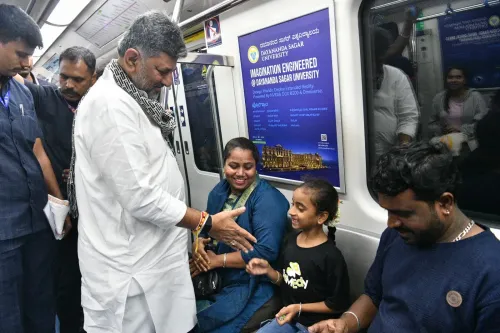
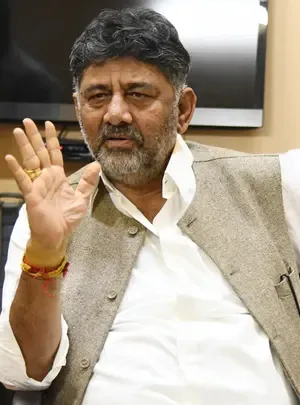
Karnataka Chief Minister D.K. Shivakumar on Tuesday, 20 October 2026, marked Namma Metro's 15th anniversary by highlighting the system's transformation from a modest 6.7 km pilot corridor in 2011 to a 96.1 km network spanning 83 stations today. Shivakumar described the metro as 'an inseparable part of Bengaluru's daily life,' connecting lakhs of commuters to workplaces and enabling them to pursue their aspirations across the city.
Fifteen Years of Growth
Namma Metro's journey began on 20 October 2011, when the first stretch between Byappanahalli and M.G. Road — a modest 6.7 km — was inaugurated. Over the next decade and a half, the network has expanded fourteen-fold, adding corridors across the city's east-west and north-south axes. The Yellow Line connecting RV Road to Bommasandra via Electronic City became fully operational in August 2025, bringing the city's key tech employment belt into the metro grid.
What CM Shivakumar Said
'What began as a new way to travel has become an inseparable part of Bengaluru's daily life,' Shivakumar said in a statement marking the milestone. He added that lakhs of people board Namma Metro every day to get to work, pursue their dreams and carry on with their daily activities, and that their journeys 'reflected the story of Bengaluru.' The Chief Minister also underscored the government's responsibility to build on current progress by making public transport more accessible and improving citywide connectivity for future generations.
Expansion Roadmap Ahead
The current 96.1 km operational network is far from the final shape of Bengaluru's metro ambitions. Phase 2 work on remaining stretches connecting major employment hubs is ongoing. The network is projected to reach 137.11 km by late 2026 and expand further to 175.55 km by late 2027, encompassing Phase 2 completions, Phase 3 corridors, and newly proposed extensions.
Impact on the City
Bengaluru has long grappled with some of India's most severe urban traffic congestion, and Namma Metro has emerged as a critical pressure valve. The system's growth mirrors the city's own expansion as a global technology hub, where reliable public transit directly affects productivity, real-estate patterns, and air quality. This is the third major Indian metro — after Delhi and Mumbai — to cross the 90 km operational mark, underlining Bengaluru's growing infrastructure ambition.
What Comes Next
With Phase 2 nearing completion and Phase 3 in planning, the focus will shift to last-mile connectivity — integrating metro stations with buses, auto-rickshaws, and cycling infrastructure. Authorities are expected to prioritise frequency improvements and feeder services as the network's footprint grows. The 20 October 2026 anniversary provides both a moment of celebration and a benchmark against which future expansion will be measured.
Point of View
But the bigger test lies ahead: whether the network can outpace Bengaluru's relentless sprawl. Reaching 96.1 km matters less if last-mile connectivity — the chronic weak link in Indian metro projects — remains broken. The Yellow Line's 2025 completion into Electronic City was long overdue; the real measure of success will be ridership density, not corridor length. As the city eyes 175 km by 2027, execution risk on Phase 3 and feeder integration deserves as much attention as the anniversary milestone.
NationPress
20 Oct 2026
Frequently Asked Questions
When did Namma Metro first start operations in Bengaluru?
Namma Metro first began operations on 20 October 2011 with an initial stretch of 6.7 km between Byappanahalli and M.G. Road. The network has since expanded to 96.1 km across 83 stations as of October 2026.
How much has the Namma Metro network grown in 15 years?
The Namma Metro network has grown from 6.7 km in 2011 to 96.1 km across 83 stations by October 2026, a fourteen-fold expansion over 15 years. Further growth to 137.11 km is projected by late 2026 and 175.55 km by late 2027.
What did Karnataka CM D.K. Shivakumar say about Namma Metro's anniversary?
CM D.K. Shivakumar said Namma Metro had become 'an inseparable part of Bengaluru's daily life,' connecting lakhs of commuters to workplaces daily. He stressed the government's responsibility to improve public transport accessibility and connectivity for future generations.
What is the latest addition to the Namma Metro network?
The Yellow Line connecting RV Road to Bommasandra via Electronic City became fully operational in August 2025, linking one of Bengaluru's largest tech employment corridors to the metro grid. It is part of Phase 2, which focuses on connecting major employment hubs.
How far will the Namma Metro network expand by 2027?
The Namma Metro network is projected to reach 137.11 km by late 2026 and 175.55 km by late 2027, covering Phase 2 completions, Phase 3 corridors, and newly proposed extensions. The expansion is among the most ambitious urban transit projects currently underway in India.