CM Sai's NEP push: Quality, culture, skills for CG students
Synopsis
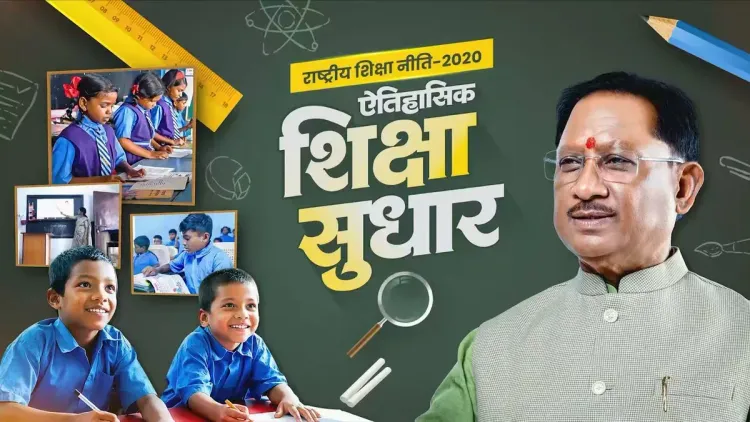
The Chief Minister's Office of Chhattisgarh on 19 June 2026 reaffirmed CM Vishnu Deo Sai's commitment to NEP 2020, vowing to build an education system rooted in local languages and culture while equipping students with modern skills and equal opportunities.
Key Takeaways
The Chhattisgarh CMO on 19 June 2026 publicly reaffirmed the state's drive to implement NEP 2020 as a pillar of good governance.
CM Vishnu Deo Sai has resolved that every student in the state achieves quality education, equal opportunity, and holistic development.
The policy framework integrates local dialects and cultural identity with modern teaching methods and vocational skills.
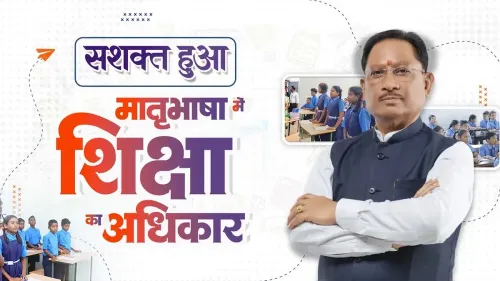
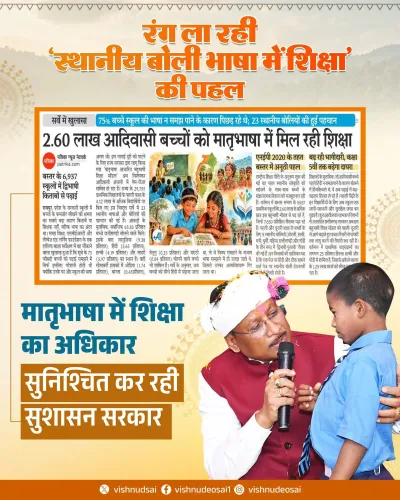
Tribal and rural students are key beneficiaries, with mother-tongue instruction central to reducing dropouts and improving outcomes.
The government frames cultural rootedness and employability as complementary goals , not competing ones.
Focus now shifts to 2026-27 budget allocations for NEP rollout, including local-language textbooks and teacher training.
The Chief Minister's Office of Chhattisgarh on Friday, 19 June 2026 reaffirmed the state government's commitment to implementing the National Education Policy (NEP) 2020, stating that the administration is building an education system that equips students with knowledge, values, skills, confidence, and opportunities for a better future.
Context
The CMO's post, shared in Hindi, outlines Chief Minister Vishnu Deo Sai's resolve that every student in Chhattisgarh must realise their aspirations through quality education, equal opportunity, and holistic development. The statement reads: 'नई शिक्षा नीति के माध्यम से सुशासन सरकार ऐसे शिक्षा तंत्र का निर्माण कर रही है' ('Through the New Education Policy, the good-governance government is building such an education system') — one that delivers 'knowledge along with values, skills along with confidence, and education along with opportunities for a better future.'
The post further emphasises that children are being connected to their culture and roots through local dialects, modern teaching methods, and quality education, while simultaneously being prepared for the challenges and possibilities of a changing world.
Policy Backdrop
The National Education Policy 2020, approved by the Union Cabinet in July 2020, replaced the 1986 education framework and directed states to integrate mother-tongue instruction, multidisciplinary learning, and vocational skills from early grades. Chhattisgarh, a state with a large tribal and rural population, has particular reason to prioritise local-language instruction, given the linguistic diversity of its districts.
The previous state government between 2019 and 2023 had expanded residential schools (asram vidyalayas) and introduced bilingual tribal textbooks. The current BJP government under CM Sai, in office since December 2023, has framed NEP implementation as a cornerstone of its 'good governance' agenda, seeking to build on those earlier access-focused initiatives with a sharper emphasis on cultural identity and employability.
Stakeholders and Impact
The primary beneficiaries of this policy direction are school students across Chhattisgarh, particularly those from tribal communities in districts where local dialects such as Gondi, Halbi, and Chhattisgarhi are the first language. Instruction in familiar languages is widely recognised as a critical factor in reducing dropout rates and improving learning outcomes at the foundational level.
For these communities, the dual promise of cultural rootedness and modern skill development addresses a long-standing tension in Indian public education — the risk that pursuit of mainstream employability comes at the cost of indigenous identity. The CMO's framing explicitly positions these goals as complementary rather than competing.
What's Next
Attention will now turn to the 2026-27 academic year and whether the state budget allocates sufficient resources for NEP implementation — including new textbooks in local dialects, teacher training programmes, and vocational infrastructure at the school level. CM Sai's stated resolve that every student in the state contributes to building a 'Viksit Chhattisgarh' (developed Chhattisgarh) signals that education reform will remain a central political and governance priority for the administration in the months ahead.
Point of View
CM Sai is attempting to neutralise a potential criticism that national-level education reform marginalises indigenous communities. The emphasis on 'Viksit Chhattisgarh' also ties state education outcomes to the broader 'Viksit Bharat' narrative of the Union government, reinforcing vertical alignment between Raipur and New Delhi. Whether the rhetoric translates into measurable outcomes will depend on budget commitments and implementation timelines in the upcoming academic year.
NationPress
19 Sept 2026
Frequently Asked Questions
What is the Chhattisgarh government doing for NEP 2020 implementation?
The Chhattisgarh government under CM Vishnu Deo Sai is building an education system aligned with NEP 2020 that integrates local dialects, modern teaching methods, vocational skills, and cultural values to prepare students for future opportunities.
Who is Vishnu Deo Sai and what is his education policy?
Vishnu Deo Sai is the Chief Minister of Chhattisgarh since December 2023. His education policy focuses on quality schooling, equal opportunity, and holistic development for every student in the state, with a particular emphasis on tribal and rural communities.
How does Chhattisgarh plan to use local languages in education?
Chhattisgarh is incorporating local dialects such as Gondi, Halbi, and Chhattisgarhi into school instruction as part of NEP 2020's mother-tongue education mandate, aiming to keep students connected to their cultural roots while improving foundational learning outcomes.
What is NEP 2020 and when was it approved?
The National Education Policy 2020 was approved by the Union Cabinet in July 2020. It replaced the 1986 education framework and emphasises mother-tongue instruction, multidisciplinary learning, and vocational skill development from early grades.
What does 'Viksit Chhattisgarh' mean in the context of education?
'Viksit Chhattisgarh' means 'developed Chhattisgarh' and is the state government's vision of progress in which every student, through quality education and equal opportunity, contributes meaningfully to the state's overall development.