What New Measures Did the Centre Take to Support Rural Local Bodies in Tamil Nadu and Assam?
Synopsis
In a significant move, the Central Government has disbursed over Rs 342 crore to enhance rural local bodies in Tamil Nadu and Assam under the 15th Finance Commission's Untied Grants. This funding aims to empower local governance and improve essential services in these regions.
Key Takeaways
Central Government allocates over Rs 342 crore for rural development.
Funds aimed at Tamil Nadu and Assam .
Supports Gram Panchayats , Block Panchayats , and District Panchayats .
Grants released in two installments.
Utilization for location-specific needs.
New Delhi, Sep 17 (NationPress) The Central Government has allocated over Rs 342 crore to bolster rural local bodies in Tamil Nadu and Assam, as part of the 15th Finance Commission's (XV FC) Untied Grants for the fiscal year 2026.
The initial tranche of untied grants, amounting to Rs 127.586 crore, has been disbursed to Tamil Nadu for the financial year 2025–26, benefitting 2,901 eligible Gram Panchayats, 74 eligible Block Panchayats, and 9 eligible District Panchayats.
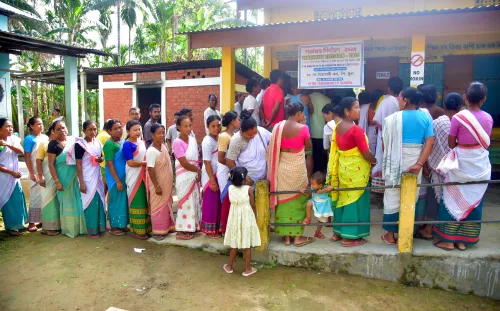
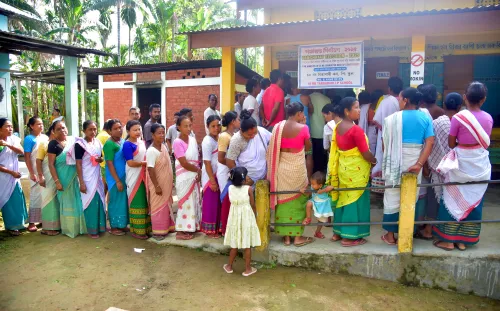
In addition, Rs 214.542 crore has been released for Assam, covering all 2,192 eligible Gram Panchayats, 156 eligible Block Panchayats, and 27 eligible Zilla Parishads, as reported by the Ministry of Panchayati Raj.
The funding is recommended by the Ministry of Panchayati Raj and the Ministry of Jal Shakti (Department of Drinking Water and Sanitation) for rural local bodies (RLBs) and Panchayati Raj Institutions (PRIs), and subsequently released by the Ministry of Finance.
These grants are typically distributed in two installments each financial year.
Recently, the government allocated over Rs 284 crore under the 15th Finance Commission Untied Grants to strengthen rural local bodies across three states for the financial year 2025–26.
Mizoram received Rs 14.2761 crore for 827 eligible village councils, while Odisha was allocated Rs 240.8149 crore for 6,085 eligible Gram Panchayats and 63 eligible Block Panchayats.
Additionally, Tripura secured Rs 29.75 crore for 606 eligible Gram Panchayats, 35 eligible Block Panchayats, 8 eligible Zilla Parishads, along with all 587 Village Committees and 40 eligible Block Advisory Committees in the state.
The Untied Grants are intended for addressing specific local needs, excluding salaries and other administrative costs.
On the other hand, the Tied Grants can be utilized for essential services such as sanitation, maintaining ODF status, managing and treating household waste, and ensuring a supply of drinking water, rainwater harvesting, and water recycling.
Point of View
The recent allocation of funds to rural local bodies in Tamil Nadu and Assam signifies the government's commitment to strengthening local governance and addressing grassroots needs. By enhancing financial support, the Centre aims to empower communities and improve essential services, aligning with broader development goals.
NationPress
19 Sept 2026
Frequently Asked Questions
What is the purpose of the Rs 342 crore released?
The Rs 342 crore released is aimed at strengthening rural local bodies in Tamil Nadu and Assam, as part of the 15th Finance Commission's Untied Grants for local development and services.
How will the funds be utilized?
The Untied Grants are designated for location-specific needs, excluding salaries, while Tied Grants can be used for basic services like sanitation, waste management, and water supply.
Which states are receiving these funds?
Tamil Nadu and Assam are the primary recipients of the Rs 342 crore allocation.
What are the eligible local bodies for these funds?
The funds are allocated to Gram Panchayats, Block Panchayats, and District Panchayats in the respective states.
Is this funding a one-time allocation?
No, the grants are typically released in two installments each financial year.