Centre moves Supreme Court against Jharkhand DGP appointment rules, cites non-compliance
Synopsis
The Centre has gone to the Supreme Court to challenge Jharkhand's 2025 DGP appointment rules, alleging the state twice appointed police chiefs with barely days or months of service left — bypassing a UPSC-based selection process the apex court mandated over two decades ago. The dispute spotlights how states continue to resist institutionalised police reform.
Key Takeaways
The Centre has moved the Supreme Court challenging Jharkhand's 2025 DGP appointment rules , alleging non-compliance with the Prakash Singh vs Union of India directives.
Solicitor General Tushar Mehta mentioned the matter before a Bench led by Chief Justice Surya Kant on 7 October 2026 ; the next hearing is on 9 October .
IPS officer Anurag Gupta was appointed Jharkhand DGP on 2 February 2025 with only about three months of service remaining, drawing Union Home Ministry objections.
Jharkhand amended its rules on 29 December 2025 to remove the six-month minimum service requirement, then appointed Tadasha Mishra on 30 December 2025 — one day before her retirement.
The Centre has sought a court declaration that the 2025 rules and all appointments under them are illegal .
The Supreme Court had already sought a compliance affidavit from Jharkhand in May 2026 over the failure to forward a DGP proposal to the UPSC .
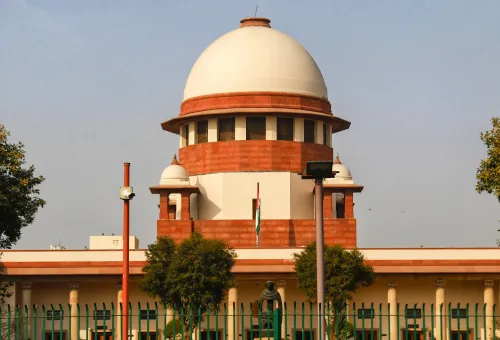
The Centre has approached the Supreme Court challenging the Jharkhand government's rules for appointing the state's Director General of Police (DGP), alleging that the state flouted the apex court's longstanding directives on police chief appointments. The matter was mentioned before a Bench headed by Chief Justice Surya Kant on Wednesday, 7 October 2026.
What the Centre Has Challenged
Solicitor General Tushar Mehta, appearing for the Centre, argued that Jharkhand notified the Jharkhand Director General and Inspector General of Police (Head of Police Force) Selection and Appointment Rules, 2025 on 8 January 2025 without adhering to the Supreme Court's directions in the landmark Prakash Singh vs Union of India case. Those directions — issued across orders dated 22 September 2006, 3 July 2018, 16 January 2019, and 13 March 2019 — mandate a structured UPSC-based selection process for DGP appointments across states.
The Centre has sought a court declaration that Jharkhand's 2025 rules and all appointments made under them are illegal. The next hearing is scheduled for 9 October.
The UPSC Process Jharkhand Allegedly Bypassed
Under the Supreme Court's 3 July 2018 directive, state governments must forward a list of eligible Indian Police Service (IPS) officers to the Union Public Service Commission (UPSC) at least three months before the incumbent DGP retires. The UPSC then prepares a panel from which the state must make its appointment. The Centre alleged that Jharkhand followed neither this process nor sought the apex court's permission before drafting its own rules.
The Disputed Appointments
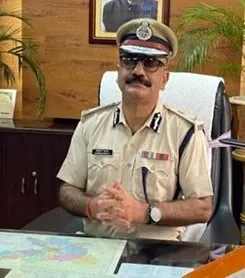
IPS officer Anurag Gupta was appointed Jharkhand DGP for a two-year term on 2 February 2025, even though he had only approximately three months of service remaining and was set to retire on 30 April 2025. The Union Home Ministry flagged objections through letters on 22 April, 3 May, and 23 May 2025. Gupta subsequently sought voluntary retirement, which the Jharkhand government approved on 6 November 2025.
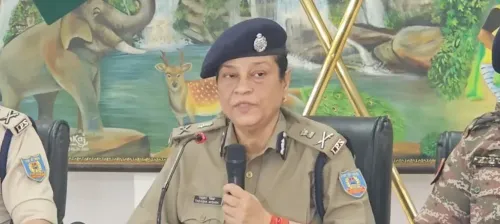
On 29 December 2025, Jharkhand amended its 2025 rules to remove the requirement that a DGP must have a minimum of six months of service remaining before retirement. The very next day, on 30 December 2025, Tadasha Mishra was appointed DGP — despite being due to retire on 31 December 2025. The Centre objected to this appointment as well.
Centre's Escalating Objections
In January 2026, the Union Home Ministry wrote formally to the Jharkhand government demanding withdrawal of the 2025 rules and cancellation of Mishra's appointment, while directing the state to initiate the DGP selection process in accordance with Supreme Court orders. By May 2026, the Supreme Court itself took cognisance of Jharkhand's failure to appoint a regular DGP and sought a compliance affidavit from the state, also questioning why a proposal had not been forwarded to the UPSC.
The Centre's latest application before the Supreme Court consolidates these objections, challenging both the legality of the 2025 rules and the validity of the appointments made under them. The dispute is part of a broader, decades-long effort to insulate police chief appointments from political influence — an effort that the Prakash Singh ruling was designed to anchor in institutional process.
Point of View
Yet states continue to find creative workarounds — Jharkhand's December 2025 rule amendment, tailor-made to accommodate a DGP with a single day of service left, is a particularly brazen example. The Centre's decision to escalate to the Supreme Court after months of letter-writing suggests New Delhi sees a political dimension here, but the real accountability question falls on the court: how long will it tolerate affidavit-based compliance theatre before imposing enforceable consequences on states that game the system?
NationPress
7 Oct 2026
Frequently Asked Questions
Why has the Centre approached the Supreme Court over Jharkhand's DGP appointment?
The Centre contends that Jharkhand's 2025 DGP appointment rules violate the Supreme Court's directions in the Prakash Singh vs Union of India case, which require states to use a UPSC-based panel process for selecting their police chief. It has sought a declaration that the 2025 rules and all appointments made under them are illegal.
What is the Prakash Singh vs Union of India case?
It is a landmark Supreme Court ruling that mandates structural police reforms across Indian states, including a UPSC-based process for DGP appointments to insulate them from political influence. Key directions were issued on 22 September 2006, 3 July 2018, 16 January 2019, and 13 March 2019.
Who were the disputed DGP appointments in Jharkhand?
IPS officer Anurag Gupta was appointed Jharkhand DGP on 2 February 2025 with roughly three months of service remaining before his April 2025 retirement. Subsequently, Tadasha Mishra was appointed DGP on 30 December 2025, one day before she was due to retire on 31 December 2025.
What changes did Jharkhand make to its DGP appointment rules?
Jharkhand notified its DGP Selection and Appointment Rules on 8 January 2025 without following the UPSC process. On 29 December 2025, it amended those rules to remove the requirement that a DGP must have at least six months of service remaining — paving the way for Mishra's appointment the following day.
When is the next Supreme Court hearing on this matter?
The Supreme Court is scheduled to hear the Centre's application on 9 October 2026. The case was mentioned before a Bench headed by Chief Justice Surya Kant on 7 October 2026 by Solicitor General Tushar Mehta.