Centre to form joint panel on sugarcane growers' issues; Joshi calls Delhi talks successful
Synopsis
For the first time, the Centre brought sugarcane farmers from Karnataka and Maharashtra directly to Delhi for talks — and the result is a joint committee of growers, scientists and officials mandated to find long-term fixes. With FRP adequacy, MSP demands, and mill-level deductions all on the table, this is either the start of a structural reset for India's sugar belt or another round of procedural delay.
Key Takeaways
Union Minister Pralhad Joshi announced on 13 October that the Centre will soon form a joint committee on sugarcane growers' issues.
The committee will include sugarcane growers , agricultural scientists , and Central and state government representatives.
Key grievances discussed: inadequate FRP , demand for MSP , weighing discrepancies, a 9% wastage deduction by sugar mills, and commercial pricing.
Farmer leader Raju Shetti reportedly agreed to the committee formation.
The Centre urged Karnataka to introduce a State Advised Price (SAP) for sugarcane, in line with Tamil Nadu , Haryana , Punjab , and Uttar Pradesh .
Agriculture Minister Shivraj Singh Chouhan and Joshi co-chaired the three-to-four hour meeting attended by three state ministers and multiple farmer organisations.
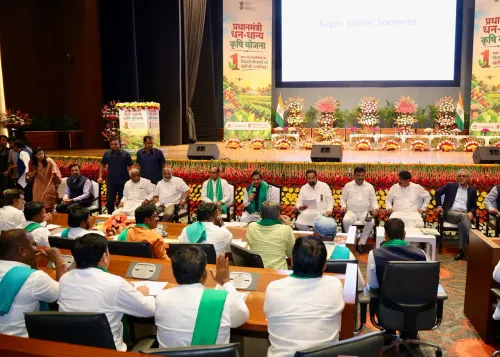
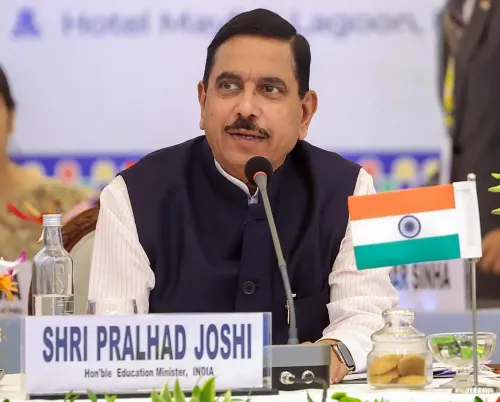
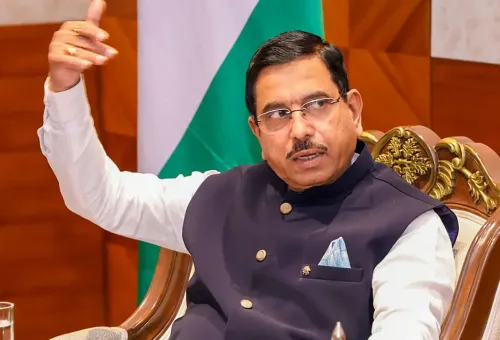
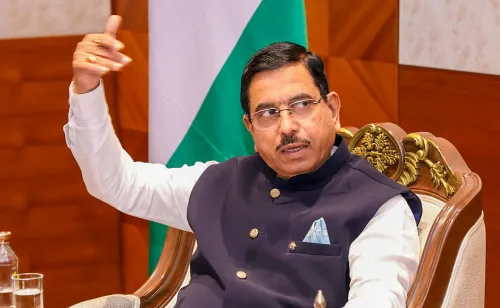
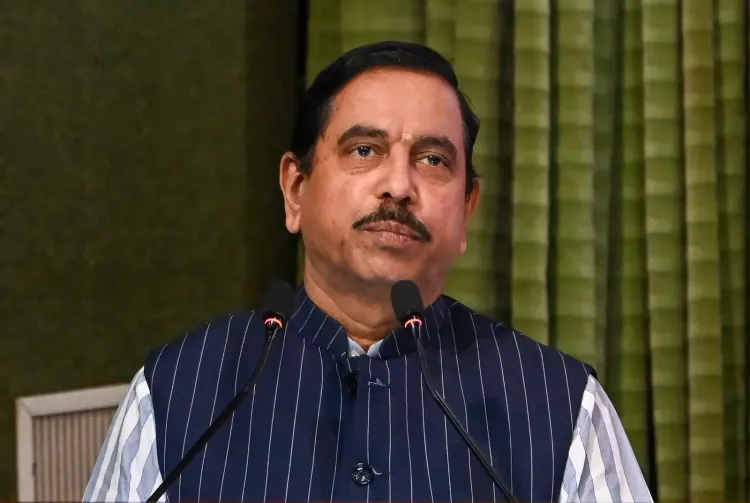
Union Food and Consumer Affairs Minister Pralhad Joshi on Tuesday, 13 October announced that the Centre would soon constitute a joint committee to address the long-standing grievances of sugarcane growers, describing a high-level meeting held in New Delhi with farmer representatives from Karnataka and Maharashtra as constructive and productive. Joshi asserted there was no justification for farmers to resort to road blockades, urging them to allow the institutional process to deliver results.
What the Joint Committee Will Do
The proposed committee will comprise sugarcane growers, agricultural scientists, and representatives from both the Central and state governments. According to Joshi, the body will conduct a detailed study of the problems confronting farmers and recommend measures for their long-term resolution. He stressed that resolving sugarcane-related issues required coordinated efforts across several ministries and active participation from state governments — making a multi-stakeholder panel the only viable path forward.
'The issues of sugarcane growers cannot be resolved in a day or two or by one or two ministries alone. The government will soon have good news for sugarcane growers. Therefore, there is no need for anyone to resort to road blockades,' Joshi said, speaking to the media in Delhi.
Key Issues Raised by Farmers
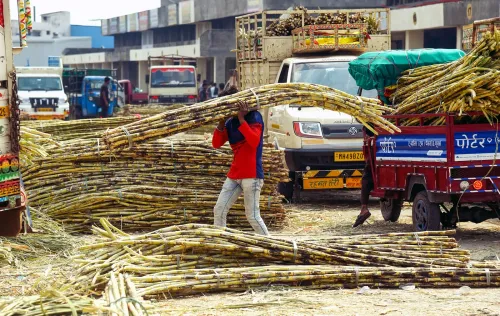
The meeting, which lasted three to four hours, saw detailed deliberations on a range of concerns. These included the allegedly inadequate Fair and Remunerative Price (FRP), demands for a Minimum Support Price (MSP), discrepancies in the weighing of sugarcane at mills, a nine per cent wastage deduction imposed by sugar mills after harvesting, and separate pricing for commercial purposes. Representatives and office-bearers of three to four farmer organisations attended and submitted suggestions, which were formally taken into consideration.
Notably, farmer leader Raju Shetti reportedly agreed to the Centre's decision to form the joint committee and work towards permanent solutions — a significant signal given his stature among sugarcane farming communities in western India.
Who Attended and What Was Discussed
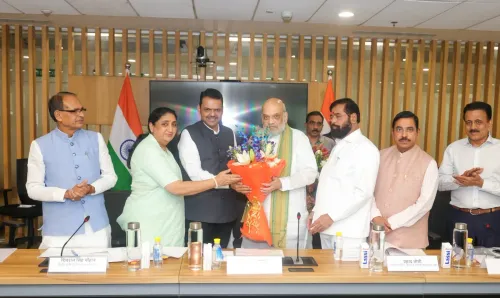
Agriculture Minister Shivraj Singh Chouhan, Joshi, departmental secretaries, three ministers from the respective state governments, and farmer representatives all participated in the discussions. The Centre, for the first time according to Joshi, had proactively invited sugarcane growers to New Delhi to hear their grievances directly — a departure from the usual pattern of reactive engagement.
This comes amid growing farmer unrest in the sugarcane belt spanning Karnataka and Maharashtra, regions that together account for a significant share of India's sugar output and where disputes over mill pricing have historically triggered protests and supply disruptions.
Demand for State Advised Price in Karnataka
A key outcome of the meeting was the Centre's call for the Karnataka government to introduce a State Advised Price (SAP) for sugarcane — a mechanism already in place in Tamil Nadu, Haryana, Punjab, and Uttar Pradesh. Joshi said Karnataka should consider a similar safeguard to ensure better returns for its farmers. The Centre also urged the state government to take strict action against sugar mills over recovery-rate anomalies, the nine per cent wastage deduction, and weighing discrepancies.
Joshi was emphatic that the Centre's commitment to resolving sugarcane farmers' problems extends beyond political lines, stating the government would work in consultation with all state governments regardless of their political affiliations. With the joint committee's constitution expected shortly, the next phase will test whether these assurances translate into concrete policy action.
Point of View
Aimed at defusing road-blockade threats ahead of state election cycles in Karnataka and Maharashtra. The joint committee is a structurally sound idea, but committees have historically been where Indian agricultural grievances go to wait; the FRP-versus-SAP debate is decades old, and the nine per cent wastage deduction has been contested for years without resolution. The real accountability test will come when the committee actually reports and its recommendations are either adopted or quietly shelved. Joshi's appeal to Karnataka to implement SAP is pointed — but it is a request, not a mandate, and the state government's response will determine whether this meeting was a genuine turning point or a pressure-relief valve.
NationPress
13 Oct 2026
Frequently Asked Questions
What is the joint committee announced by the Centre for sugarcane growers?
It is a multi-stakeholder body comprising sugarcane growers, agricultural scientists, and Central and state government representatives, announced on 13 October by Union Minister Pralhad Joshi. The committee will study farmers' problems and recommend long-term solutions, with its constitution expected shortly.
What issues did sugarcane farmers raise at the Delhi meeting?
Farmers raised concerns about the allegedly inadequate Fair and Remunerative Price (FRP), demands for a Minimum Support Price (MSP), discrepancies in sugarcane weighing at mills, a nine per cent wastage deduction imposed by sugar mills after harvesting, and separate pricing for commercial use.
What is a State Advised Price (SAP) and why is Karnataka being asked to adopt it?
A State Advised Price is a price set by a state government for sugarcane that is typically higher than the central FRP, offering farmers better returns. Tamil Nadu, Haryana, Punjab, and Uttar Pradesh already implement SAP; the Centre urged Karnataka to follow suit to protect its sugarcane farmers.
Why did the Centre call farmers to Delhi for this meeting?
According to Joshi, this was the first time the Centre proactively invited sugarcane growers to New Delhi to directly hear their grievances, marking a shift from reactive engagement. The move also came as farmers from Karnataka and Maharashtra threatened road blockades over unresolved pricing and mill-related issues.
Will the formation of the joint committee stop farmer protests?
Joshi appealed to farmers to hold off on road blockades, saying 'good news' was forthcoming. Farmer leader Raju Shetti reportedly agreed to the committee process. However, the effectiveness of this assurance will depend on how quickly the committee is constituted and whether it produces actionable recommendations.