CM Sai Draws ₹1.07 Lakh Crore in Bids at CG Industry Dialogue
Synopsis
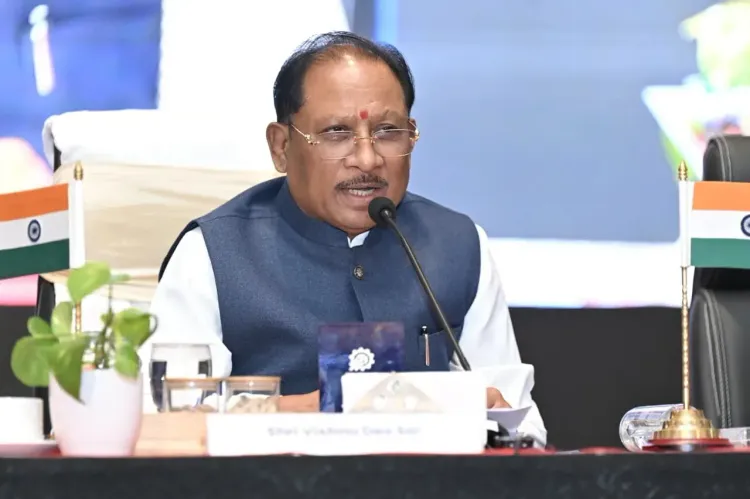
Chief Minister Vishnu Dev Sai presided over Chhattisgarh Industry Dialogue Chapter-3 at Nava Raipur on 19 November 2026, receiving investment proposals worth over ₹1.07 lakh crore from 24 industry groups and projecting around 20,000 new jobs for the state's youth.
Key Takeaways
Investment proposals worth over ₹1.07 lakh crore were received at Chhattisgarh Industry Dialogue Chapter-3 in Nava Raipur on 19 November 2026 .
CM Vishnu Dev Sai handed Invitation to Invest letters to 24 industry groups at the event.
The proposals are projected to create employment for approximately 20,000 youth in Chhattisgarh.
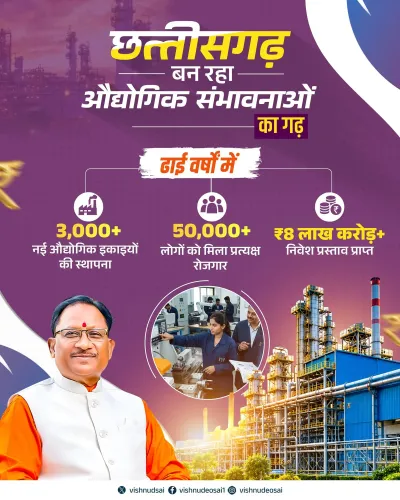
Cumulative investment proposals received over the past 1.5 to 2 years now exceed ₹8.5 lakh crore .
Around 60 industrial projects from earlier rounds have already commenced work in the state.
The event's hashtags explicitly flagged Bastar development , signalling the government's intent to extend industrial growth to conflict-affected southern districts.
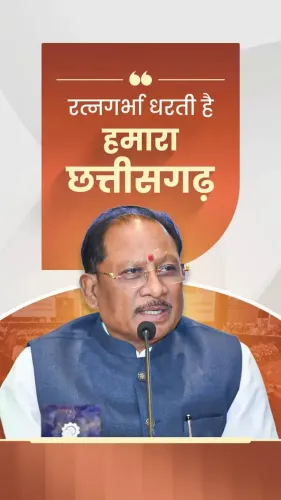
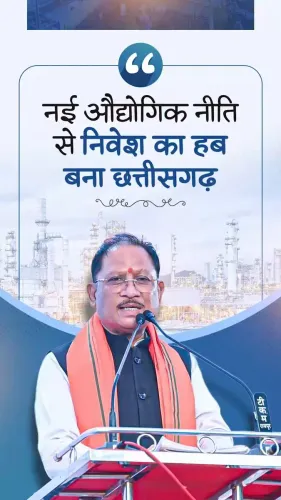
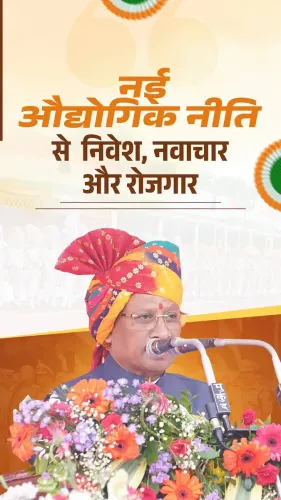
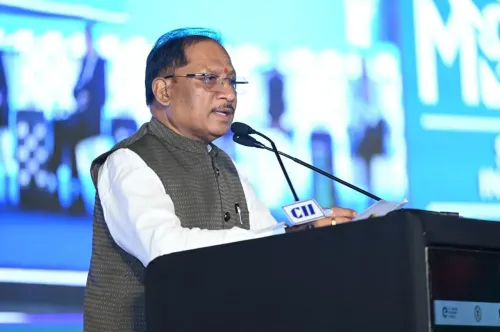
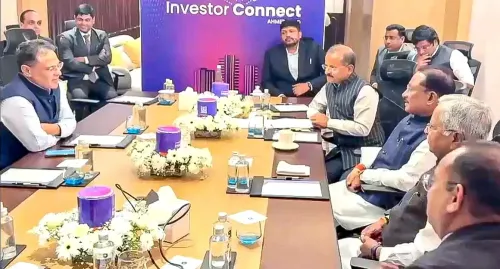
Over one lakh crore rupees in a single afternoon. Chief Minister Vishnu Dev Sai presided over the Chhattisgarh Industry Dialogue Chapter-3 at Nava Raipur on Thursday, 19 November 2026, where the state received investment proposals worth more than ₹1.07 lakh crore — and personally handed Invitation to Invest letters to 24 industry groups.
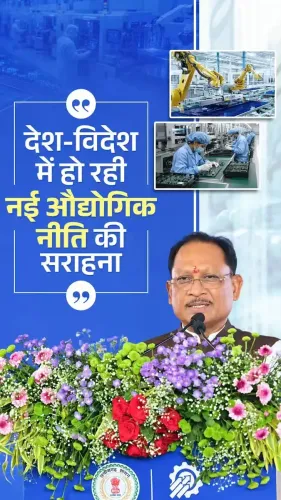
The Chief Minister's Office announced that the proposals are projected to generate employment for approximately 20,000 young people in the state. Speaking at the event, CM Sai framed the moment as validation of a broader strategic bet: 'nai audyogik niti aur nivesh ke anukul vatavaran' — a new industrial policy and investment-friendly environment — that his government has been building since taking office in December 2023.
₹8.5 Lakh Crore and Counting: The Accumulating Pipeline
The Chapter-3 dialogue did not arrive in isolation. CM Sai noted that over the past one-and-a-half to two years, Chhattisgarh has received investment proposals totalling more than ₹8.5 lakh crore in aggregate — a figure that spans domestic and international interest. He added that work has already commenced on approximately 60 industrial projects across the state, signalling that at least a portion of earlier commitments is moving from paper to ground.
Chhattisgarh's pitch to investors rests heavily on its natural endowment: the state sits atop some of India's richest deposits of iron ore, coal, limestone and bauxite, making it a natural anchor for metals, energy and downstream processing industries. The BJP government that came to power after the December 2023 assembly elections identified industrialisation as a centrepiece of its economic agenda, updating the state's industrial policy framework to sharpen ease-of-doing-business incentives.
Invitation Letters as a Signal, Not Just a Symbol
The act of handing Invitation to Invest letters to 24 industry groups is a deliberate political and administrative signal. These letters typically formalise the state's intent to facilitate land, clearances and infrastructure for specific investors — moving a dialogue-stage commitment one step closer to a binding process. For the investors, the letter provides a government-backed anchor for internal approvals and board presentations.
The hashtag #BastarDevelopment in the official post is notable: Bastar, Chhattisgarh's historically conflict-affected southern division, has been a focus of the current government's push to attract investment into areas previously seen as security risks. Its inclusion alongside #InvestChhattisgarh and #ViksitChhattisgarh signals that the investment push is being framed as a tool of regional development, not just aggregate growth.
What Converts Proposals Into Jobs
India's state-level investment summits have a well-documented gap between announced proposals and grounded projects. The real test for Chhattisgarh's ₹1.07 lakh crore Chapter-3 haul will come in subsequent state budget documents and investor follow-up updates — tracking how many of the 24 invited groups proceed to land acquisition, environmental clearance and actual construction. The 60 projects already underway from earlier rounds provide a partial benchmark for the conversion rate the government can credibly claim.
For 20,000 prospective jobs, the arithmetic is unforgiving: proposals must become plants, plants must become payrolls. Chhattisgarh's mineral wealth gives it structural tailwinds. Whether the policy infrastructure matches the resource base is the question every investor in that room on Thursday was quietly answering for themselves.
Point of View
Where headline proposal figures serve as much as political messaging as economic commitments. For the Sai government, the ₹8.5 lakh crore cumulative pipeline — cited alongside 60 projects already underway — is an attempt to demonstrate execution credibility, not just ambition, ahead of budget season. The deliberate inclusion of Bastar in the event's framing is strategically significant: it ties industrial investment to the broader 'Viksit Chhattisgarh' narrative and to security normalisation in a region long viewed as an operational deterrent for investors. The ultimate measure of success will be the employment conversion rate — how many of those 20,000 projected jobs actually materialise within a fiscal cycle.
NationPress
19 Nov 2026
Frequently Asked Questions
What is Chhattisgarh Industry Dialogue Chapter-3?
Chhattisgarh Industry Dialogue Chapter-3 is the third edition of an investor engagement event organised by the Chhattisgarh government in Nava Raipur to attract domestic and international investment into the state.
How much investment did Chhattisgarh receive at the November 2026 industry dialogue?
The state received investment proposals worth more than ₹1.07 lakh crore at the Chapter-3 event held on 19 November 2026, projected to generate about 20,000 jobs.
What is the total investment pipeline for Chhattisgarh in the last two years?
CM Vishnu Dev Sai stated that Chhattisgarh has received investment proposals totalling more than ₹8.5 lakh crore over the past one-and-a-half to two years, with around 60 projects already under execution.
What is an Invitation to Invest letter in India?
An Invitation to Invest letter is a formal document issued by a state government to a prospective investor, signalling the government's intent to facilitate land, clearances and infrastructure support for a specific industrial project.
Why is Bastar being mentioned in Chhattisgarh investment events?
Bastar is Chhattisgarh's historically conflict-affected southern region. The current government has been promoting it as an emerging investment destination as part of its regional development and security normalisation agenda under the 'Viksit Chhattisgarh' framework.