CM Sai: Chhattisgarh draws ₹8 lakh crore in investment bids
Synopsis
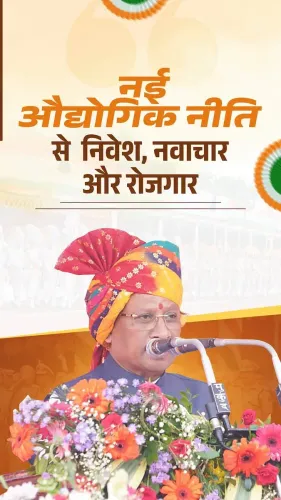
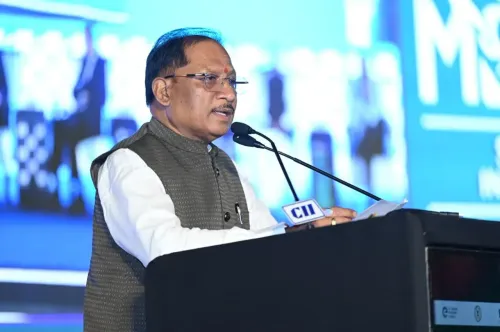
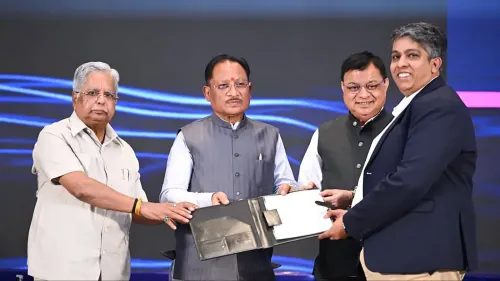
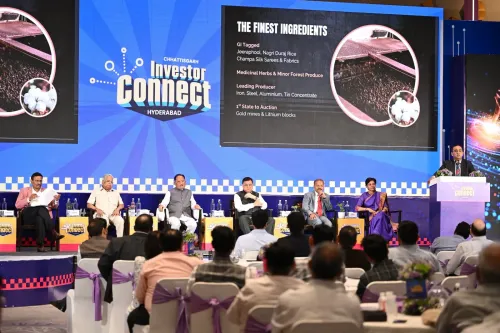
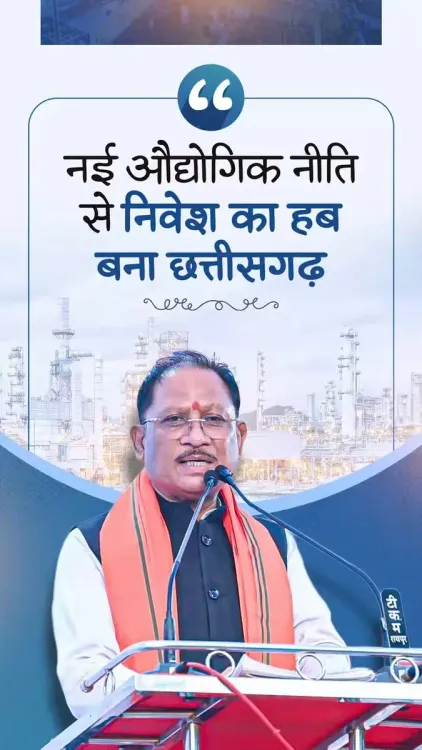
Chhattisgarh Chief Minister Vishnu Deo Sai announced that the state's New Industrial Policy 2024-30 has attracted investment proposals exceeding ₹8 lakh crore, with the government positioning the policy as a major employment driver for the state's youth.
Key Takeaways
₹8 lakh crore in investment proposals have been received under Chhattisgarh's New Industrial Policy 2024-30, according to CM Vishnu Deo Sai.
The policy covers the period 2024 to 2030 and focuses on investment, innovation, employment, and trade promotion.
It succeeds the Chhattisgarh Industrial Policy 2019-2024 , which targeted steel, power, and manufacturing sectors.
CM Sai framed the policy explicitly as an opportunity engine for Chhattisgarh's youth .
The policy aligns with the national Make in India initiative encouraging states to attract domestic and foreign capital.
Conversion of proposals into operational projects and actual employment figures remain the key metrics to watch.
Eight lakh crore rupees. That is the headline number Chhattisgarh Chief Minister Vishnu Deo Sai is putting forward as proof that the state's New Industrial Policy 2024-30 is already reshaping the investment map of central India — and the pitch is aimed squarely at the state's youth.
What the New Industrial Policy 2024-30 promises
Unveiled to cover the period 2024 to 2030, the policy is built around four pillars: investment attraction, innovation, employment generation, and trade promotion. CM Sai stated on 30 September 2026 that investment proposals worth more than ₹8 lakh crore have already flowed in under its framework — a figure the state government is presenting as a signal of industrial momentum. 'Yuvaon ke liye rojgar ke naye avsar srujit ho rahe hain' ('New employment opportunities are being created for the youth'), he wrote, framing the policy explicitly as a generational dividend.
Chhattisgarh's industrial arc: from minerals to manufacturing
Chhattisgarh sits atop some of India's richest mineral belts — coal, iron ore, bauxite — and successive governments have tried to translate that geological luck into factory floors and payrolls. The previous Industrial Policy 2019-2024 targeted core sectors such as steel, power, and manufacturing. The 2024-30 edition widens that aperture, signalling a push toward innovation and diversified trade alongside the traditional heavy-industry base.
The update also slots neatly into the national Make in India framework, which has encouraged states to compete aggressively for domestic and foreign capital with tailored incentive packages. For a state that became BJP-governed again in December 2023 under Sai's leadership, landing marquee investment numbers early in the term carries clear political weight — but the economic logic stands independently of the politics.
The gap between proposals and payrolls
Investment proposals and actual deployed capital are two very different things — and that gap is the story to watch. Across Indian states, intent-to-invest figures announced at summits and policy launches routinely outpace ground-level project commissioning. The real test for Chhattisgarh's ₹8 lakh crore pipeline will be how many projects break ground, how quickly, and how many jobs they generate for the youth the policy explicitly targets. The state government's own employment-generation data releases in the coming months will be the scoreboard.
If even a fraction of that investment converts into operational capacity, it would mark a significant structural shift for a state whose economy has historically leaned on natural-resource extraction rather than broad-based manufacturing employment.
Point of View
Not merely a resource-extraction state. Positioning the policy around youth employment is politically astute — Chhattisgarh has a young demographic and high aspirational pressure. However, the credibility of such headline numbers in Indian state politics depends almost entirely on the conversion rate from proposal to production, and the government will face scrutiny on that metric as the policy's mid-term arrives. If the pipeline delivers, it reshapes Chhattisgarh's industrial identity; if it stalls, the ₹8 lakh crore figure becomes a liability.
NationPress
1 Oct 2026
Frequently Asked Questions
What is Chhattisgarh's New Industrial Policy 2024-30?
It is a state government policy covering 2024 to 2030, designed to attract investment, promote innovation, generate employment, and boost trade in Chhattisgarh.
How much investment has Chhattisgarh received under the new industrial policy?
Chief Minister Vishnu Deo Sai stated that investment proposals worth more than ₹8 lakh crore have been received under the New Industrial Policy 2024-30.
Who is Vishnu Deo Sai and when did he become Chhattisgarh CM?
Vishnu Deo Sai is a BJP leader who became Chief Minister of Chhattisgarh in December 2023 after the party's victory in the state assembly elections.
How does Chhattisgarh's 2024-30 policy differ from the previous industrial policy?
The previous policy (2019-2024) focused primarily on core sectors like steel, power, and manufacturing, while the 2024-30 policy broadens its scope to include innovation and trade promotion alongside traditional heavy industry.
Will the ₹8 lakh crore investment proposals actually create jobs in Chhattisgarh?
Investment proposals represent intent, not guaranteed outcomes. The actual employment impact will depend on how many projects are commissioned — a figure the state government is expected to report as the policy progresses.