Is India's Chabahar Port Project Navigating Troubled Waters Amid US Warnings?
Synopsis
As India navigates rising tensions from US tariffs on Iranian trade, the future of the Chabahar port project hangs in the balance. Will this vital connection to Afghanistan and Central Asia be compromised amid geopolitical challenges?
Key Takeaways
Chabahar Port is crucial for India's trade with Afghanistan and Central Asia .
US tariffs pose potential risks to Indian operations.
The 10-year agreement with Iran aims to enhance the port's capabilities.
Further sanctions may complicate financing and insurance options.
New Delhi aims to strengthen regional ties amid geopolitical challenges.
New Delhi, Jan 13 (NationPress) In light of US President Donald Trump's recent caution that nations engaging in trade with Iran might incur an additional 25% tariff, the future of operations at Chabahar Port could be under threat. India stands as one of Iran's leading trade partners, alongside China, Turkey, the UAE, Pakistan, and Armenia.
The proposed tariff would exacerbate previously established US duties, including a reciprocal 25% trade tariff and an identical punitive measure targeting the purchase of Russian oil. This increase follows the sanctions placed on Moscow's oil in response to the ongoing war in Ukraine.
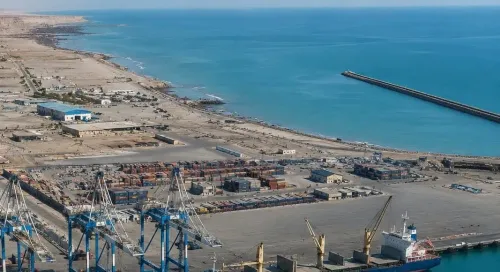
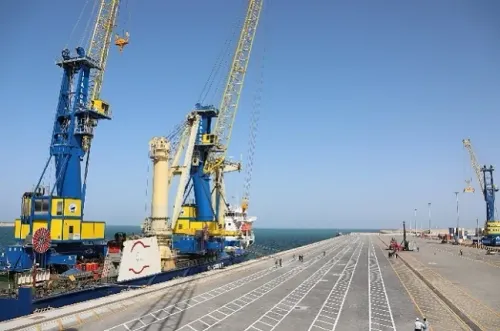
Consequently, any impact on operations at Chabahar could represent a significant strategic risk for India, as this project serves as New Delhi's counter to Pakistan's Gwadar Port, which was developed with Chinese assistance.
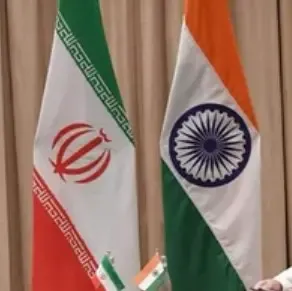
In May 2024, India and Iran inked a decade-long agreement to enhance the Shahid Beheshti terminal. However, the US Secretary of State has withdrawn the sanctions exception granted in 2018 under the Iran Freedom and Counter-Proliferation Act (IFCA) for projects aiding Afghanistan's reconstruction and economic growth, effective September 29 of the previous year.
India did receive a brief exemption, which permits ongoing operations and development until April of this year.
In the meantime, New Delhi has been involved in discussions with Washington regarding sanctions and trade negotiations, thus allowing continued terminal development without immediate repercussions from the United States.
This port is vital for India's access to Afghanistan and Central Asia, facilitating trade and connectivity while bypassing Pakistan.
The extension is perceived as a diplomatic achievement for India, especially against the backdrop of the broader tensions resulting from US sanctions on both Iran and Russia.
India’s $500 million investment and its decade-long management agreement for the Shahid Beheshti terminal now face potential secondary sanctions, which could complicate trade routes to Afghanistan and Central Asia.
A US Congressional research report from August last year indicates that Washington's sanctions on Iran aim to deter, constrain, and prompt changes in the Iranian regime's adversarial behavior since the 1979 Revolution.
It noted that the Carter Administration initially imposed sanctions to demand the release of US Embassy personnel held hostage in 1979, with Congress and the executive branch later expanding these sanctions during the 1980s and 1990s.
Additionally, the 118th Congress has enacted numerous Iran-related sanctions, primarily as part of an emergency national security measure following Tehran's unprecedented attack against Israel in April 2024.
Among these measures is legislation directing the President to impose sanctions on port operators, refineries, and other entities related to Iranian oil.
If the White House opts to enforce this authority decisively, Indian companies involved in Chabahar could encounter restrictions in US markets, resulting in uncertainty regarding financing and insurance. Global financial institutions may shy away from transactions associated with Chabahar, potentially hindering port operations.
Moreover, with Afghanistan's border with Pakistan intermittently closed due to skirmishes, access to maritime trade through Chabahar presents a viable alternative that could also be disrupted, impacting humanitarian supplies.
For New Delhi, further sanctions and punitive tariffs could complicate ongoing trade discussions with Washington. The current waiver, effective until April 2026, has provided India with an opportunity to sustain operations and evaluate future developments at Chabahar. New Delhi is anticipated to leverage this period to strengthen regional connections and infrastructure investments crucial for India's economic and geopolitical strategy in Central Asia and beyond.
Point of View
The Chabahar Port project represents a crucial investment for India. The interplay of international sanctions and regional trade dynamics necessitates careful navigation to safeguard India's interests and maintain its strategic foothold in Central Asia.
NationPress
3 Oct 2026
Frequently Asked Questions
What is the significance of Chabahar Port for India?
Chabahar Port is pivotal for India's access to Afghanistan and Central Asia, allowing trade routes that bypass Pakistan.
How do US sanctions impact India's operations at Chabahar?
US sanctions could impose additional tariffs and restrictions on Indian companies involved in Chabahar, complicating operations and financing.
What were the terms of India's agreement with Iran regarding Chabahar?
India signed a 10-year agreement in May 2024 to develop the Shahid Beheshti terminal at Chabahar.
What are the potential consequences of further sanctions on Chabahar?
Further sanctions could hinder trade operations, limit financing options, and disrupt humanitarian access for Afghanistan.
What does the current waiver for Chabahar operations entail?
The waiver allows India to continue operations at Chabahar until April 2026, providing a window to assess future developments.