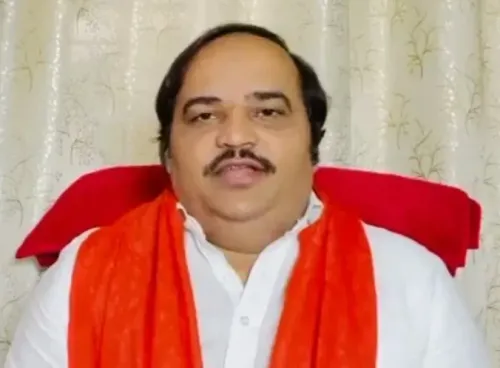
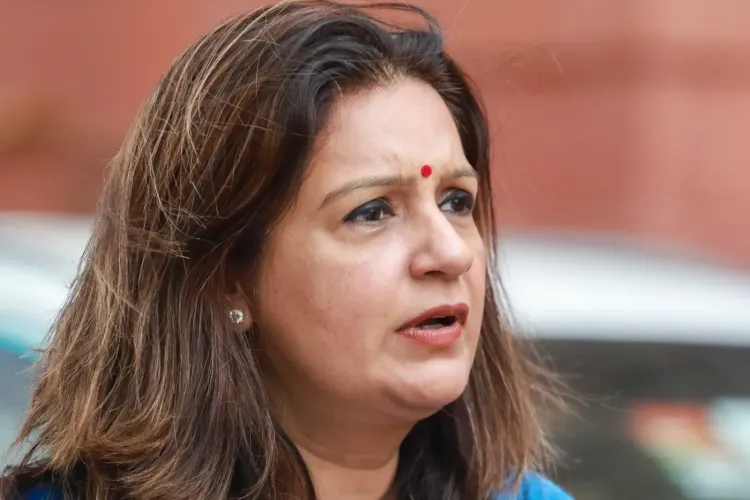
Priyanka Chaturvedi breaks with Sanjay Raut over Albania protest remarks
Synopsis
In a rare intra-party split, Shiv Sena (UBT) MP Priyanka Chaturvedi publicly broke with colleague Sanjay Raut after he posted on X that India should learn from Albanians burning down their Supreme Court. Her pushback — forceful and on the record — signals that the debate over political language and democratic norms is cutting right through the opposition itself.
Key Takeaways
Priyanka Chaturvedi publicly criticised Sanjay Raut 's X post invoking the burning of Albania's Supreme Court on 20 October 2026 .
Raut had written that 'all countries should learn a lesson from these events — especially India,' referencing Albanian protesters attacking courts, parliament, and government offices.
Chaturvedi said suggesting violence could happen in India 'is wrong, and it weakens our democracy and Constitution.' BJP leaders accused Raut of promoting anarchy and demanded an apology.
Chaturvedi cited peaceful constitutional protests — including a Supreme Court challenge over the Election Commission — as the correct path for political grievances.
Shiv Sena (Uddhav Balasaheb Thackeray) leader Priyanka Chaturvedi on Tuesday, 20 October publicly distanced herself from party MP Sanjay Raut's remarks invoking the burning of Albania's Supreme Court, saying his suggestion that India should draw lessons from such violence was inappropriate and posed a direct threat to the country's democracy and Constitution.
Chaturvedi's rebuke is notable as an intra-party dissent — a senior Shiv Sena (UBT) leader openly challenging the position of one of the party's most prominent voices in Parliament.
What Raut Said
In a post on X, Raut had written: 'The people of Albania have burned down the Supreme Court. The people were enraged because the Supreme Court was helping corrupt prime ministers. The protesting public has also attacked the parliament and government offices, as well as the ministers' homes. All countries should learn a lesson from these events. Especially India.'
The remarks triggered an immediate political storm, drawing sharp criticism from Bharatiya Janata Party (BJP) leaders who accused Raut of promoting anarchy and demanded a public apology.
Chaturvedi's Counter-Argument
Chaturvedi argued that the real lesson from the Albanian unrest was the opposite of what Raut had implied — that institutions must be respected and law and order preserved, not dismantled through mob action.
'The only lesson we should learn is that we must not take the justice system and law and order into our own hands and should avoid such violent protests. Violence achieves nothing and goes against the interests of the country. Whether in Bangladesh, Nepal, Albania or France, these incidents begin with student protests, after which bad-faith actors get involved, leading to such incidents,' she said.
Democratic Accountability Through Peaceful Means
The Shiv Sena (UBT) leader drew a distinction between legitimate political agitation and violence, pointing to her own party's track record of constitutional protest. She cited a peaceful demonstration that she said led to the removal of Dharmendra Pradhan from a position, and the party's ongoing legal challenge in the Supreme Court seeking accountability from the Election Commission of India and the resignation of Gyanesh Kumar.
'This fight is for our country's Constitution and democracy. Now, our fight to ensure that the Election Commission is not undermined and to seek the resignation of Gyanesh Kumar is being pursued in the Supreme Court,' Chaturvedi said.
BJP Escalates Criticism of Raut
BJP leaders seized on Raut's post, framing it as an endorsement of political violence and demanding that he retract the statement. The party accused the opposition MP of encouraging anarchy at a time of heightened political tension. Raut had not issued a clarification or retraction as of the time of this report.
Why It Matters
The episode underscores a recurring tension within opposition politics in India: the line between sharp anti-establishment rhetoric and statements that can be interpreted as endorsing extrajudicial action. Chaturvedi's willingness to call out a senior colleague publicly signals that the debate over political language is not confined to the ruling party versus the opposition — it is live within the opposition bloc itself. The exchange is also likely to fuel a broader conversation about the responsibilities of elected representatives when commenting on foreign political unrest in relation to Indian institutions.
Point of View
And invoking foreign unrest is a well-worn rhetorical device. But Chaturvedi's public rebuke exposes the real risk: when an elected MP appears to hold up the torching of a Supreme Court as a lesson for India, it hands the BJP a readymade narrative about the opposition's relationship with institutions. Chaturvedi is doing damage control, but the fact that this correction had to come from within the same party, rather than as a clarification from Raut himself, is the more telling detail. The episode also raises a question mainstream coverage glosses over: does the Shiv Sena (UBT) have a coherent, shared position on the limits of political agitation — or is the party's messaging simply whatever its most prominent voices say on a given day?
NationPress
20 Oct 2026
Frequently Asked Questions
What did Sanjay Raut say about Albania that sparked the controversy?
Raut posted on X that Albanian protesters had burned down the Supreme Court and attacked parliament and government offices because the court was allegedly protecting a corrupt prime minister, and that 'all countries should learn a lesson from these events — especially India.' The post drew immediate criticism from BJP leaders and, unusually, from within his own party.
Why did Priyanka Chaturvedi criticise her own party colleague?
Chaturvedi argued that endorsing or drawing positive lessons from violent protests abroad is incompatible with defending India's democracy and Constitution. She stressed that political grievances — including her party's own fights against the ruling establishment — should be pursued through peaceful, lawful means, not through references to mob violence.
What has the BJP said about Sanjay Raut's remarks?
BJP leaders accused Raut of promoting anarchy and demanded a public apology, framing his post as an attempt to encourage extrajudicial action against Indian institutions. As of the time of this report, Raut had not issued a retraction.
What examples of peaceful protest did Chaturvedi cite?
She referenced a Shiv Sena (UBT) protest that she said led to the removal of Dharmendra Pradhan from a position, and the party's ongoing Supreme Court petition seeking accountability from the Election Commission and the resignation of Gyanesh Kumar — both cited as examples of constitutional agitation.
What is the broader significance of this intra-party split?
The episode is significant because it represents a senior opposition figure publicly challenging a colleague's rhetoric, highlighting that debates over the language of political dissent are not restricted to the ruling party versus the opposition. It also draws attention to questions about what elected representatives should and should not say when invoking foreign unrest in relation to Indian institutions.