Is Chennai Ready for the Return of Double-Decker Buses After 17 Years?
Synopsis
Chennai is on the brink of welcoming back double-decker buses after 17 years, with plans for 20 electric buses as part of a sustainability initiative. This revival reflects a growing trend in public transport, generating excitement among residents. With a focus on modern infrastructure and commuter-friendly solutions, this initiative is poised to transform city travel.
Key Takeaways
Chennai is set to reintroduce double-decker buses after over 17 years.
The MTC plans to implement 20 air-conditioned electric buses.
The initiative aligns with sustainable public transport goals.
Fare collection will remain with the MTC.
Operational routes will be limited due to height restrictions.
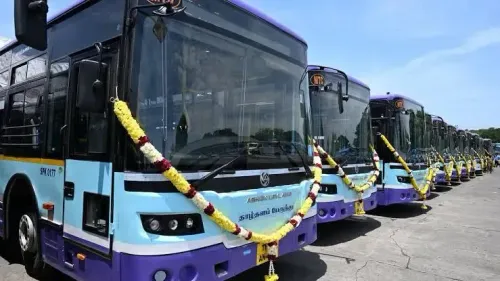
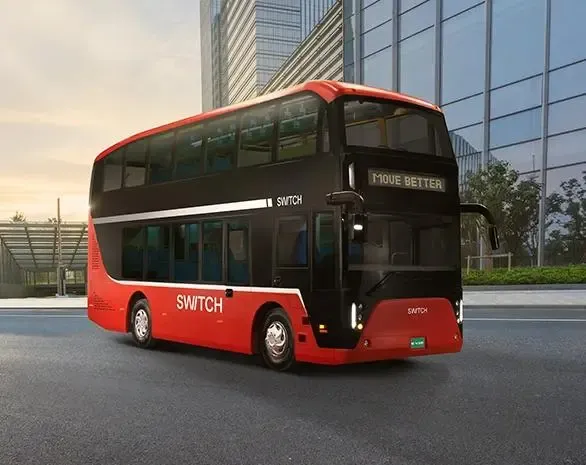
Chennai, Jan 8 (NationPress) The city of Chennai is preparing for the revival of double-decker buses after more than 17 years, as the Metropolitan Transport Corporation (MTC) has devised a plan to incorporate 20 air-conditioned electric double-decker buses into its fleet electrification initiative.
A tender released by the MTC on Thursday outlines the procurement of these buses under the Gross Cost Contract (GCC) model.
Interested bidders are invited to a pre-bid meeting on January 13 at 3 p.m. Within the GCC framework, the selected contractor will be responsible for owning, operating, and maintaining the buses, while the MTC will compensate based on the kilometers traveled.
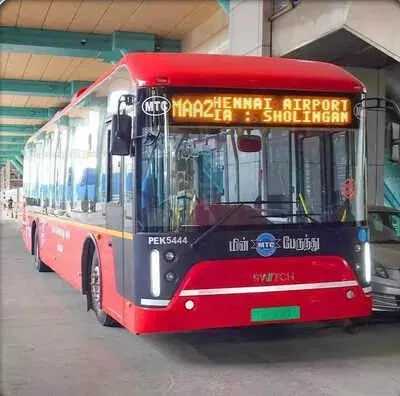
However, fare collection and revenue will remain with the transport organization. This strategic move is a notable step towards a modern and sustainable public transport system in the city and has already sparked significant public enthusiasm. The excitement was recently ignited when an electric double-decker bus produced by Switch Mobility was spotted on the streets of Chennai, with images and videos widely shared on social media.
Officials have clarified that the new buses will not operate throughout the entire city network. Due to their height, double-decker buses necessitate sufficient vertical clearance, making them impractical for routes with low bridges, overhead power lines, flyovers, or other structural barriers.
Consequently, services will be limited to specific corridors that satisfy safety and infrastructure criteria. This initiative aligns Chennai with similar advancements in other Indian cities.
Mumbai launched the country’s first air-conditioned electric double-decker buses in January 2023, while both Hyderabad and Bhubaneswar have adopted such services in recent years.
Thiruvananthapuram operates open-top double-decker buses primarily for tourism purposes. All 20 buses proposed for Chennai are designed, developed, and manufactured by a private company.
This company previously conducted a trial run of an electric double-decker bus in the city in August 2023, following an announcement by the Transport Minister regarding the feasibility of operating double-decker buses, particularly on selected tourist routes.
Chennai has a rich history with double-decker buses that dates back to the 1970s. Although they were discontinued in the 1980s, the iconic buses made a short-lived return in 1997, operating on the High Court–Tambaram route until 2008 when they were withdrawn again. The current proposal, according to officials, aims to rejuvenate that legacy in a cleaner and more commuter-friendly electric form.
Point of View
The revival of double-decker buses in Chennai signals a crucial step towards eco-friendly public transport. This initiative not only resonates with the city's historical legacy but also aligns with national sustainability goals. It showcases the MTC's commitment to enhancing urban mobility while embracing modern technology. Such developments are essential for fostering a greener future.
NationPress
10 Oct 2026
Frequently Asked Questions
When will the double-decker buses be operational?
The timeline for the operational status of the double-decker buses will depend on the completion of the procurement process, which includes a pre-bid meeting scheduled for January 13.
How many buses are being introduced?
The MTC plans to introduce a total of 20 air-conditioned electric double-decker buses.
Why were double-decker buses discontinued in the past?
Double-decker buses were discontinued due to challenges related to height clearance and infrastructure limitations.
What is the significance of the Gross Cost Contract (GCC) model?
Under the GCC model, the contractor is responsible for owning and maintaining the buses, while the MTC pays based on kilometers operated, allowing for better resource management.
Are these buses suitable for all routes in Chennai?
No, the double-decker buses will operate only on selected corridors that meet safety and infrastructure requirements.