Chennai's Unchecked Urbanization Threatens Water Security: Vital Report
Synopsis
Chennai's rapid urban expansion is threatening its water resources according to a new report. The loss of traditional water storage systems could lead to alarming shortages in the coming years, necessitating immediate action for sustainable water management.
Key Takeaways
Unplanned urbanization is stressing Chennai's water resources.
Traditional water storage systems are rapidly disappearing.
Water demand is expected to increase significantly by 2050.
The region's economic stability is at risk due to water insecurity.
Immediate action is required to enhance water management strategies.
Chennai, March 4 (NationPress) The uncontrolled and spontaneous urban expansion in Chennai is exerting significant strain on the water resources within the Chennai river basin, raising alarms regarding the city’s future water sustainability. A newly released data analysis indicates that the gradual elimination of traditional water storage methods could lead to severe water shortages in the forthcoming decades.
This research, conducted by the Tamil Nadu Green Climate Company (TNGCC) in partnership with the Council on Energy, Environment and Water (CEEW), emphasizes that the surge in urban development is jeopardizing the natural water management systems that have historically sustained the area.
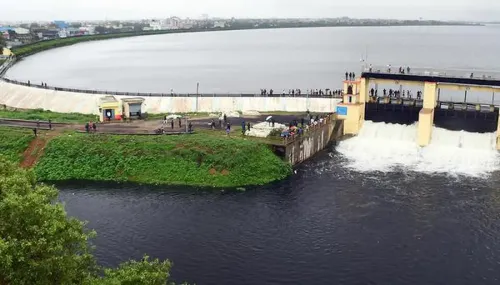
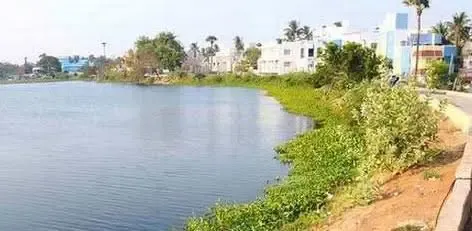
The results stress the immediate necessity for improved planning and preservation of water bodies. The assessment reveals that Chennai has already forfeited a significant fraction of its traditional tank storage capabilities due to urban sprawl and alterations in land use. The diminishing number of these tanks has hampered the basin’s capacity to collect rainwater and manage water distribution during dry spells.
Additionally, the vast network of tank storage in surrounding districts is also at risk as urbanization persists. Without the protection of these water bodies, the region may confront a more severe water crisis despite experiencing seasonal rainfall.
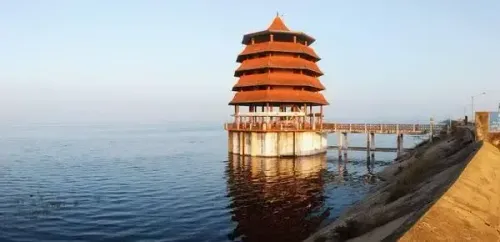
The degradation of interconnected tanks and water bodies has weakened the natural hydrological resilience of the basin. Historically, these tanks have been vital for collecting rainwater and distributing it for agricultural, domestic, and groundwater replenishment purposes. Their gradual decline has diminished the region’s capacity to effectively manage seasonal rainfall and provide a buffer against drought conditions.
The assessment also points to increasing strain on sewage treatment facilities within the basin. The current treatment infrastructure is struggling to handle the escalating generation of wastewater, resulting in untreated sewage contaminating rivers and canals. This trend has begun to degrade the quality of both surface water and groundwater across various sectors of the basin.
The Chennai River basin, encompassing Chennai, Chengalpattu, Kancheepuram, Ranipet, and Tiruvallur districts, contributes nearly 33% of Tamil Nadu’s economic output, making water security a crucial economic issue for the region.
Utilizing Water Evaluation and Adaptation Planning modeling, the report forecasts that total water demand in the basin will increase from 2,479 MCM in 2025 to 2,728 MCM by 2050 under a business-as-usual scenario.
Agriculture is anticipated to remain the predominant consumer, accounting for nearly 60% of total demand by 2050, while the growth in population will continue to elevate domestic water needs.
The study suggests that the disparity between water supply and demand is likely to grow significantly over the next two decades. Should current trends persist, the basin could face difficulties in meeting the escalating demands of agriculture, households, and industries.
Risk mapping performed as part of the assessment identifies specific river sub-basins within the Chennai area that are especially vulnerable to water-related stress.
Factors such as declining groundwater quality, exposure to coastal conditions, and reliance on rainfall-dependent agriculture have been recognized as primary contributors to this vulnerability.
Experts involved in the study recommend that enhancing water-use efficiency and expanding water recycling initiatives will be essential for addressing the future water requirements of the basin. Strategies such as increasing micro-irrigation coverage and advocating for the reuse of treated wastewater could significantly alleviate the escalating water deficit in the region.
Point of View
It is evident that Chennai's unchecked urban growth poses a serious threat to its water resources, which are essential for both economic stability and public health. Immediate action is required to manage and conserve these vital resources effectively.
NationPress
5 Oct 2026
Frequently Asked Questions
What is causing the water crisis in Chennai?
The water crisis in Chennai is primarily attributed to rapid and unplanned urbanization, which has led to the loss of traditional water storage systems.
How much water demand is projected to increase by 2050?
Water demand in the Chennai river basin is projected to rise from 2,479 MCM in 2025 to 2,728 MCM by 2050.
What role do traditional tanks play in water management?
Traditional tanks are crucial for collecting rainwater, providing irrigation, domestic water supply, and recharging groundwater.
What measures can be taken to improve water security?
Enhancing water-use efficiency, expanding water recycling, and increasing micro-irrigation coverage are essential measures for improving water security.
Which districts are included in the Chennai river basin?
The Chennai river basin includes Chennai, Chengalpattu, Kancheepuram, Ranipet, and Tiruvallur districts.