Chhattisgarh Adds 360 Paddy Centres, Pays ₹3,100 Per Quintal
Synopsis
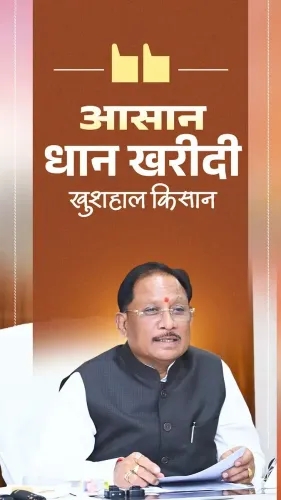
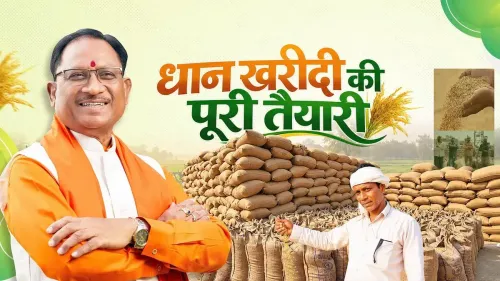
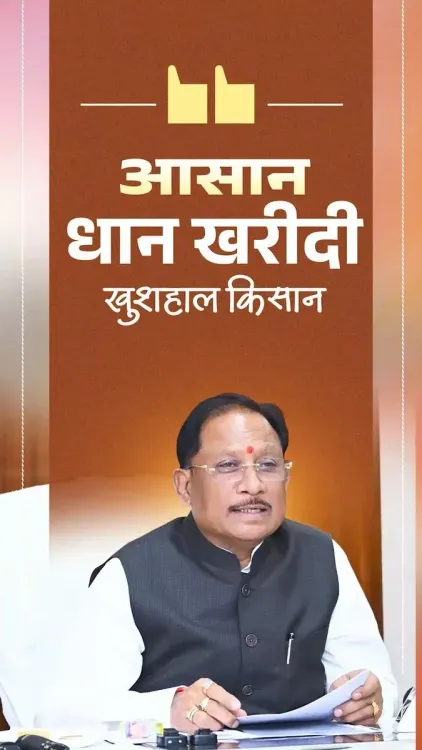
The Chhattisgarh government under CM Vishnu Deo Sai has announced paddy procurement at ₹3,100 per quintal and the launch of 360 new purchase centres, aiming to cut logistics barriers and deliver fair prices to farmers during the kharif season.
Key Takeaways
The Chhattisgarh government has set paddy procurement at ₹3,100 per quintal for the current season.
360 new paddy purchase centres have been launched to improve accessibility for farmers across the state.
CM Vishnu Deo Sai , who took office in December 2023 , is continuing the state's tradition of supplementing the central MSP with a higher state-backed rate.
The expansion of purchase centres directly targets the logistics problem that forces farmers into distress sales to local traders.
Chhattisgarh is one of central India's major paddy-producing states, making procurement infrastructure a high-stakes policy lever.
Paddy farmers in Chhattisgarh are getting a bigger safety net this kharif season — a procurement price of ₹3,100 per quintal and 360 new purchase centres designed to bring the government buyer closer to the farm gate. The Chief Minister's Office of Chhattisgarh announced the measures on Wednesday, 28 October 2026, framing them as part of Chief Minister Vishnu Deo Sai's commitment to fair returns and easier access for growers across the state.
₹3,100 per quintal — what the rate means for farmers
The procurement rate of ₹3,100 per quintal places the state-level price above the central Minimum Support Price, continuing a well-established Chhattisgarh tradition of supplementing the national floor with a state-backed premium. For small and marginal farmers — who make up the bulk of the state's paddy growers — that gap between the MSP and the state rate can translate directly into improved household income at the end of a long growing season.
Chhattisgarh is one of central India's most significant rice-producing states, and successive governments have leaned on enhanced procurement as a primary tool to keep distress sales in check. The BJP-led Sai government, which took office in December 2023, is continuing that arc — but with a notably expanded physical footprint of purchase points.
360 new centres: closing the distance between harvest and payment
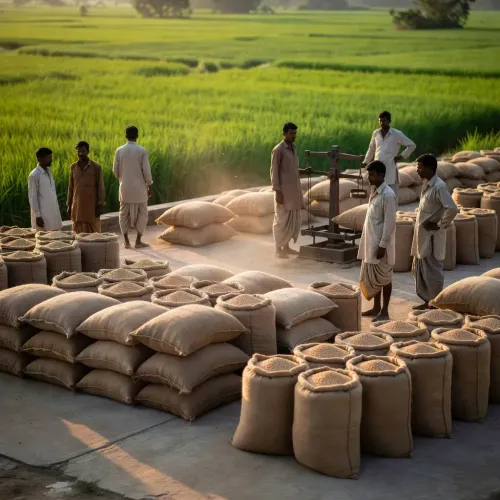
The addition of 360 new paddy procurement centres this season directly targets a structural problem: when collection points are too far away, farmers either accept lower prices from local traders or absorb the logistics cost themselves, eroding the benefit of any support price. Placing more centres within reach of villages removes that leverage from middlemen.
The CMO's post used the phrase 'किसानों को अपनी उपज बेचने में अधिक सुविधा मिले' — 'so that farmers get more convenience in selling their produce' — underscoring that the expansion is as much about logistics as it is about price. Across India's rice-belt states, the distance to the nearest procurement centre has long been a quiet but decisive factor in how much of the headline support price a farmer actually captures.
Sai government's agricultural positioning ahead of the procurement season
The announcement lands ahead of the kharif procurement window, the period when paddy harvested over the preceding months moves from fields to mandis. Announcing the rate and infrastructure together, before the rush, gives farmers time to plan — and signals that the state machinery is ready. The hashtag #किसान_हितैषी_साय_सरकार ('farmer-friendly Sai government') attached to the post underlines that the BJP administration views agrarian support as a central plank of its political identity in the state.
Whether the 360 new centres are fully operational at peak arrival time, and whether the procurement machinery absorbs the added volume without bottlenecks, will be the real test of the policy's reach when farmers begin queuing up with their harvests.
Point of View
Still consolidating its footing after the December 2023 victory, farmer welfare optics ahead of the procurement season serve both policy and political purposes. The addition of 360 centres is a harder, more testable commitment than a price announcement alone — it will either validate the government's execution capacity or expose gaps in last-mile infrastructure when the harvest arrives. Across India's rice-bowl states, this pattern of competitive procurement politics signals that agrarian support is far from a settled issue.
NationPress
29 Oct 2026
Frequently Asked Questions
What is the paddy procurement rate in Chhattisgarh in 2026?
The Chhattisgarh government has announced a paddy procurement rate of ₹3,100 per quintal for the current kharif season, which is above the central government's Minimum Support Price.
How many new paddy purchase centres has Chhattisgarh opened in 2026?
360 new paddy procurement centres have been launched by the Chhattisgarh government this season to improve accessibility for farmers selling their produce.
Who is the Chief Minister of Chhattisgarh overseeing farmer welfare schemes?
Vishnu Deo Sai is the Chief Minister of Chhattisgarh, heading the BJP-led state government since December 2023 . He has championed paddy procurement and farmer support as key policy priorities.
Why does Chhattisgarh pay more than the central MSP for paddy?
Chhattisgarh governments have long supplemented the central Minimum Support Price with a higher state procurement rate to protect farmers — especially small and marginal growers — from distress sales to private traders.
When does kharif paddy procurement begin in Chhattisgarh?
Kharif paddy procurement in Chhattisgarh typically begins in the post-harvest period following the main growing season. The government announced the ₹3,100 rate and the 360 new centres ahead of this window to give farmers time to plan.