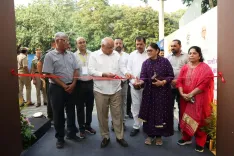
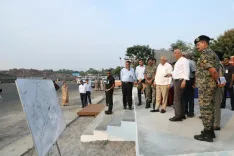
Chhattisgarh CMO holds Shauryanjali tribute in Raipur

Synopsis
The Chief Minister's Office of Chhattisgarh organised the Shauryanjali programme in Raipur on 17 October 2026, a solemn state ceremony honouring security personnel who died in the line of duty, streamed live for families across the state.
Key Takeaways
The Chief Minister's Office of Chhattisgarh held the Shauryanjali programme in Raipur on 17 October 2026 .
The event is a formal state tribute to security personnel killed in the line of duty.
The ceremony was broadcast live, extending reach to families across the state.
Chhattisgarh has a long history of internal security challenges, particularly in the Bastar region.
Such programmes often precede official government orders on posthumous honours and ex-gratia payments.
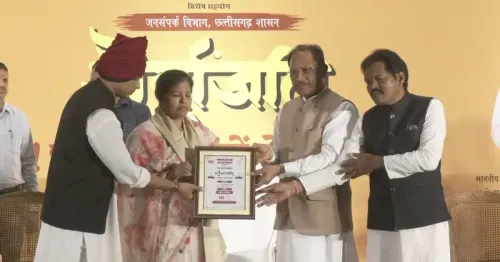
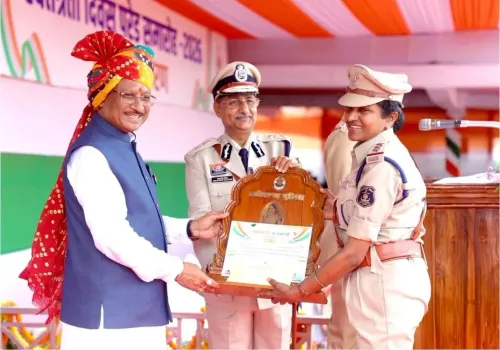
Raipur stood in solemn remembrance on Saturday, 17 October 2026, as the Chief Minister's Office of Chhattisgarh convened the Shauryanjali programme — a formal state ceremony to honour security personnel who laid down their lives in the line of duty.
What the Shauryanjali ceremony represents
The word Shauryanjali — a compound of shaurya (valour) and anjali (offering) — captures exactly what such events are designed to do: transform grief into a dignified public act of remembrance. State governments across India, particularly those managing internal security pressures, have long used these ceremonies to acknowledge the sacrifice of their uniformed personnel and to signal to families that the state has not forgotten.
Chhattisgarh, which has been on the frontlines of India's longest-running internal conflict in its Bastar region, has particular reason to hold such observances. Dozens of police, paramilitary, and district force personnel have been killed over the years in encounters across the state's southern forests.
Raipur as the site of remembrance
Holding the event in Raipur, the state capital, elevates the ceremony beyond a local tribute — it becomes an act of governance, a public record of the state's commitment to those who serve. The Chief Minister's Office streamed the programme live, broadening access for families and communities across the state who could not attend in person.
Such ceremonial observances also carry a practical dimension: they frequently precede or accompany formal government orders on posthumous honours, promotions, and ex-gratia payments to next-of-kin — announcements that families await with quiet urgency.
A pattern of state-led military remembrance
Chhattisgarh is far from alone in this practice. Shauryanjali-style events have become part of the ceremonial calendar for several Indian states, a recognition that the human cost of internal security operations demands periodic, formal acknowledgement at the highest level of government. The consistency of the format — state capital, official CMO presence, public broadcast — underscores how institutionalised these tributes have become.
The families of fallen personnel, for whom no ceremony truly fills the void, nonetheless often describe these events as a rare moment when the state looks them in the eye.
What follows in the coming days — any official orders on posthumous recognition or financial relief — will reveal whether this ceremony was a prelude to action or a solemn standalone tribute.
Point of View
In public and on record, that it counts its fallen. For Chhattisgarh, whose security landscape has demanded sustained sacrifice from its personnel, such observances carry weight beyond ritual. Politically, they bind the government to a constituency of bereaved families who watch closely for what follows the ceremony — concrete support, not just symbols. The live broadcast dimension reflects a broader trend of state administrations using digital reach to make institutional remembrance inclusive.
NationPress
17 Oct 2026
Frequently Asked Questions
What is the Shauryanjali programme in Chhattisgarh?
Shauryanjali is a formal state ceremony organised by the Chhattisgarh government to honour security personnel who died in the line of duty. The word combines 'shaurya' (valour) and 'anjali' (offering), symbolising a tribute to fallen heroes.
Where was the Shauryanjali event held?
The Shauryanjali programme on 17 October 2026 was held in Raipur, the capital of Chhattisgarh, and was organised by the Chief Minister's Office.
Why does Chhattisgarh hold Shauryanjali ceremonies?
Chhattisgarh has faced prolonged internal security challenges, especially in the Bastar region. The state government holds Shauryanjali events to formally acknowledge the sacrifice of police and paramilitary personnel killed in the line of duty.
What happens after a Shauryanjali ceremony in Chhattisgarh?
Such ceremonies often precede official government orders on posthumous honours, promotions, and ex-gratia financial payments to the families of fallen security personnel.
How can families watch the Shauryanjali programme?
The Chief Minister's Office of Chhattisgarh streamed the Shauryanjali programme live, allowing families and citizens across the state to participate remotely.