CM Chhattisgarh: India Must Meet Global Supply Chain Expectations
Synopsis
The Chhattisgarh Chief Minister's Office on 10 June 2026 declared India's share in global growth is rising and called on the country to meet global expectations as a trusted supply-chain partner — echoing a decade of central policy from Make in India to PLI schemes.
Key Takeaways
The Chhattisgarh CMO posted on 10 June 2026 that India's share in global economic growth is continuously rising.
The statement calls on India to adopt global parameters, global competition, and a global perspective in its economic outlook.
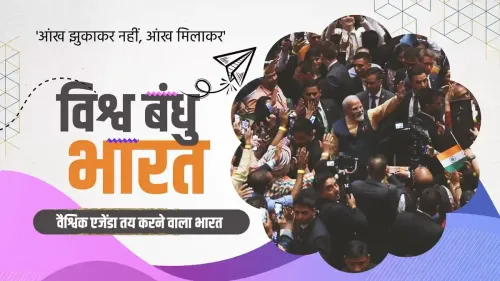
The world is described as seeking solutions from India and viewing it as a reliable partner in global supply chains .
The message aligns with central schemes including Make in India (2014) , Atmanirbhar Bharat (2020) , and PLI schemes across 14 sectors .
Chhattisgarh is a key state for steel, minerals, and food processing, making it a direct stakeholder in India's supply-chain ambitions.
Upcoming milestones include Union Budget 2027-28 PLI extensions and pending FTAs with the EU and UK .
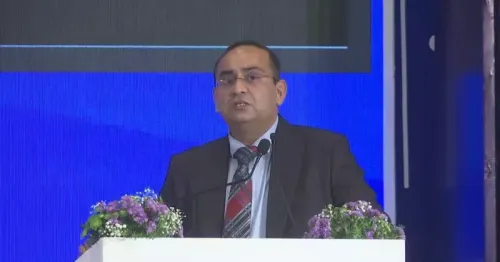
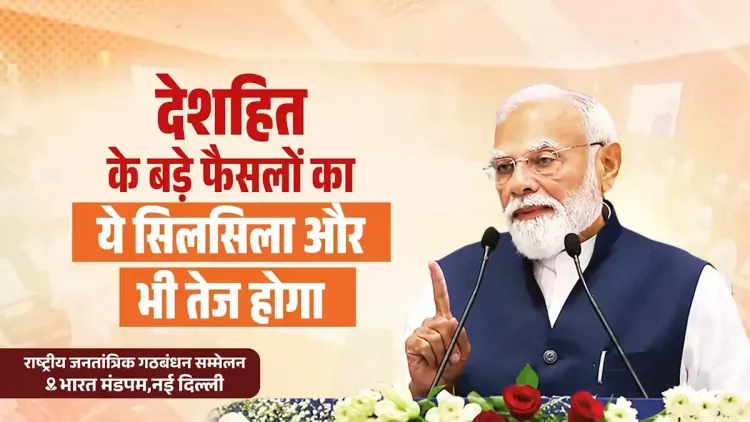
The Chief Minister's Office of Chhattisgarh on Wednesday, 10 June 2026 shared a statement emphasising India's growing share in global economic growth and calling on the country to align itself with global parameters, global competition, and a global perspective. The post, shared in Hindi, underscores the view that the world now looks to India as both a solutions provider and a trusted partner in global supply chains.
Context
The statement, posted on the official Chhattisgarh Chief Minister's Office account, reads: 'आज ग्लोबल ग्रोथ में भारत की हिस्सेदारी लगातार बढ़ रही है' ('Today, India's share in global growth is continuously rising'). It goes on to argue that India must now evaluate itself through the lens of global parameters and global competition. The closing thought — that the world wants solutions from India and sees it as a reliable partner in global supply chains — frames the message as both an aspiration and a responsibility. The post includes a video, suggesting it may be a clip from a speech or official address, though the precise occasion has not been independently confirmed.Policy Backdrop
The sentiment expressed aligns closely with a decade-long shift in India's economic policy posture. The Make in India initiative, launched in 2014, first positioned India as a global manufacturing destination. In May 2020, the Atmanirbhar Bharat Abhiyan broadened this vision — combining domestic resilience with outward-facing reliability — as global supply chains faced severe disruption during the COVID-19 pandemic. From 2020 to 2023, the central government rolled out Production Linked Incentive (PLI) schemes across 14 sectors, including electronics, pharmaceuticals, and automobiles, to integrate Indian manufacturers into global value chains. During India's G20 presidency in 2023, supply-chain resilience and 'friend-shoring' were elevated as core economic priorities on the multilateral stage.Stakeholders and Impact
The message carries practical weight for manufacturing firms, exporters, and foreign direct investment (FDI) investors eyeing India as an alternative or complementary node to existing supply-chain hubs. Chhattisgarh itself holds strategic relevance in this context: the state is a significant producer of steel and minerals, and its government has aligned with central initiatives in sectors such as steel, mining, and food processing. For domestic industry, the statement reinforces the expectation that Indian businesses must benchmark themselves against international competition rather than domestic metrics alone. For global investors, the framing of India as a 'trustworthy partner' — 'भरोसेमंद पार्टनर' — signals continued policy commitment to predictability and integration.What's Next
Attention will turn to the Union Budget 2027-28, where potential extensions of PLI schemes and new incentives for sectors such as semiconductors and green hydrogen could further cement India's role in global value chains. Pending free trade agreements with the European Union and the United Kingdom also remain critical milestones: their conclusion would structurally embed Indian exporters in high-value global markets. As state governments including Chhattisgarh amplify the national narrative of supply-chain reliability, the pressure on both policy delivery and industrial performance to match the rhetoric will only intensify.Point of View
Signalling that the supply-chain-reliability message has been internalised across the federal structure. By invoking global parameters and competition rather than purely domestic benchmarks, the post nudges Indian industry toward an export-performance mindset that PLI schemes have been trying to institutionalise since 2020. The timing — mid-2026, ahead of a likely pre-budget policy cycle — suggests this is also soft groundwork for investment attraction, particularly relevant for a mineral-rich state like Chhattisgarh. The broader arc points to India doubling down on its positioning as a post-China-plus-one manufacturing destination, with state governments serving as on-the-ground advocates for that pitch.
NationPress
26 Oct 2026
Frequently Asked Questions
What did the Chhattisgarh CMO say about India's global role on 10 June 2026?
The Chhattisgarh Chief Minister's Office stated that India's share in global growth is continuously rising and that India must now align with global parameters, global competition, and a global perspective, as the world looks to India for solutions and as a trusted supply-chain partner.
What is the Make in India initiative and how does it relate to this statement?
Make in India is a central government initiative launched in 2014 to position India as a global manufacturing destination and attract FDI. The Chhattisgarh CMO's emphasis on global competition and supply-chain reliability directly echoes the goals of this decade-old programme.
What are PLI schemes and which sectors do they cover?
Production Linked Incentive schemes are central government programmes launched from 2020 onward to incentivise domestic manufacturing for export competitiveness. They cover 14 sectors including electronics, pharmaceuticals, and automobiles.
How does Chhattisgarh fit into India's global supply chain ambitions?
Chhattisgarh is a significant producer of steel and minerals and has aligned with central manufacturing and investment policies. Its government routinely reinforces the national supply-chain narrative to attract investment in minerals, logistics, and downstream manufacturing.
What are the next policy milestones for India's supply chain integration?
Key milestones include Union Budget 2027-28 decisions on PLI scheme extensions and potential new incentives for semiconductors and green hydrogen, as well as the conclusion of pending free trade agreements with the European Union and the United Kingdom.