CM Office Credits Modi's Decade for Chhattisgarh's Growth
Synopsis
The Chief Minister's Office of Chhattisgarh marked PM Modi's decade in power on 13 June 2026, crediting his leadership for transforming the state through stronger infrastructure, expanded welfare delivery, and improved connectivity under cooperative federalism.
Key Takeaways
The Chief Minister's Office of Chhattisgarh posted on 13 June 2026 crediting PM Narendra Modi's decade in office for the state's development.
Chhattisgarh is described as a 'model of inclusive development' with gains in infrastructure, connectivity, welfare delivery, and economic opportunity.
Key central schemes deployed in the state include PM Gram Sadak Yojana Phase-II , PM Awas Yojana (Rural) , and Ayushman Bharat .
Tribal communities and rural households are the primary stated beneficiaries of the decade's development push.
Progress will be tracked through Chhattisgarh assembly budget sessions and NITI Aayog reviews of scheme implementation.
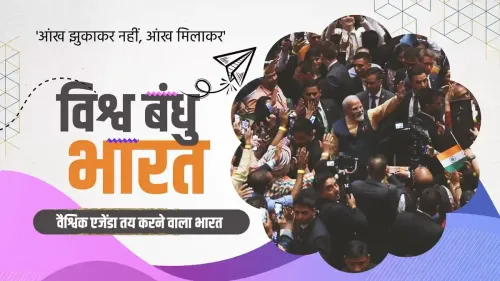
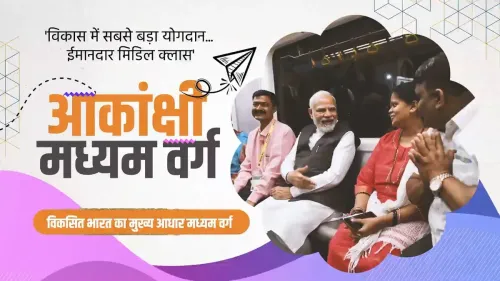
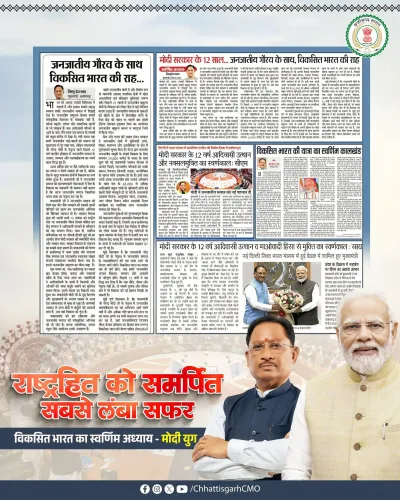
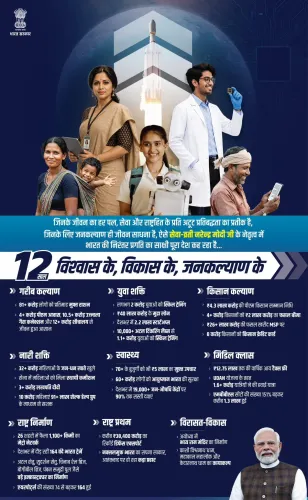
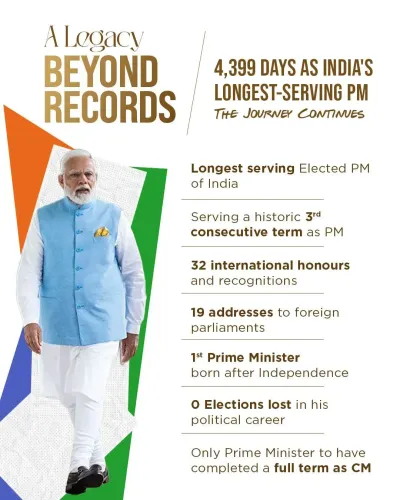
The Chief Minister's Office of Chhattisgarh on Saturday, 13 June 2026 marked what it called a decade of decisive leadership under Prime Minister Narendra Modi, asserting that the central government's guidance has transformed the state into a model of inclusive development across infrastructure, connectivity, welfare delivery, and economic opportunity.
Context
The post, shared under the hashtag #LongestServingElectedPMModi, states that 'a decade of decisive leadership has transformed challenges into opportunities for growth and progress.' The message frames Chhattisgarh's development trajectory as a direct outcome of the Prime Minister's vision, citing stronger infrastructure, enhanced connectivity, improved welfare delivery, and expanding economic opportunities as markers of this progress.
The reference to a decade points to the period since May 2014, when PM Modi first assumed office. The Chief Minister's Office positions the state's current growth story as a reflection of the aspirations of its people and a vision for a 'stronger, more prosperous future.'
Policy Backdrop
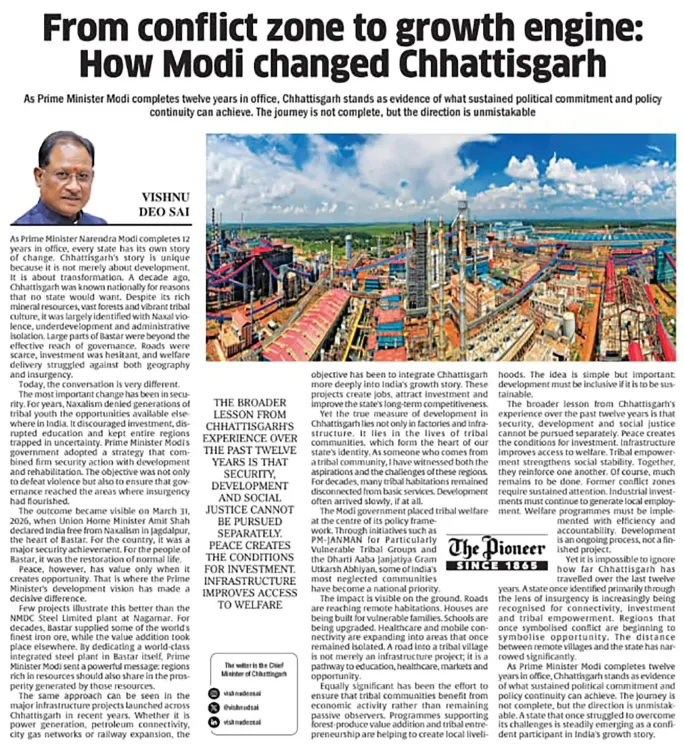
Chhattisgarh, carved out as a separate state in 2000, is characterised by large tribal populations, significant mineral wealth, and a history of left-wing extremism that long constrained development. The state has been a focus area for centrally-sponsored schemes aimed at reducing regional disparities.
Since 2014, the central government rolled out programmes including Pradhan Mantri Gram Sadak Yojana Phase-II for rural road connectivity, PM Awas Yojana (Rural) for housing, and Ayushman Bharat for health coverage — all of which Chhattisgarh adopted as part of the broader cooperative federalism framework. These schemes have been particularly significant in reaching tribal and rural households in the state's interior districts.
Resource-rich states like Chhattisgarh have been highlighted in successive NITI Aayog reviews as key beneficiaries of centrally-aligned infrastructure and welfare investment, with the aim of bridging the gap between resource availability and human development outcomes.
Stakeholders and Impact
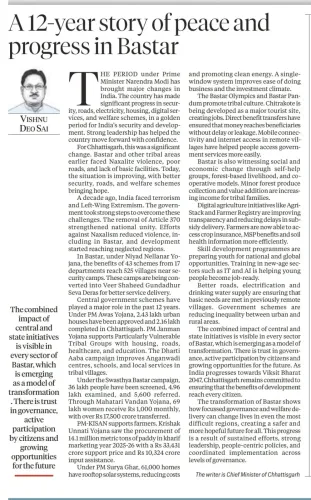
The primary beneficiaries of the development push cited by the Chief Minister's Office are Chhattisgarh's tribal communities and rural households, who constitute a significant share of the state's population. Improved road connectivity and welfare delivery have been particularly consequential in remote Bastar and Surguja divisions, areas that historically faced acute access deficits.
Expanding economic opportunities, as referenced in the post, broadly encompass industrial investment, mineral-sector growth, and agricultural support — sectors central to the livelihoods of the state's working population. The framing by the CMO aligns state-level gains with the national narrative of cooperative federalism between New Delhi and state governments.
What's Next
Measurable progress on the claims made by the Chief Minister's Office will be assessed through upcoming Chhattisgarh assembly budget sessions and periodic NITI Aayog reviews of central scheme implementation across the state. These forums will offer data on actual infrastructure completion rates, welfare coverage, and economic indicators.
As PM Modi's tenure continues, the alignment between central schemes and state-level delivery in Chhattisgarh will remain a barometer of cooperative federalism's effectiveness in India's tribal heartland — and a political benchmark for both the state and central governments heading into future electoral cycles.
Point of View
Tying Chhattisgarh's development narrative directly to the Prime Minister's decade in power at a symbolically charged moment. The hashtag choice signals a coordinated messaging effort across BJP-governed states to consolidate the 'longest-serving elected PM' identity for Modi. For Chhattisgarh specifically, the framing is significant because the state returned to BJP rule in late 2023 after a five-year Congress interlude, making the invocation of central-scheme gains a dual assertion of both central and state government performance. The broader pattern reflects how cooperative federalism has become as much a political communication tool as an administrative framework in India's federal system.
NationPress
29 Jul 2026
Frequently Asked Questions
Why is the Chhattisgarh CMO praising PM Modi's decade in power?
The Chief Minister's Office of Chhattisgarh posted on 13 June 2026 to mark what it called a decade of decisive leadership under PM Modi, crediting his guidance for the state's growth in infrastructure, welfare delivery, and connectivity.
What central government schemes have benefited Chhattisgarh since 2014?
Key schemes include Pradhan Mantri Gram Sadak Yojana Phase-II for rural roads, PM Awas Yojana (Rural) for housing, and Ayushman Bharat for health coverage, all adopted by Chhattisgarh under the cooperative federalism framework.
What does 'LongestServingElectedPMModi' mean?
The hashtag references PM Narendra Modi's status as the longest-serving elected Prime Minister of India, having held office since May 2014 across multiple terms.
Who benefits most from Chhattisgarh's development programmes?
Tribal communities and rural households, particularly in remote divisions like Bastar and Surguja, are the primary beneficiaries of infrastructure and welfare schemes cited by the Chief Minister's Office.
How will Chhattisgarh's development progress be measured going forward?
Progress will be assessed through Chhattisgarh assembly budget sessions and NITI Aayog reviews of central scheme implementation, which track infrastructure completion, welfare coverage, and economic indicators.