Chhattisgarh CMO Hails Modi as India's Longest-Serving Elected PM
Synopsis
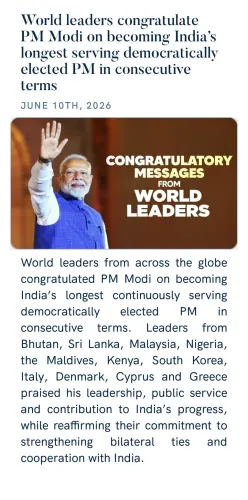
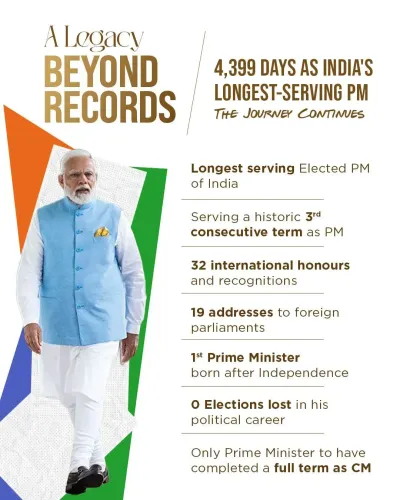
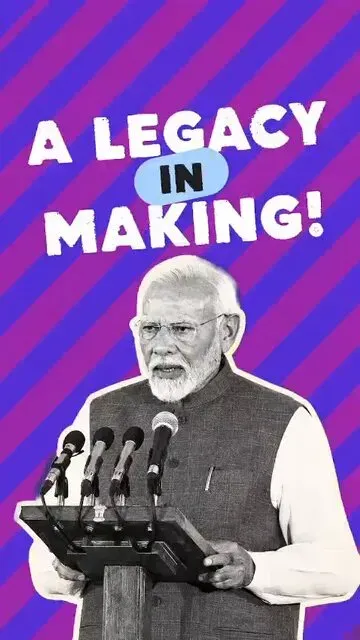
The Chief Minister's Office of Chhattisgarh on 10 June 2026 hailed Prime Minister Narendra Modi as India's longest continuously serving elected Prime Minister, marking a political milestone spanning more than 12 years of uninterrupted governance since May 2014.
Key Takeaways
PM Narendra Modi has been declared India's longest continuously serving elected Prime Minister as of June 2026 .
Modi first took oath on 26 May 2014 and has since been re-elected in 2019 and 2024 without interruption.
The Chhattisgarh Chief Minister's Office made the announcement via an official post on X on 10 June 2026 .
The milestone is framed specifically around 'continuously serving' and 'elected' tenure, distinguishing it from earlier Prime Ministers.
State-level BJP administrations routinely amplify central government leadership milestones as part of coordinated political messaging.
The hashtag #NewIndia links the record to the BJP -led government's overarching governance narrative.
The Chief Minister's Office of Chhattisgarh on Wednesday, 10 June 2026 took to X to mark what it called a landmark achievement, stating that Prime Minister Narendra Modi has become India's longest continuously serving elected Prime Minister, describing the milestone as reflecting 'an extraordinary journey of service, leadership, and nation-building.'
Context
Narendra Modi first took oath as Prime Minister on 26 May 2014 following the Bharatiya Janata Party's decisive victory in the 2014 Lok Sabha elections. He was sworn in for a second consecutive term on 30 May 2019 and secured a third consecutive term in 2024, making him one of the few leaders in independent India's history to have led the government without interruption across three general election cycles.
The post by the official Chhattisgarh CMO account used the hashtags #LongestServingElectedPMModi and #NewIndia, framing the tenure milestone within the broader 'New India' political narrative championed by the BJP-led National Democratic Alliance government at the Centre.
Policy Backdrop
The record being referenced pertains specifically to continuously serving elected Prime Ministers — a distinction that sets aside leaders who served non-consecutive terms or held office through indirect arrangements. Jawaharlal Nehru, India's first Prime Minister, served from 1947 to 1964, but a portion of that tenure predates the republic's first general election in 1952. The framing of Modi's milestone as 'elected' and 'continuous' is therefore a specific constitutional and electoral benchmark.
State-level BJP administrations across the country have routinely used their official social media channels to amplify central government leadership milestones, linking national political records to a broader narrative of governance stability and policy continuity. The Chhattisgarh CMO's post follows this established pattern of coordinated messaging.
Stakeholders and Impact
For BJP supporters and the party's organisational machinery, the milestone serves as a reaffirmation of the electoral mandate the party has received across three consecutive general elections since 2014. It also underscores the stability of coalition governance under the National Democratic Alliance.
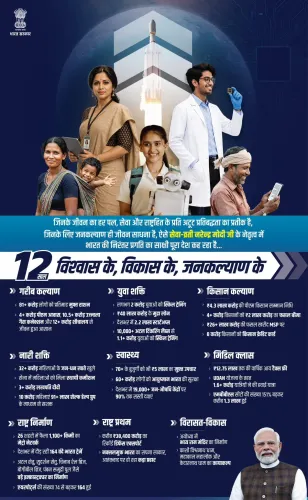
For the broader Indian polity, the milestone invites reflection on over a decade of uninterrupted governance by a single leader — a period that has seen major policy interventions including demonetisation, the rollout of GST, the abrogation of Article 370 in Jammu and Kashmir, and large-scale welfare schemes such as PM-KISAN, Ayushman Bharat, and the Pradhan Mantri Awas Yojana.
What's Next
The milestone is likely to be referenced in upcoming Parliament sessions and may feature in state assembly proceedings across BJP-governed states as part of ongoing political messaging ahead of scheduled state elections. The Chhattisgarh CMO's amplification signals that the record will be woven into the party's outreach narrative at both the state and national level in the months ahead.
Point of View
And this post fits squarely into that pattern. The specific framing of 'longest continuously serving elected Prime Minister' is carefully chosen, sidestepping comparisons with Nehru's longer but partially pre-election tenure. Coming in June 2026, the messaging is timed to embed the record into public consciousness well before the next electoral cycle. Taken together, the post reflects how official state machinery is increasingly deployed to reinforce national political narratives.
NationPress
26 Oct 2026
Frequently Asked Questions
Who is India's longest continuously serving elected Prime Minister?
As of June 2026, Narendra Modi holds the record as India's longest continuously serving elected Prime Minister, having been in office without interruption since 26 May 2014 .
When did Narendra Modi first become Prime Minister of India?
Narendra Modi was first sworn in as Prime Minister on 26 May 2014 after the BJP -led NDA won the 2014 Lok Sabha elections .
How many terms has Modi served as Prime Minister?
Modi has served three consecutive terms as Prime Minister — beginning in 2014 , re-elected in 2019 , and again in 2024 — making his tenure continuous and uninterrupted.
Why did the Chhattisgarh CMO post about Modi's PM record?
The Chhattisgarh Chief Minister's Office posted the tribute on 10 June 2026 to mark the milestone of PM Modi becoming India's longest continuously serving elected Prime Minister, in line with a broader pattern of BJP -governed states amplifying central leadership achievements.
What does 'longest continuously serving elected PM' mean?
The distinction refers to a Prime Minister who has held office without a break and whose entire tenure follows a direct electoral mandate, setting it apart from leaders who served non-consecutive terms or held office prior to India's first general election in 1952 .