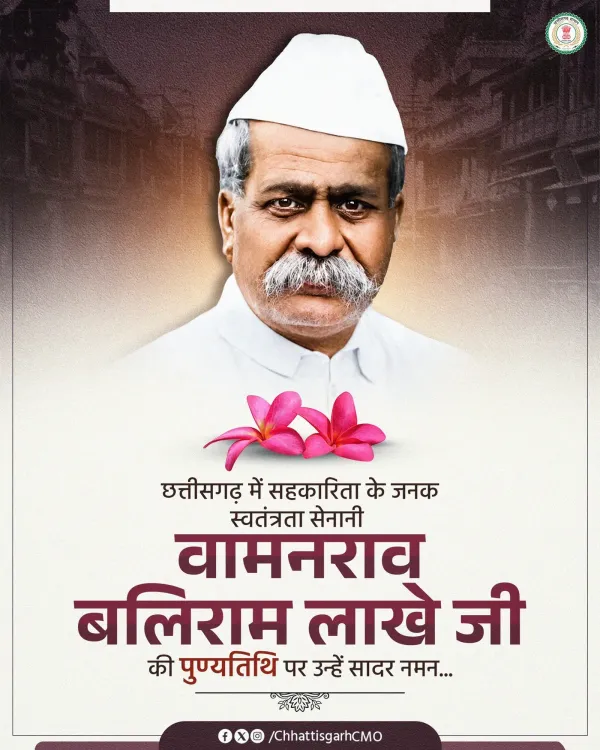
Chhattisgarh CMO pays tribute to cooperative pioneer Wamanrao Lakhe
Synopsis
The Chhattisgarh Chief Minister's Office paid tribute to Wamanrao Baliram Lakhe on his death anniversary, honouring the freedom fighter credited as the father of the cooperative movement in the region.
Key Takeaways
The Chief Minister's Office of Chhattisgarh posted a tribute to Wamanrao Baliram Lakhe on 21 August 2026 , his death anniversary.
Lakhe is widely regarded as the father of the cooperative movement in Chhattisgarh.
He was also a freedom fighter whose rural organising work dates to the early 20th century.
His cooperative structures predated Chhattisgarh's statehood in 2000 by nearly a century.
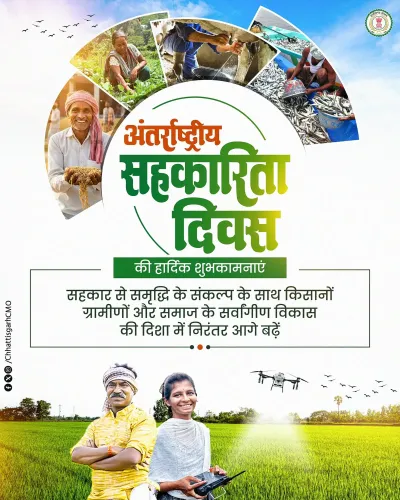
The cooperative sector remains central to agricultural credit and marketing for farmers across the state.
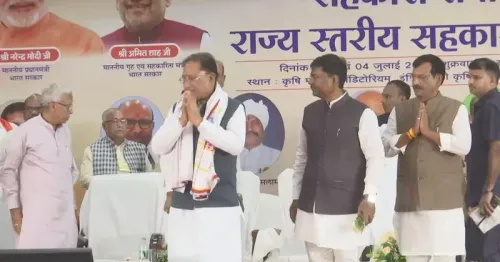
A freedom fighter who helped lay the foundations of rural economic self-reliance in central India was remembered on Friday. The Chief Minister's Office of Chhattisgarh paid homage to Wamanrao Baliram Lakhe on his death anniversary, honouring the man widely regarded as the father of the cooperative movement in the region.
Posting on 21 August 2026, the CMO offered its respects with the words 'सादर नमन' — a respectful salute — describing Lakhe as both a freedom fighter and the founding force behind Chhattisgarh's cooperative tradition.
Who was Wamanrao Baliram Lakhe?
Lakhe was an early 20th-century figure from the Chhattisgarh region whose work among farmers and rural communities predated the state's formal creation in 2000 by nearly a century. He is credited with building some of the earliest farmer organisations and self-help structures in central India — cooperative structures that gave smallholder cultivators collective bargaining power at a time when they had almost none. That legacy places him at the intersection of two of India's defining modern struggles: independence from colonial rule and economic dignity for the rural poor.Why cooperatives still matter in Chhattisgarh
The cooperative sector remains a critical pillar of agrarian life across Chhattisgarh, channelling credit, procurement, and marketing support to millions of farmers. The roots of that network trace directly to the kind of grassroots organising Lakhe championed. State governments across India routinely observe such death anniversaries as a way of anchoring present-day policy ambitions in a longer historical arc — signalling continuity between a reformer's vision and current programmes. For Chhattisgarh, where farming communities still depend heavily on cooperative infrastructure, the tribute carries weight beyond ceremony.Point of View
The Chhattisgarh CMO subtly frames the ruling dispensation as the inheritor of a cooperative tradition with deep roots. In a state where farmer welfare and rural credit access remain live electoral issues, that framing is deliberate. Watch whether the tribute is followed by any announcement on cooperative sector expansion — that would confirm the gesture is policy-linked, not merely commemorative.
NationPress
21 Aug 2026
Frequently Asked Questions
Who was Wamanrao Baliram Lakhe?
Wamanrao Baliram Lakhe was an early 20th-century freedom fighter from the Chhattisgarh region, widely regarded as the pioneer of the cooperative movement there, known for building farmer organisations and rural self-help structures.
Why is Wamanrao Lakhe called the father of cooperatives in Chhattisgarh?
He is credited with establishing some of the earliest cooperative and farmer self-help structures in central India, laying the groundwork for the cooperative network that still supports Chhattisgarh's agricultural communities today.
When is Wamanrao Baliram Lakhe's death anniversary?
His death anniversary falls on 21 August , marked in 2026 by a formal tribute from the Chhattisgarh Chief Minister's Office.
What is the cooperative movement's role in Chhattisgarh today?
Cooperative societies in Chhattisgarh provide critical credit, procurement, and marketing support to farming communities, making them a key part of the state's rural economy.
Why do Indian state governments observe freedom fighter death anniversaries?
It is a long-standing practice to acknowledge historical contributions to independence and social reform, and to connect current governance with the legacy of regional figures who shaped the state's identity.