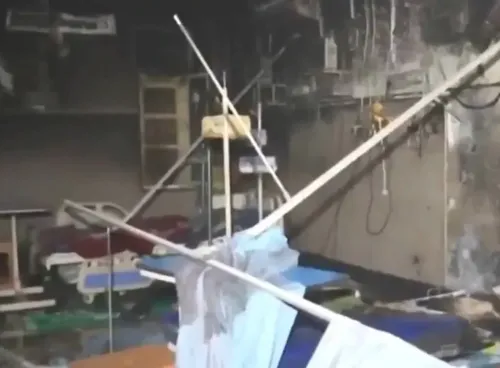
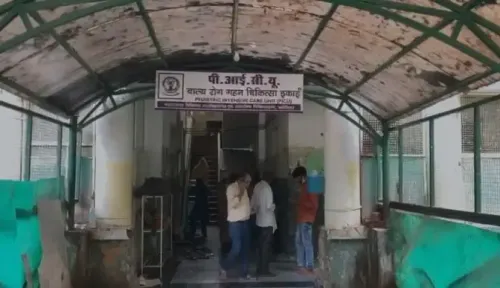
Chhindwara NICU fire: Three newborns critically burned, rushed to Jabalpur
Synopsis
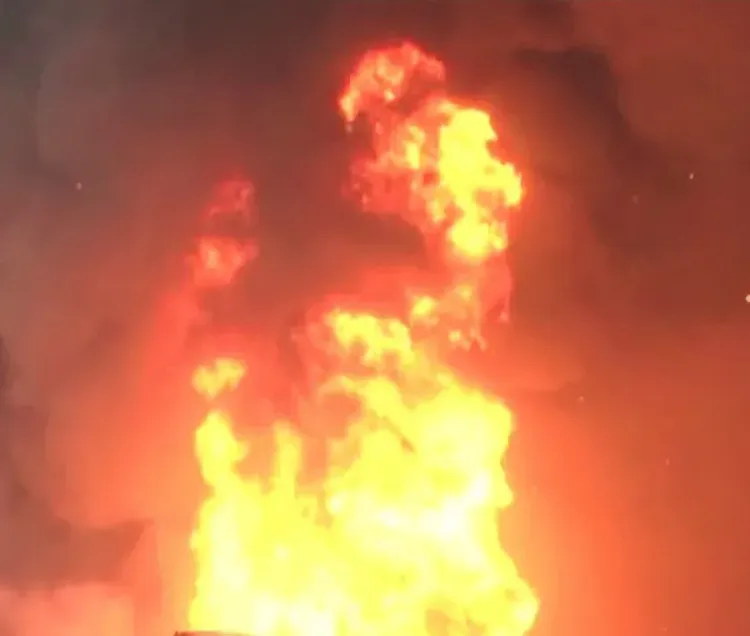
A radiant warmer's heating filament sparked inside the NICU of Chhindwara District Hospital at 2 a.m. on 22 August, setting three newborns ablaze in an oxygen-rich environment. All three infants — in critical condition — have been rushed to Jabalpur for specialist care, exposing a dangerous gap in medical equipment safety at government hospitals.
Key Takeaways
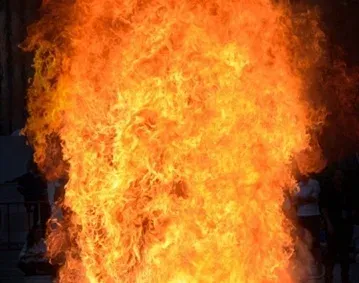
A radiant warmer machine caught fire in the NICU of Chhindwara District Hospital , Madhya Pradesh , at around 2 a.m. on 22 August .
Three newborns sustained severe burn injuries; all remain in a critical condition.
The fire spread rapidly due to the presence of oxygen inside the enclosed NICU unit.
Dr Anshul Lamba , hospital paediatrician, confirmed a sudden sparking of the warmer's heating filament as the cause.
All three infants were transferred to Netaji Subhash Chandra Bose Medical College, Jabalpur ; one may require surgical intervention .
An internal inquiry has been initiated; preliminary findings point to a technical fault or short circuit in the warmer.
Three newborns sustained severe burn injuries early on Saturday, 22 August after a radiant warmer machine caught fire inside the Neonatal Intensive Care Unit (NICU) of Chhindwara District Hospital in Madhya Pradesh, prompting an emergency transfer to a specialist facility in Jabalpur. The incident has raised urgent questions about equipment maintenance and patient safety standards in government hospitals.
How the Fire Broke Out
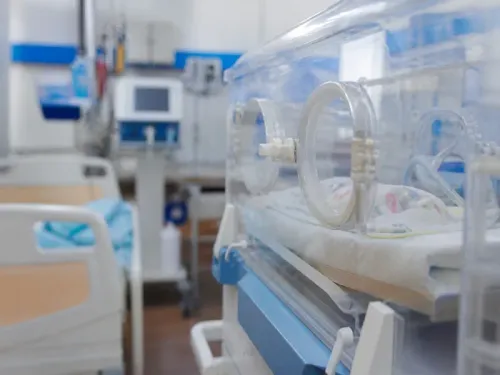
The blaze erupted at approximately 2 a.m. when a filament inside the heating unit of the radiant warmer sparked without warning. The three infants had been placed in the warmer to maintain stable body temperature — standard post-birth intensive care protocol.
The presence of oxygen inside the enclosed NICU caused the fire to spread rapidly, engulfing the newborns before staff could intervene. Dr Anshul Lamba, paediatrician at the hospital, confirmed the sequence of events. 'Newborns are kept in warmers after birth to keep their body temperature stable. At night, the filament sparked suddenly and the fire broke out. All three babies suffered severe burns,' he said.
Staff Response and Immediate Treatment
Doctors and nursing staff on night duty acted swiftly — pulling the infants from the burning warmer, deploying fire extinguishers to contain the blaze, and administering first aid on site. Despite the prompt response, all three newborns remained in a critical condition owing to the extent of their burn injuries.
With no paediatric surgeon available at the Chhindwara facility, hospital authorities referred all three infants to Netaji Subhash Chandra Bose Medical College in Jabalpur for advanced care. They were transported under the supervision of two doctors. One of the three newborns is reportedly in a particularly grave condition and may require surgical intervention.
Inquiry and Safety Concerns
Hospital authorities have launched an internal inquiry into the incident. Preliminary findings point to a technical fault or short circuit in the warmer machine as the likely cause, according to officials. Investigators are examining both the equipment and the NICU's safety protocols to prevent a recurrence.
Notably, this incident surfaces broader concerns about the upkeep of critical medical equipment in government-run hospitals across India, where NICUs serve among the most vulnerable patient populations. The failure of a single device in an oxygen-rich environment carries catastrophic risk — a hazard that safety audits are meant to pre-empt.
What Happens Next
The three newborns are currently receiving treatment at Netaji Subhash Chandra Bose Medical College, Jabalpur. The outcome of the internal inquiry at Chhindwara District Hospital is expected to determine whether disciplinary action or equipment procurement reviews will follow. State health authorities have yet to issue a formal statement on the matter.
Point of View
It did. This incident is not an isolated equipment failure; it is a symptom of deferred maintenance and absent safety audits in government hospitals where the most fragile patients are placed in equipment that may not have been serviced in months. The fact that no paediatric surgeon was available at a district hospital NICU compounds the concern: the infrastructure exists on paper, but the clinical depth does not. State health departments owe the public a transparent inquiry — not just an internal one — and a time-bound audit of NICU equipment across Madhya Pradesh.
NationPress
22 Aug 2026
Frequently Asked Questions
What caused the NICU fire at Chhindwara District Hospital?
A heating filament inside a radiant warmer machine sparked without warning, triggering a fire that spread rapidly due to the oxygen-rich environment of the NICU. Hospital paediatrician Dr Anshul Lamba confirmed the filament sparking as the cause; a preliminary inquiry points to a technical fault or short circuit.
How many newborns were injured in the Chhindwara NICU fire?
Three newborns sustained severe burn injuries in the incident, which occurred at approximately 2 a.m. on 22 August. All three remain in a critical condition, and one reportedly may require surgical intervention.
Where have the injured newborns been taken for treatment?
All three infants were referred to Netaji Subhash Chandra Bose Medical College in Jabalpur, as no paediatric surgeon was available at Chhindwara District Hospital. They were transported under the supervision of two doctors.
What action has the hospital taken after the fire?
Chhindwara District Hospital authorities have launched an internal inquiry into the incident. Investigators are examining the warmer equipment and reviewing NICU safety protocols. State health authorities have yet to issue a formal public statement.
Why are NICU fires particularly dangerous?
NICUs maintain elevated oxygen levels to support premature and critically ill newborns, which makes any ignition source — such as a sparking electrical filament — significantly more dangerous than in a standard ward. The oxygen-enriched atmosphere accelerates the spread of fire, leaving little time for intervention.