Chinese Consulate in Strasbourg Attempts to Censor Taiwanese Theatre Production

Synopsis
A recent attempt by the Chinese consulate in Strasbourg to suppress a Taiwanese theatre production has ignited significant public outcry and political controversy, emphasizing the ongoing battle for free expression amidst international tensions.
Key Takeaways
China's diplomatic interventions extend to cultural institutions and local governments.
The incident emphasizes the importance of free expression in the face of political pressure.
Public outcry can lead to significant resistance against censorship attempts.
The global media landscape is increasingly influenced by state propaganda .
Strasbourg's response highlights the need for vigilance within democratic institutions .
New Delhi, March 22 (NationPress) A recent incident has highlighted China’s aggressive tactics in suppressing dissenting voices that challenge its narratives. The Chinese consulate in Strasbourg attempted to exert influence on a local theatre to cancel a scheduled performance featuring Taiwan’s national theatre and concert hall. This move was met with strong opposition from the public, rendering the attempt ineffective.
The revelation sparked significant political backlash, with Taiwanese media vocally condemning the perceived infringement on free expression.
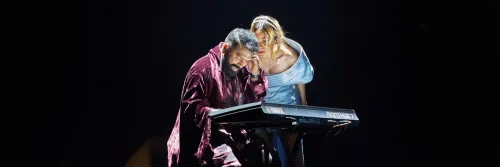
The documentary-style performance, collaboratively developed by Rimini Protokoll and Taiwan’s National Theatre and Concert Hall, simulates the inauguration of a Taiwanese embassy and delves into Taiwan’s ambiguous international standing.
According to a report by 'Bitter Winter', when the theatre’s director did not respond to the initial request, the deputy consul general escalated the matter by directly contacting the City of Strasbourg, the theatre’s primary sponsor. He insisted that the show’s continuation would jeopardize Sino-French relations.
The mayor of Strasbourg, Jeanne Barseghian, acknowledged receipt of the letter, labeling the intervention as highly serious.
Attempts to reach the Chinese consulate, as well as the Chinese Embassy in Paris and China’s Ministry of Foreign Affairs, were unsuccessful.
Taiwanese media outlets have taken this issue seriously, commending Strasbourg authorities for resisting political pressure and affirming that Taiwan’s voice “must not be silenced.”
The situation in Strasbourg is indicative of a broader trend where Chinese diplomatic missions exert pressure on foreign governments, cultural institutions, universities, and private venues to censor content that contradicts Beijing’s political stance.
Numerous media organizations across various nations have been criticized for aligning their narratives with those of the Chinese state, which facilitates cultural censorship.
The Strasbourg incident underscores the extent of China’s political pressure, which reaches beyond national governments to include municipal entities, cultural institutions, and individual festival organizers.
Ultimately, the ‘battle’ in Strasbourg demonstrates how cultural diplomacy can transform into a contested space for political influence, highlighting the necessity for democratic institutions to remain alert and proactive.
Point of View
It's evident that the incident reflects ongoing tensions in international diplomacy and cultural exchanges. The resistance from Strasbourg authorities showcases a commitment to uphold democratic values and protect artistic expression against external pressures.
NationPress
24 Sept 2026
Frequently Asked Questions
What was the incident involving the Chinese consulate in Strasbourg?
The Chinese consulate attempted to pressure a local theatre to cancel a performance by Taiwan’s national theatre, which led to public and media backlash.
What was the nature of the performance?
The performance was a documentary-style show simulating the opening of a Taiwanese embassy, exploring Taiwan's international status.
How did the authorities in Strasbourg respond?
Strasbourg’s mayor confirmed receiving a letter from the Chinese consulate and described the intervention as serious, ultimately supporting the continuation of the show.
What does this incident say about Chinese diplomatic influence?
It highlights a trend where Chinese missions pressure foreign institutions to conform to Beijing’s narratives, impacting cultural expressions globally.
Why is this incident significant?
It illustrates the broader implications of cultural diplomacy and the importance of safeguarding free speech against political influence.