China's hydro-hegemony: dams, rivers, and geopolitical leverage in South Asia
Synopsis
China’s water strategy is not just about electricity — it is about control. With 24,217 large dams, a USD 170 billion megaproject on the Brahmaputra’s upper reaches, and a proposed Teesta scheme in Bangladesh, Beijing is quietly building upstream leverage over India and its neighbours. The silence inside China around Medog may be the most telling detail of all.
Key Takeaways
China operates 24,217 large dams, compared to 10,053 in the US and 4,489 in India, according to the International Commission on Large Dams .
The Medog Hydropower Project , launched in 2025 , is estimated to cost USD 170 billion and will have roughly three times the capacity of the Three Gorges Dam .
The project sits on the Yarlung Tsangpo , which flows into India as the Brahmaputra and into Bangladesh as the Jamuna , raising downstream concerns about flow, ecology, and flooding.
China’s proposed Teesta River Comprehensive Management and Restoration Project in Bangladesh has alarmed New Delhi over strategic encirclement in sensitive border regions.
The Three Gorges Dam recorded 3,429 earthquakes in the six years after filling, versus 94 in the preceding period, according to the China Earthquake Administration .
Analysts warn that Beijing’s water projects follow a consistent pattern of converting infrastructure into geopolitical leverage, mirroring its Belt and Road Initiative strategy.
China is systematically deploying large-scale river infrastructure across South Asia to consolidate what analysts describe as ‘hydro-hegemony’ — using upstream control over shared rivers as a tool of geopolitical leverage. From the Medog Hydropower Project on the Tibetan Plateau to a proposed water management scheme on the Teesta River in Bangladesh, Beijing’s water strategy is raising alarms in New Delhi and beyond.
China’s Dam Dominance
According to data from the International Commission on Large Dams, China now operates 24,217 large dams — more than double the 10,053 held by the United States and nearly five times India’s 4,489. This infrastructure base gives Beijing unmatched capacity to regulate river flows that cross international boundaries, affecting millions of people downstream.
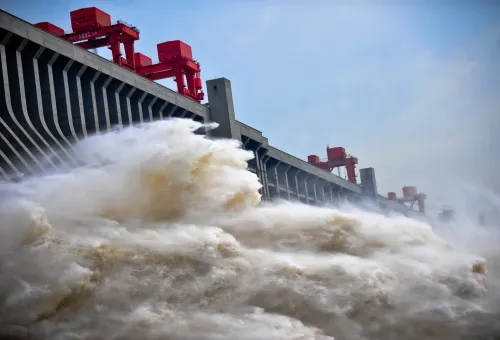
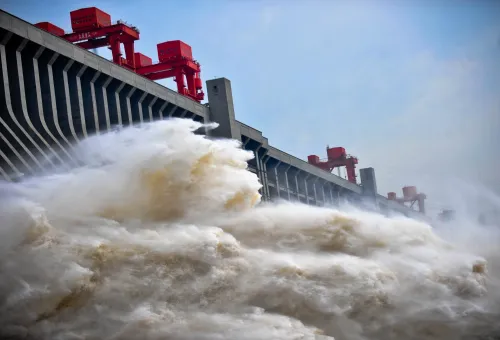
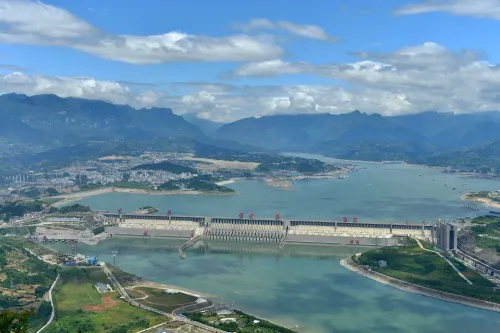
The scale of China’s ambition came into sharp focus when Beijing broke ground on the Medog Hydropower Project in 2025. Estimated to cost approximately USD 170 billion, the project would have a generation capacity roughly three times that of the Three Gorges Dam — itself the world’s largest hydroelectric power station at 22,500 MW.
The Medog Project and Downstream Anxieties
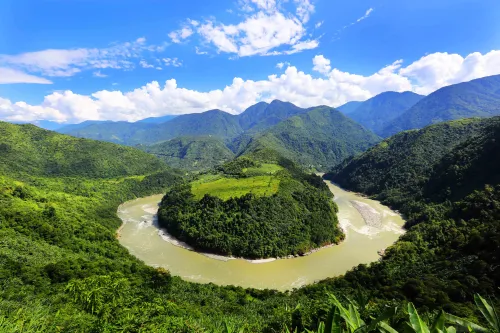
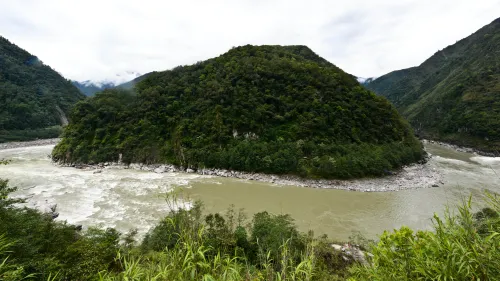
The Medog project sits on the Yarlung Tsangpo, which becomes the Brahmaputra in India and the Jamuna in Bangladesh. Any major upstream intervention on this river system raises serious downstream concerns about water flow, aquatic biodiversity, sedimentation patterns, and flood risk for millions in Assam, Arunachal Pradesh, and Bangladesh.
Participants at a China Expert Group Meeting organised by the Vivekananda International Foundation last September noted: “Initial analysis of satellite data focused on the deep U-bend of the river, approximately 25–30 km from the India-China border, where recent infrastructure developments, including roads, settlements and other facilities, indicated significant activity.”
The panel further noted that “reports indicate that the project will require four to six tunnels of 20–60 km each to divert water around a sharp bend in the river, entailing extensive tunnelling through a highly sensitive and geologically fragile area.” A January 2025 analysis from the Institute of South Asian Studies warned that the Medog project could have severe ecological consequences in Tibet, arguing it would worsen pressure on an already fragile plateau environment.
Notably, a report published in April by CCE News observed: “Perhaps the most striking feature of the Medog project is not its scale, its cost, or its geopolitical implications, but the near-total silence surrounding it inside China.” This contrasts sharply with the construction of the Three Gorges Dam, which generated fierce domestic debate before being suppressed — suggesting tighter information control around Medog.
Lessons from Three Gorges
The Three Gorges Dam, built across the Yangtze River in Hubei province between 1994 and 2012, displaced over 1.4 million people and submerged numerous archaeological sites. A 2020 report cited a study by the China Earthquake Administration which found that in the six years after the reservoir was filled in June 2003, 3,429 earthquakes were recorded along the reservoir — compared with only 94 in the period from January 2000 to May 2003. Critics have linked this seismic uptick to reservoir-induced stress on geological faults.
Environmental concerns associated with Three Gorges — including sedimentation, biodiversity loss, and increased landslide risk — are now being raised afresh in the context of Medog, which sits in an even more seismically active and geologically fragile zone.
The Teesta Gambit in Bangladesh
China’s water ambitions extend beyond the Brahmaputra basin. Beijing has proposed a Teesta River Comprehensive Management and Restoration Project in Bangladesh, a major water initiative that has drawn significant regional attention. The Teesta flows through Sikkim and West Bengal in India before entering Bangladesh through the Rangpur Division.
India and Bangladesh negotiated a water-sharing agreement in 2011, but its implementation was stalled by the then-opposition in West Bengal. Facing persistent water insecurity, Dhaka turned to Beijing to fill the gap. New Delhi is reportedly wary that Chinese involvement in the Teesta basin could give Beijing a strategic foothold in sensitive border regions, complicating India’s own water diplomacy with its eastern neighbour.
Analysts argue that the pattern mirrors Beijing’s Belt and Road Initiative playbook — where infrastructure financing translates, over time, into political leverage. This comes amid broader concerns about China’s expanding influence in South Asia, from Sri Lanka to Nepal to Pakistan.
A Consistent Strategic Pattern
Viewed collectively, China’s river infrastructure strategy reflects what observers describe as a deliberate approach: using large water projects to simultaneously meet domestic energy targets and accumulate upstream bargaining power over downstream neighbours. For India, which shares river systems with China across its northern and northeastern frontiers, the strategic implications are direct and urgent. How New Delhi responds — through diplomacy, its own dam-building, or international water law — will shape the hydro-political landscape of South Asia for decades.
Point of View
Contrasted with the fierce debate that accompanied Three Gorges, signals that Beijing has learned to suppress dissent more efficiently, not that the project is less consequential. For India, the real vulnerability is not a single dam but the cumulative effect of upstream control across multiple river systems simultaneously. New Delhi’s response has so far been reactive; a proactive framework — combining international water law, bilateral diplomacy, and its own infrastructure investment in border states — is overdue.
NationPress
5 Oct 2026
Frequently Asked Questions
What is China’s hydro-hegemony strategy in South Asia?
China’s hydro-hegemony refers to its use of large upstream dams and river infrastructure to gain geopolitical leverage over downstream neighbours. With 24,217 large dams and projects like Medog on the Yarlung Tsangpo and a proposed Teesta scheme in Bangladesh, Beijing is building the capacity to influence water flows that millions in India and Bangladesh depend on.
What is the Medog Hydropower Project and why does it concern India?
The Medog Hydropower Project is a USD 170 billion dam project on the Yarlung Tsangpo river in Tibet, launched in 2025, with a capacity roughly three times that of the Three Gorges Dam. It concerns India because the Yarlung Tsangpo becomes the Brahmaputra in Arunachal Pradesh and Assam, meaning any upstream manipulation could affect water flow, flooding, and ecology for millions of Indians downstream.
What is China’s proposed Teesta River project in Bangladesh?
China has proposed a Teesta River Comprehensive Management and Restoration Project in Bangladesh to help manage water flows on a river that originates in Sikkim and West Bengal. India views Beijing’s involvement with concern, fearing it could give China a strategic foothold in a sensitive border region and complicate India’s own unresolved water-sharing negotiations with Dhaka.
How does the Medog project compare to the Three Gorges Dam?
The Three Gorges Dam on the Yangtze River has an installed capacity of 22,500 MW and is currently the world’s largest hydroelectric power station. The Medog project is estimated to have roughly three times that capacity, making it potentially the largest hydropower project ever built, at an estimated cost of USD 170 billion.
What are the environmental risks associated with China’s dam projects?
Environmental concerns include sedimentation, biodiversity loss, increased landslide risk, and seismic activity. A study by the China Earthquake Administration found 3,429 earthquakes near the Three Gorges reservoir in the six years after it was filled, versus 94 in the preceding period. The Medog site sits in an even more geologically fragile and seismically active zone, compounding these risks.