Chirag Paswan joins PM Modi's drug-free youth campaign virtually
Synopsis
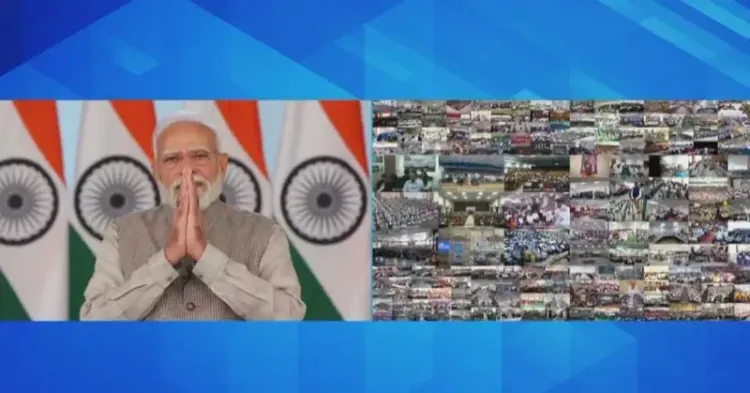
PM Modi launched the 'Nashamukta Yuva - Sankalp Abhiyan' on August 2, 2026, with Union Minister Chirag Paswan joining virtually. The campaign extends the 2020 Nasha Mukt Bharat Abhiyan, framing youth de-addiction as central to India's Viksit Bharat 2047 human-capital goals.
Key Takeaways
PM Narendra Modi launched the 'Viksit Bharat ke liye Nashamukta Yuva - Sankalp Abhiyan' on August 2, 2026 .
Chirag Paswan , Union Minister of Food Processing Industries, participated virtually, reflecting cross-ministry mobilisation.
The campaign is an evolution of the Nasha Mukt Bharat Abhiyan launched in 2020 by the Ministry of Social Justice and Empowerment.
The government frames youth de-addiction as essential to achieving the Viksit Bharat 2047 human-capital vision.
Implementation details — state-level MoUs, budgetary allocations, and NITI Aayog review mechanisms — are yet to be announced.
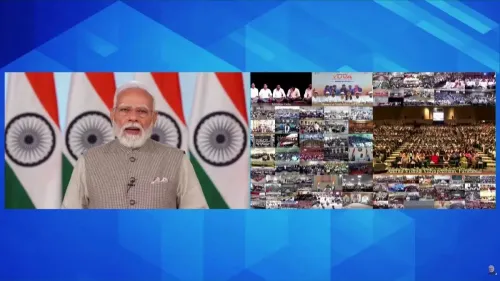
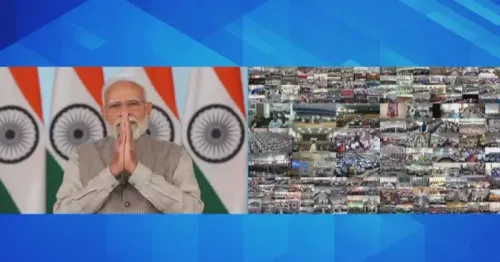
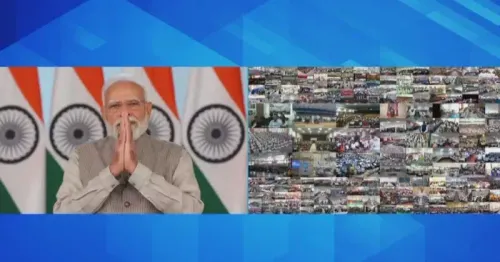
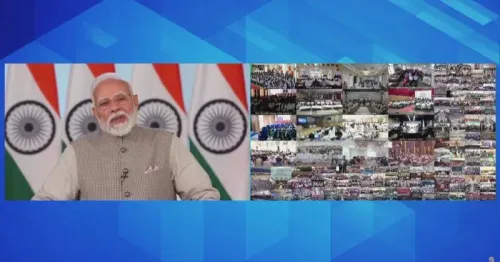
India's war on youth drug abuse got a whole-of-government signal on Sunday, August 2, 2026, when Prime Minister Narendra Modi launched the 'Viksit Bharat ke liye Nashamukta Yuva - Sankalp Abhiyan' — a pledge-drive for a drug-free youth in service of a developed India. Union Food Processing Minister Chirag Paswan joined the launch event virtually, adding his ministry's presence to what the government is framing as a cross-portfolio national commitment.
From Nasha Mukt Bharat to Sankalp Abhiyan — the campaign lineage
The new initiative builds on the Nasha Mukt Bharat Abhiyan, first launched in 2020 by the Ministry of Social Justice and Empowerment. That programme targeted awareness generation, expansion of rehabilitation centres, and state-level action plans across districts identified as high-burden zones. The latest campaign sharpens the framing: de-addiction is no longer just a welfare concern — it is positioned as a prerequisite for the human capital that Viksit Bharat 2047 demands.
Why ministers beyond Social Justice are in the room
Paswan's virtual participation is deliberate optics. When a PM-led launch draws ministers from unrelated portfolios — food processing, not social welfare — it signals that the government wants every department to own the de-addiction agenda, not silo it. The broader pattern is consistent: flagship welfare campaigns under the Viksit Bharat umbrella routinely mobilise cross-ministerial participation to demonstrate unified political will. For Lok Janshakti Party (Ram Vilas), whose base is concentrated among younger, aspirational voters in Bihar and beyond, visible alignment with a youth-welfare initiative carries its own political logic.
The road from a launch event to measurable outcomes runs through state-level memoranda of understanding, budgetary allocations in parliamentary sessions, and NITI Aayog reviews — none of which have been detailed yet. What the August 2 event establishes is the political architecture: a prime ministerial imprimatur, multi-ministry buy-in, and a campaign name that ties sobriety directly to national ambition.
India's youth — the demographic dividend the country is betting its 2047 vision on — are the intended audience. Whether the Sankalp Abhiyan translates that bet into ground-level change will depend on what follows the launch.
Point of View
Alignment with a PM-led youth initiative reinforces LJP (Ram Vilas)'s positioning as a party invested in aspirational, younger voters — particularly in Bihar. The deeper question is whether the Sankalp Abhiyan adds structural teeth to the 2020 Abhiyan's framework, or remains a rebranded awareness push; that answer will emerge in parliamentary budget allocations and state-level rollout data.
NationPress
2 Aug 2026
Frequently Asked Questions
What is the Viksit Bharat Nashamukta Yuva Sankalp Abhiyan?
It is a campaign launched by PM Narendra Modi on August 2, 2026, aimed at pledging Indian youth to a drug-free life as part of the broader Viksit Bharat 2047 development vision.
What is the Nasha Mukt Bharat Abhiyan?
The Nasha Mukt Bharat Abhiyan was launched in 2020 by the Ministry of Social Justice and Empowerment to combat drug abuse among youth through awareness, rehabilitation centres, and state-level action plans.
Why did Chirag Paswan join a drug-free campaign when he is the Food Processing Minister?
His virtual participation signals a whole-of-government approach, where ministers across portfolios back flagship welfare campaigns to demonstrate unified political will under the Viksit Bharat umbrella.
What is Viksit Bharat 2047?
Viksit Bharat 2047 is the Indian government's vision to transform India into a fully developed nation by the centenary of its independence, with human capital development — including youth welfare — as a core pillar.
What is Lok Janshakti Party (Ram Vilas)?
It is a political party led by Chirag Paswan, named after his late father Ram Vilas Paswan, with a strong base in Bihar and a focus on Dalit and aspirational voter communities.