CM Himanta visits Dibrugarh erosion zones, cites IIT experts and ₹90 cr plan
Synopsis
Chief Minister Himanta Biswa Sarma visited five erosion-hit localities in Dibrugarh on 2 August 2026, announcing IIT expert engagement for a long-term Brahmaputra erosion solution alongside a ₹90 crore departmental mitigation project, and assured affected residents of government support.
Key Takeaways
Himanta Biswa Sarma conducted a ground visit to Chabua, Balijan, Pukhurijan, Dinjan, and Rahmoria in Dibrugarh on 2 August 2026 .
Experts from the Indian Institutes of Technology (IIT) will be engaged to develop a long-term scientific solution to Brahmaputra bank erosion.
A ₹90 crore mitigation project proposed by the state water resources department will complement the IIT study.
The CM interacted with local residents and assured them of the government's unwavering support.
Brahmaputra erosion has been a chronic problem in Assam, with successive governments implementing embankment projects under the Brahmaputra Board framework since the 1980s .
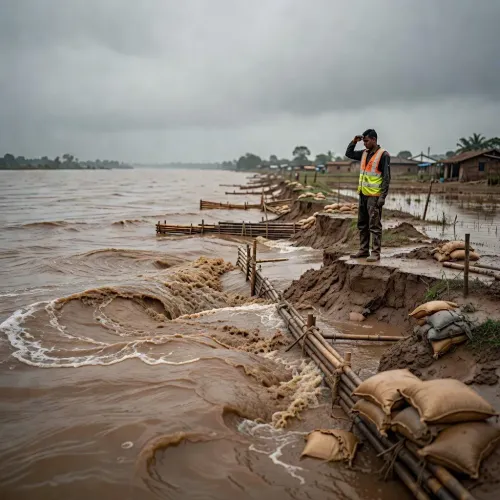
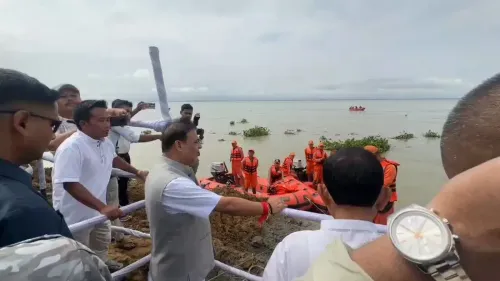
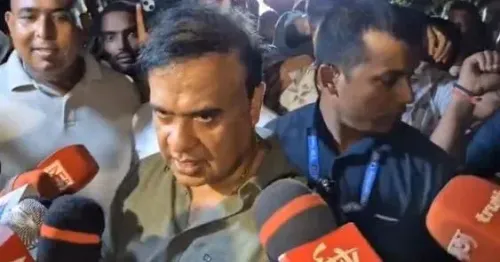
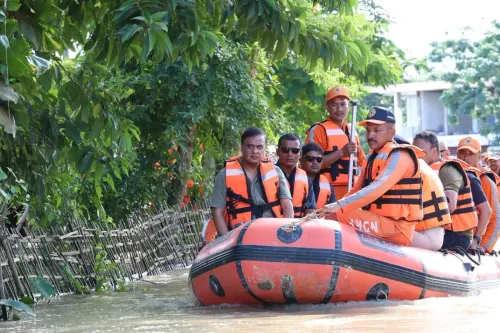
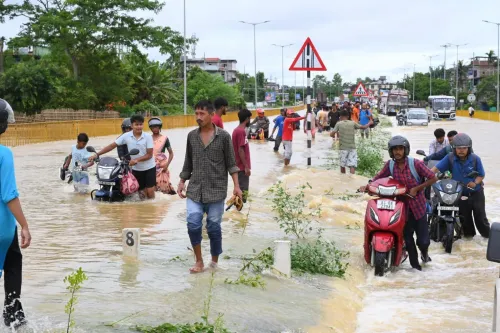
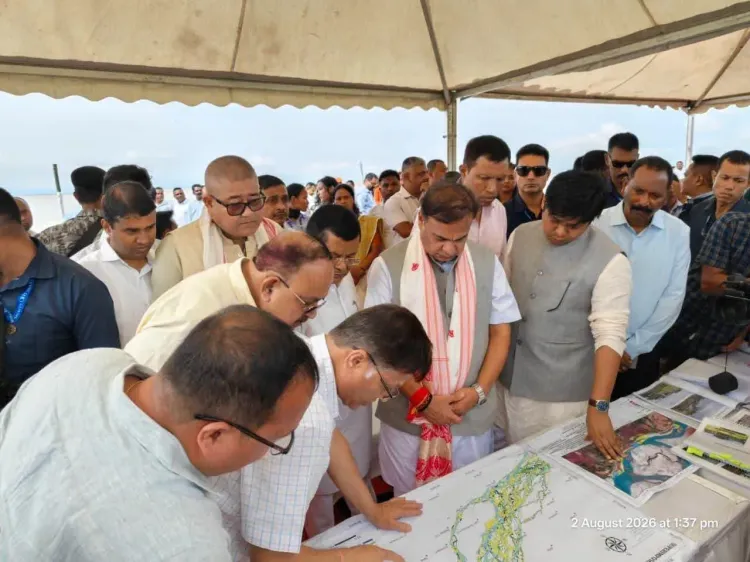
The Brahmaputra does not negotiate. Year after year, it carves into the banks of Dibrugarh, swallowing farmland and livelihoods — and on Sunday, 2 August 2026, Chief Minister Dr. Himanta Biswa Sarma walked into that reality firsthand, visiting the erosion-battered stretches of Chabua, Balijan, Pukhurijan, Dinjan, and Rahmoria to assess the damage on the ground.
IIT expertise meets a ₹90 crore departmental push
The CM's visit was not just a show of solidarity. Dr. Sarma announced that experts from the Indian Institutes of Technology (IIT) will be formally engaged to develop a long-term, science-backed solution to Brahmaputra bank erosion — a mandate that runs alongside the state water resources department's already-proposed ₹90 crore mitigation project. The two tracks are designed to complement each other: the departmental project addresses immediate protection works, while IIT input aims to crack the deeper engineering problem that has defeated successive governments for decades. This is a familiar playbook in Assam — but the explicit pairing of a large capital outlay with an IIT technical study signals a more structured attempt to move beyond patchwork fixes.Chabua to Rahmoria: five villages, one chronic wound
The five localities the CM toured — Chabua, Balijan, Pukhurijan, Dinjan, and Rahmoria — sit along one of the most erosion-vulnerable corridors in Upper Assam. The Brahmaputra, one of the world's highest-sediment rivers, shifts its channel seasonally, and communities along its banks in Dibrugarh have faced repeated displacement and agricultural land loss. Dr. Sarma interacted directly with local residents during the visit, assuring them of the government's 'unwavering support' — a phrase that carries particular weight when spoken on ground that may not exist in its current form a monsoon from now.Decades of embankments, and the case for something different
Assam has been fighting this river since the 1980s, when the Brahmaputra Board was established to coordinate flood and erosion management. Embankments have been built, breached, rebuilt, and breached again. The pattern — short-term protection works followed by calls for scientific review — has repeated across administrations. What distinguishes the current announcement is the institutional weight of IIT involvement alongside a defined project budget, rather than a study in place of one. Whether that combination finally yields durable solutions is the question Dibrugarh's residents have been asking for a generation. The rollout of the ₹90 crore project and the IIT team's eventual recommendations will be the real test of whether this visit marks a turning point or another entry in a long ledger of well-intentioned interventions.Point of View
But one that Assam has approximated before without lasting results. For CM Sarma, the optics of a personal field visit to five named villages reinforces his administration's infrastructure-and-delivery brand heading into a period of heightened scrutiny over flood and erosion management. The IIT engagement also signals an attempt to shift accountability for outcomes toward a credentialled external body, which can insulate the government politically if solutions prove elusive. The real indicator will be whether the ₹90 crore project reaches financial closure and IIT recommendations translate into funded, implemented works — not just a report.
NationPress
2 Aug 2026
Frequently Asked Questions
Why did CM Himanta visit Dibrugarh on 2 August 2026?
CM Dr. Himanta Biswa Sarma visited erosion-affected areas in Dibrugarh — including Chabua, Balijan, Pukhurijan, Dinjan, and Rahmoria — to assess the impact of Brahmaputra bank erosion firsthand and announce government interventions.
What is the ₹90 crore project for Brahmaputra erosion in Assam?
The Assam water resources department has proposed a ₹90 crore mitigation project to address Brahmaputra bank erosion. It is designed to work alongside an IIT-led long-term technical study announced during the CM's Dibrugarh visit.
How will IIT experts help with Brahmaputra erosion?
IIT experts will be engaged to develop a long-term, science-backed solution to Brahmaputra erosion, complementing the state department's immediate mitigation works rather than replacing them.
Which areas in Dibrugarh are worst affected by Brahmaputra erosion?
The CM's visit covered Chabua, Balijan, Pukhurijan, Dinjan, and Rahmoria — five localities in Dibrugarh district along one of the most erosion-vulnerable stretches of the Brahmaputra in Upper Assam.
What has Assam done historically to control Brahmaputra erosion?
Assam has implemented successive anti-erosion and embankment projects under the Brahmaputra Board framework since the 1980s, combining short-term protection works with periodic calls for scientific review — a pattern the current IIT engagement continues.