Chirag Paswan Salutes Quit India Movement on 84th Anniversary
Synopsis
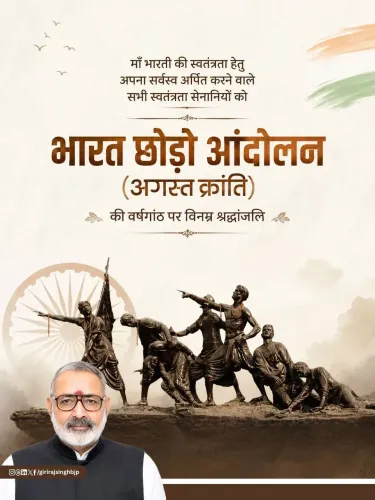
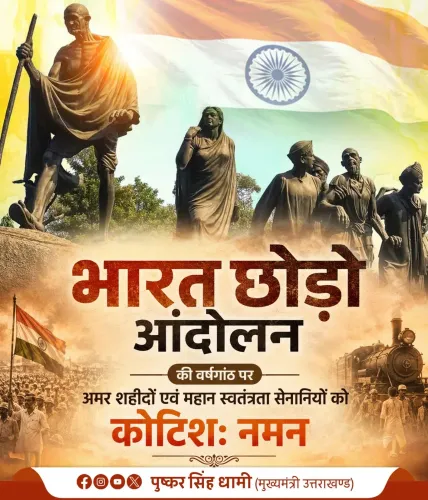
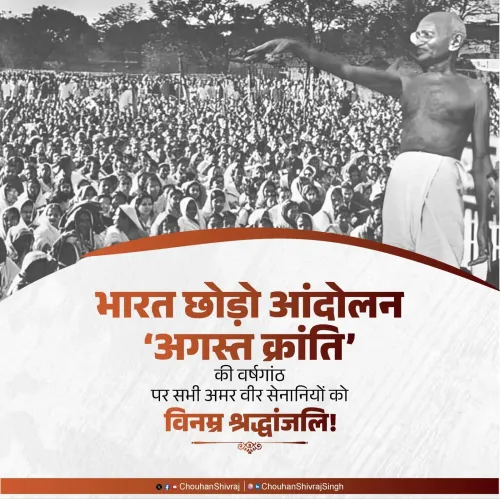
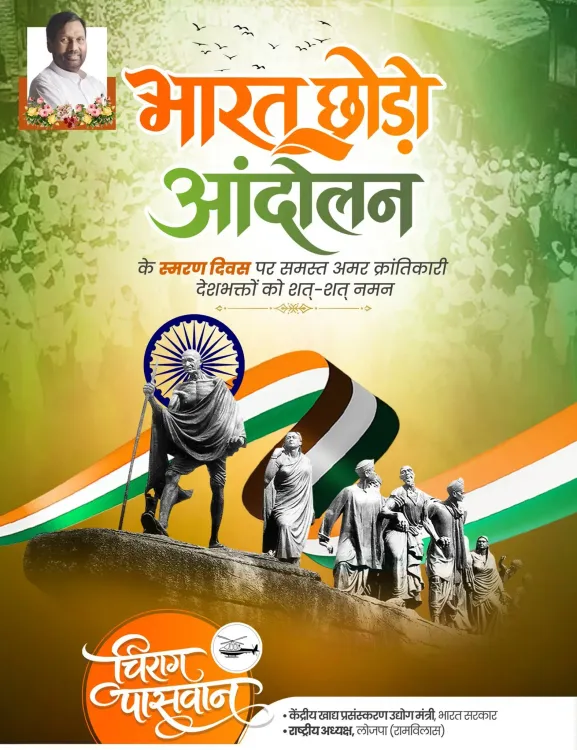
On the 84th anniversary of the Quit India Movement, Union Minister Chirag Paswan saluted the freedom fighters who launched India's boldest mass civil disobedience campaign on 8 August 1942, calling it an immortal chapter of public resolve and indomitable courage.
Key Takeaways
Union Food Processing Minister Chirag Paswan posted a tribute on 8 August 2026 marking the Quit India Movement anniversary.
The Quit India Movement was launched on 8 August 1942 at the All India Congress Committee session in Bombay .
Paswan described the movement as an 'immortal chapter of India's public resolve, public participation, and indomitable courage.' The movement saw mass participation from students, farmers, workers, and women across India following Gandhi's 'Do or Die' call.
Political leaders across party lines mark 8 August annually as a moment of cross-partisan national remembrance.
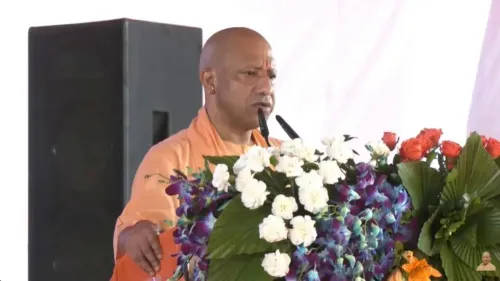
Eighty-four years after a nation rose as one and told an empire to leave, Union Food Processing Minister Chirag Paswan paused on Saturday, 8 August 2026, to bow before those who made that defiance possible.
Posting in Hindi on the anniversary of the Quit India Movement, Paswan wrote: 'On the anniversary of the Quit India Movement, I salute all those freedom fighters who dedicated everything for the independence of the nation. This movement is an immortal chapter of India's public resolve, public participation, and indomitable courage.'
The Night That Changed Everything: 8 August 1942
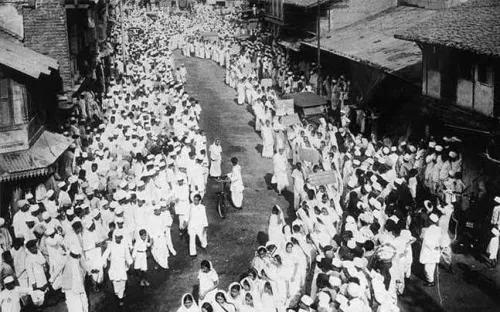
On the night of 8 August 1942, the All India Congress Committee convened in Bombay and passed a resolution that shook the foundations of British rule. Mahatma Gandhi's call — 'Karo ya Maro' (Do or Die) — electrified a subcontinent. Within hours, the British administration had arrested the entire Congress leadership, but the movement they tried to suppress only spread further, drawing millions of ordinary Indians into open defiance.
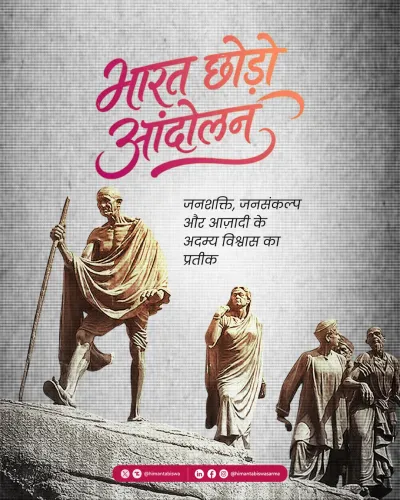
The Quit India Movement stands apart in the independence struggle for one defining quality: it was not led by a handful of leaders but carried forward by students, farmers, workers, and women in towns and villages across the country. That mass character — what Paswan called 'jansankalp aur janbhagidari' (public resolve and public participation) — is what makes the anniversary a moment of collective memory rather than partisan commemoration.
A Cross-Party Moment of National Memory
Each 8 August, political figures from every corner of India's spectrum mark the occasion, a rare point of convergence in an otherwise fractious public discourse. The tributes are a reminder that the legitimacy of the republic rests, in part, on an acknowledged debt to those who risked imprisonment, lathi charges, and worse to end colonial rule.
For Paswan, president of the Lok Janshakti Party (Ram Vilas) and a minister in the National Democratic Alliance government, the post also carries a personal lineage — his father, the late Ram Vilas Paswan, was himself a towering figure who framed his politics in the language of constitutional rights and social justice rooted in the freedom struggle's unfinished promises.
The courage of 1942 was never just about ending foreign rule. It was a wager on what kind of nation would follow. That question — what India owes its founders — is the quiet undertow beneath every 8 August tribute.
Point of View
But it carries a particular resonance for the LJP (Ram Vilas), a party that has long anchored its identity in the social-justice promises of the independence era. By invoking mass participation — janbhagidari — rather than individual heroes, Paswan frames the freedom struggle as a democratic, bottom-up achievement, a framing that subtly aligns with his party's Dalit-inclusive political base. Annual tributes like this also serve a quiet institutional function: they reinforce the NDA's claim to the nationalist legacy at a time when ownership of that legacy remains fiercely contested across India's political spectrum.
NationPress
22 Sept 2026
Frequently Asked Questions
When was the Quit India Movement launched?
The Quit India Movement was launched on 8 August 1942 , when the All India Congress Committee passed a resolution in Bombay demanding an immediate end to British colonial rule, followed by Mahatma Gandhi's historic 'Do or Die' call.
What did Chirag Paswan say on Quit India Movement anniversary 2026?
Chirag Paswan posted a tribute in Hindi saluting all freedom fighters who dedicated everything for the nation's independence, calling the Quit India Movement an immortal chapter of India's public resolve, public participation, and indomitable courage.
Who is Chirag Paswan?
Chirag Paswan is India's Union Minister of Food Processing Industries and the national president of the Lok Janshakti Party (Ram Vilas) , the party founded by his father, the late Ram Vilas Paswan.
Why is 8 August significant in Indian history?
8 August marks the anniversary of the Quit India Movement of 1942, one of the largest and most consequential mass civil disobedience campaigns in India's independence struggle against British rule.
What was the Quit India Movement?
The Quit India Movement was a mass civil disobedience campaign launched by the Indian National Congress on 8 August 1942 , demanding an immediate British withdrawal from India. It mobilised millions of ordinary citizens and is regarded as a turning point in the independence struggle.