Giriraj Singh pays tribute on Quit India Movement anniversary
Synopsis
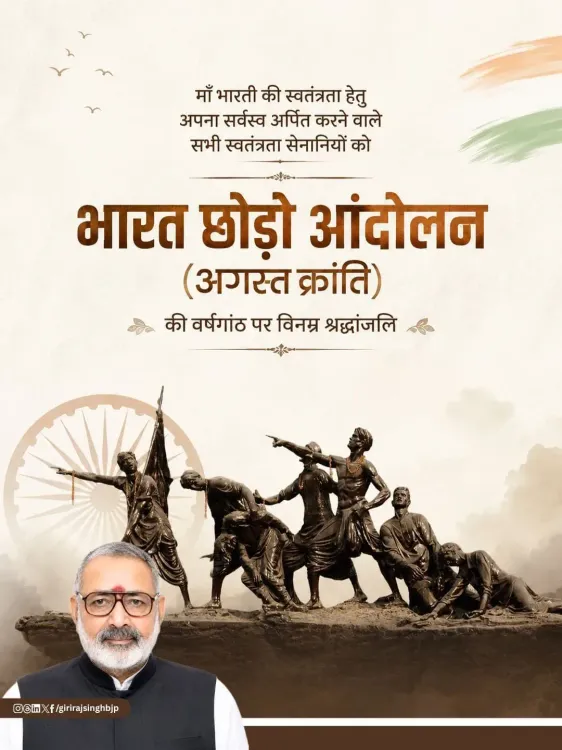
On the 84th anniversary of the Quit India Movement, Union Textiles Minister Giriraj Singh honoured the freedom fighters of 1942, calling the August Revolution a golden chapter of India's independence struggle and urging citizens to build a strong, prosperous India.
Key Takeaways
Giriraj Singh posted a tribute on 9 August 2026 , the anniversary of the Quit India Movement.
The Quit India Movement was launched on 8 August 1942 by the Indian National Congress, demanding an immediate end to British rule.
Singh described the movement as a 'golden chapter' that 'shook the foundations of British rule and united the entire nation.' He called on citizens to honour the freedom fighters' sacrifices by actively participating in nation-building.
The tribute comes less than a week before Independence Day on 15 August , India's most intensely patriotic period.
Eighty-four years after Mahatma Gandhi's clarion call of 'Karo ya maro' ('Do or Die') shook the foundations of the British Empire, Union Textiles Minister Giriraj Singh paused on Sunday, 9 August 2026 to salute the freedom fighters who gave everything for a free India.
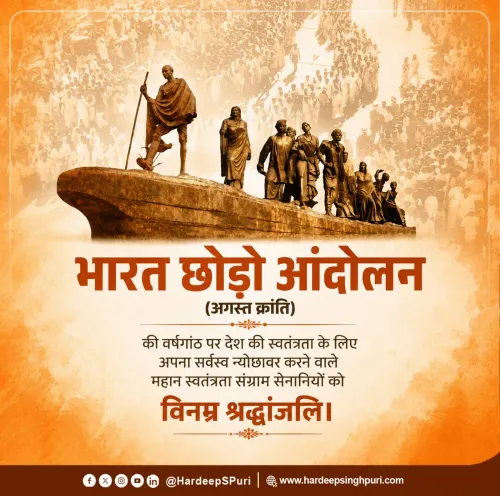
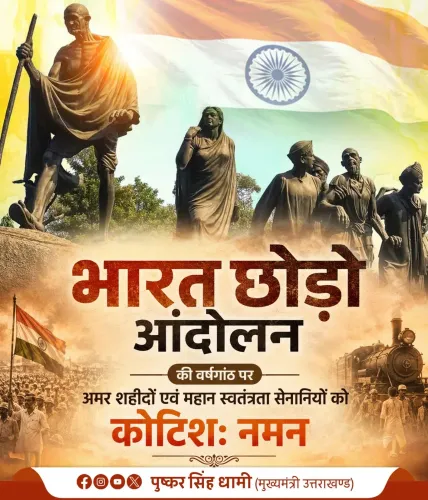
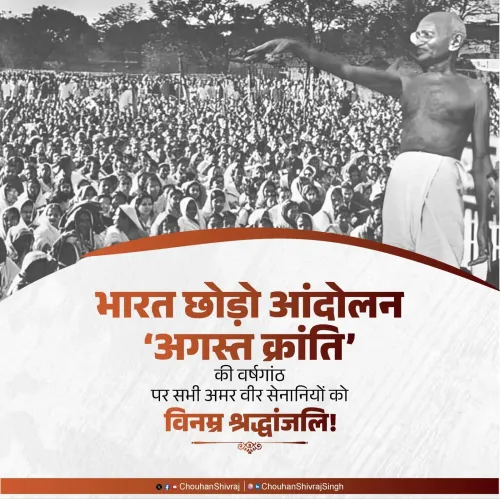
Posting on the 84th anniversary of the Quit India Movement, Singh offered what he called a 'humble tribute' — vinamra shraddhanjali — to the 'great freedom fighters who sacrificed everything for Mother India's independence.' He described the movement, launched in 1942, as a 'golden chapter of India's freedom struggle that shook the foundations of British rule and united the entire nation in the quest for independence.'
The August Revolution that changed everything
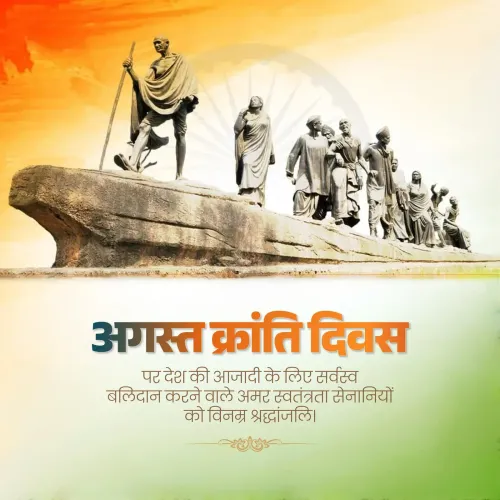
The Quit India Movement — also called August Kranti, the August Revolution — was launched on 8 August 1942 by the Indian National Congress at the Gowalia Tank Maidan in Bombay. It was the most forceful mass civil disobedience campaign of the independence era, demanding an immediate end to British colonial rule. Within days, the British administration had arrested virtually the entire Congress leadership, but the movement had already ignited a nationwide groundswell that colonial authorities could not fully suppress.
The movement is widely regarded as a turning point: it demonstrated that mass non-cooperation could paralyse colonial governance, and it accelerated the political calculus that eventually led to independence in 1947.
A call to carry the torch forward
Singh's post was not purely retrospective. He closed with a pledge — and an invitation to every citizen — to honour those sacrifices through active nation-building: 'Let us resolve to build the strong and prosperous India of their dreams by playing our active role in nation-building.'
The framing reflects a consistent pattern in Indian political commemoration: linking the moral authority of the independence generation to present-day development goals. With Independence Day on 15 August less than a week away, tributes of this kind mark the opening of the country's most intensely patriotic fortnight on the calendar.
For a minister whose portfolio sits at the intersection of industrial heritage and economic ambition — India's textile sector is one of its oldest and largest — the call to build a 'strong and prosperous India' carries an occupational resonance that goes beyond ceremony.
Point of View
The messaging subtly frames the current administration as the inheritor and executor of 1942's unfinished promise. With Independence Day a week away, such statements also serve as a soft political warm-up — reinforcing patriotic credentials ahead of the government's flagship 15 August address. For a senior BJP leader from Bihar, a state with deep roots in the freedom struggle, the resonance is both national and locally grounded.
NationPress
23 Sept 2026
Frequently Asked Questions
What is the Quit India Movement and when was it launched?
The Quit India Movement was a mass civil disobedience campaign launched on 8 August 1942 by the Indian National Congress, demanding an immediate end to British colonial rule in India. It is also known as the August Kranti or August Revolution.
Why is 9 August significant in India?
9 August is observed as Quit India Movement Day ( August Kranti Diwas ) in India, marking the anniversary of the 1942 movement that galvanised mass participation in the independence struggle.
Who is Giriraj Singh?
Giriraj Singh is a senior BJP leader, Lok Sabha MP from Begusarai, Bihar , and currently serves as the Union Minister of Textiles in the Indian government.
What did Giriraj Singh say about the Quit India Movement?
Singh called the 1942 movement a 'golden chapter of India's freedom struggle' that 'shook the foundations of British rule,' and urged citizens to resolve to build a 'strong and prosperous India' in honour of the freedom fighters' sacrifices.
What events follow Quit India Movement Day in India?
Quit India Movement Day on 9 August is typically followed by Independence Day on 15 August , making the period one of the most significant on India's patriotic calendar, marked by official commemorations and political messaging nationwide.