Rajnath Singh Pays Tribute on Quit India Movement Day
Synopsis
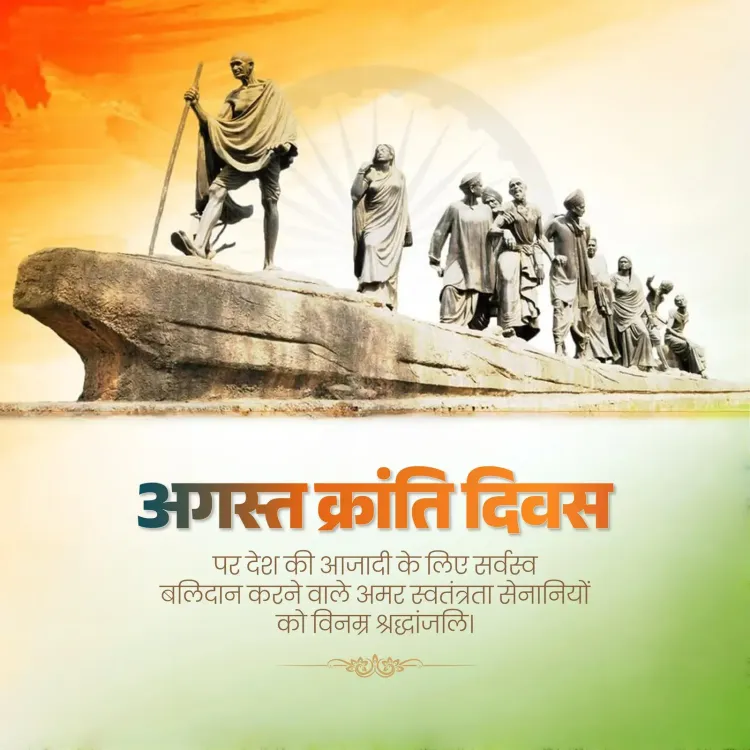
Union Defence Minister Rajnath Singh marked the Quit India Movement's anniversary on 9 August, honouring Mahatma Gandhi and all freedom fighters, and connecting their sacrifice to the goal of building a strong, self-reliant, and developed India.
Key Takeaways
Union Defence Minister Rajnath Singh posted a tribute on 9 August 2026 marking the anniversary of the Quit India Movement.
The Quit India Movement was launched on 8 August 1942 by Mahatma Gandhi , demanding immediate British withdrawal from India.
Singh offered tribute to Gandhi, all freedom fighters, and martyrs who sacrificed their lives for independence.
He linked their legacy to the present-day goal of building a 'strong, prosperous, self-reliant and developed India' — Viksit Bharat .
The tribute reflects a broader pattern of connecting India's independence-struggle heritage to current national-development objectives.
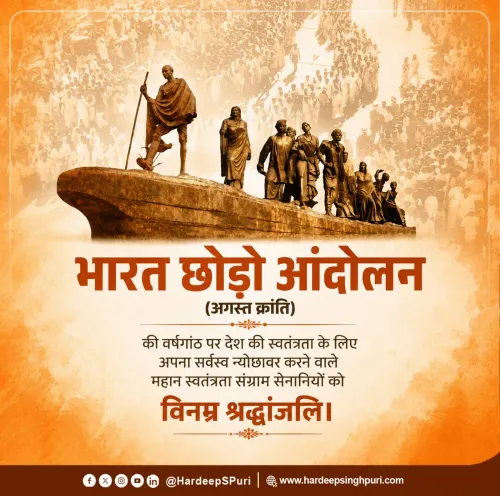
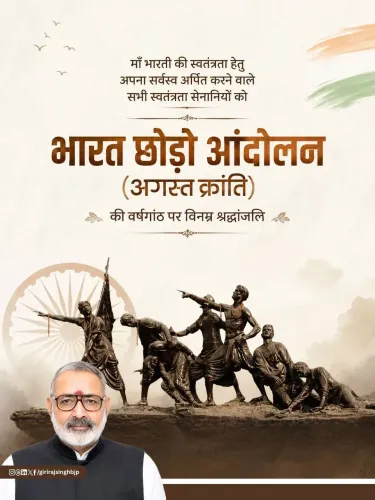
Eighty-four years after Mahatma Gandhi gave India its most electric command — 'Karo ya maro' ('Do or die') — Union Defence Minister Rajnath Singh invoked that same fire on 9 August 2026, calling the Quit India Movement an immortal chapter in India's resolve, people-power, and unbreakable faith in freedom.
In a post in Hindi, Singh wrote that the movement launched on 8 August 1942 under Gandhi's leadership 'spread a new consciousness across the country and inspired countless Indians to unite and struggle for independence.' He offered respectful tribute — 'sadar naman' — to the Father of the Nation, every freedom fighter, and every martyr who gave all they had.
The movement that shook an empire
The Quit India Movement was not a polite petition. Launched from Gowalia Tank Maidan, Bombay on 8 August 1942, it was Gandhi's most uncompromising demand yet: immediate British withdrawal from India. Within days, the colonial government arrested Gandhi and the entire Congress leadership — and the country erupted anyway. Spontaneous protests, strikes, and acts of civil disobedience spread from cities to villages, demonstrating that the independence movement had sunk roots far beyond any single leader.
The British suppressed the uprising with force, but the political cost was irreversible. The movement hardened mass conviction that colonial rule's days were numbered, and it remains one of the defining escalations on the road to 15 August 1947.
From sacrifice to 'Viksit Bharat'
Singh's tribute did not stop at remembrance. He drew a direct line from the martyrs' sacrifice to present-day national ambition, writing that 'continuously working to build a strong, prosperous, self-reliant and developed India — Viksit Bharat — is the true homage to them.' The framing is consistent with how the current government links the freedom struggle's legacy to its own policy goals of Aatmanirbhar Bharat (self-reliant India) and economic development.
For a senior leader who has held portfolios spanning home affairs and now defence, invoking the Quit India Movement carries particular weight: the movement's call for national self-determination resonates directly with contemporary arguments for strategic autonomy and indigenous defence production.
The martyrs asked India to imagine itself free. The question their anniversary always renews is how faithfully that imagination is being honoured.
Point of View
A moment defined by mass self-determination and rejection of external dependence, the framing lends historical weight to current narratives around strategic autonomy. As a senior BJP leader and former Home Minister now heading Defence, Singh's voice on national sacrifice carries institutional resonance that goes beyond ceremonial tribute.
NationPress
23 Sept 2026
Frequently Asked Questions
What is the Quit India Movement and why is it remembered on 9 August?
The Quit India Movement was launched on 8 August 1942 by Mahatma Gandhi at Gowalia Tank Maidan in Bombay, demanding immediate British withdrawal from India. 9 August — when mass protests erupted nationwide after Gandhi's arrest — is observed annually as Quit India Movement Day or Kranti Diwas .
What did Rajnath Singh say about the Quit India Movement?
Rajnath Singh called the movement 'an immortal chapter in India's resolve, people-power, and unbreakable faith in freedom,' paid tribute to Mahatma Gandhi and all martyrs, and said building a strong, self-reliant, developed India is the truest homage to their sacrifice.
Who led the Quit India Movement?
Mahatma Gandhi led the Quit India Movement, announcing it on 8 August 1942 with his famous 'Do or Die' call. The entire Congress leadership was arrested within hours, but protests spread spontaneously across India.
What is 'Aatmanirbhar Bharat' and how does it connect to the Quit India Movement?
Aatmanirbhar Bharat means 'self-reliant India' and is a key policy goal of the current government. Leaders like Rajnath Singh frequently connect it to the freedom struggle's spirit of self-determination, arguing that economic and strategic independence honours the martyrs' vision.
What is Rajnath Singh's role in the Indian government?
Rajnath Singh is India's Union Minister of Defence and a senior BJP leader. He previously served as Union Home Minister and as Chief Minister of Uttar Pradesh .