Chirag Paswan meets Amit Shah, seeks justice for Bihar victims
Synopsis
Union Minister Chirag Paswan met Home Minister Amit Shah in New Delhi on July 2, 2026, to brief him on the alleged murders of two Paswan community youths in Rajgir and the killing of Bharat Tiwari by police in Arrah, Bihar, urging impartial probes and swift justice for victims' families.
Key Takeaways
Chirag Paswan met Amit Shah in New Delhi on July 2, 2026 to raise two separate killing cases from Bihar .
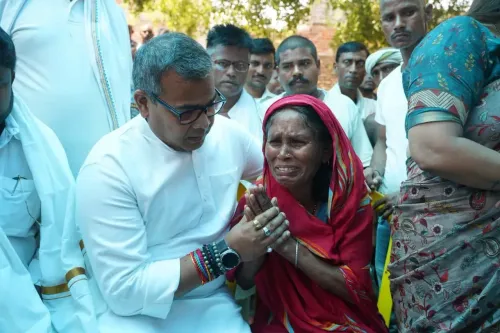
Two youths from the Paswan community were allegedly murdered in Rajgir , Nalanda district.
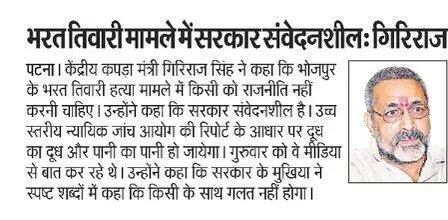
Bharat Tiwari was allegedly killed by police in Arrah , Bhojpur district.
Paswan urged the Home Minister to ensure impartial investigations in both cases.
He called for prompt and appropriate justice for the bereaved families of all victims.
The cases may be referred to central agencies like the CBI , and could feature in the upcoming monsoon session of Parliament .
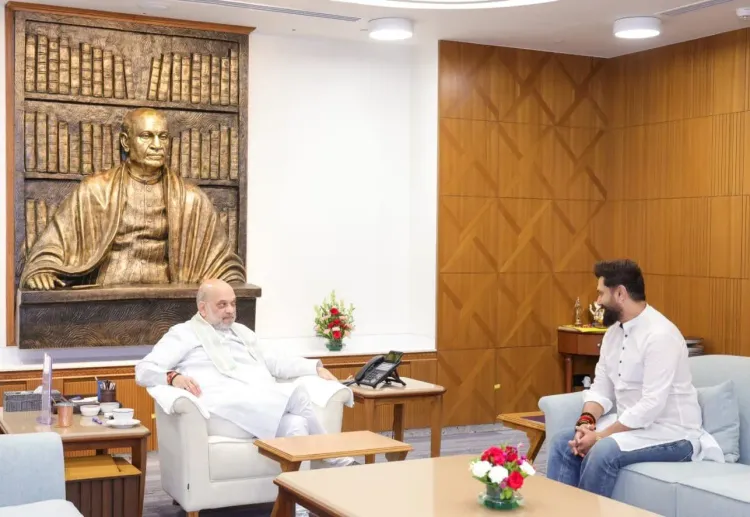
Union Food Processing Minister Chirag Paswan met Union Home Minister Amit Shah in New Delhi on Thursday, July 2, 2026, to brief him on two separate incidents of alleged killings in Bihar — the brutal murders of two young men from the Paswan community in Rajgir, and the death of Bharat Tiwari allegedly at the hands of police in Arrah — and to press for impartial investigations and swift justice for the victims' families.
Context
Posting on X after the meeting, Chirag Paswan wrote in Hindi: 'आज नई दिल्ली में माननीय केंद्रीय गृह एवं सहकारिता मंत्री आदरणीय श्री @AmitShah जी से भेंट कर बिहार के राजगीर में पासवान समाज के दो युवकों की निर्मम हत्या तथा आरा में पुलिस द्वारा भरत तिवारी की हत्या के संबंध में विस्तृत जानकारी दी।' ('Today in New Delhi I met the honourable Union Home and Cooperation Minister Shri Amit Shah and provided detailed information regarding the brutal murder of two youths of the Paswan community in Rajgir, Bihar, and the killing of Bharat Tiwari by police in Arrah.')
He added that he had urged the Home Minister to ensure impartial inquiries in both cases and to secure 'prompt and appropriate justice' for the bereaved families. The post was accompanied by an image, likely from the meeting.
Policy Backdrop
The two incidents span different districts of Bihar: Rajgir falls in Nalanda district, while Arrah is the headquarters of Bhojpur district. The Rajgir case involves alleged targeted killings of members of the Paswan community, a Scheduled Caste group that forms a significant political constituency for the Lok Janshakti Party (Ram Vilas), the Bihar-based NDA ally that Chirag Paswan leads as national president. The Arrah case involves the alleged killing of Bharat Tiwari in a police action, raising questions about custodial or encounter deaths.
Central ministers from Bihar-origin parties have a well-established practice of escalating state-level law-and-order concerns to the Union Home Ministry, particularly when the victims belong to communities they politically represent. This approach uses the framework of cooperative federalism to press state police — in this case, the Bihar Police — for accountability, and can sometimes result in referrals to central investigative agencies.
Stakeholders and Impact
The families of the victims in both Rajgir and Arrah are the most immediate stakeholders, seeking justice and closure. For the broader Paswan community in Bihar, the Rajgir killings carry particular resonance: violence against Scheduled Caste members is a recurring flashpoint in the state's political landscape, and community leaders are expected to visibly intervene at the highest levels of government.
Chirag Paswan's decision to personally brief Amit Shah — rather than writing to the Bihar government — signals the gravity with which his party views both incidents. It also reinforces his role as the community's primary political voice at the Centre, a mantle inherited from his father and LJP founder Ram Vilas Paswan, who regularly raised caste-related violence and justice issues in central forums until his death in 2020.
What's Next
The immediate outcome of the meeting with Amit Shah has not been officially confirmed. Observers will watch whether the Home Ministry directs central agencies such as the CBI to take up either case, or whether it issues advisories to the Bihar government to expedite investigations. Both cases could also surface as questions or debates in the upcoming monsoon session of Parliament, given their political salience. The pressure from a sitting Union Minister is likely to accelerate at least a formal response from state authorities.
Point of View
Effectively creating federal pressure on the state administration. Coming amid Bihar's pre-election political churn, the move also keeps the LJP (Ram Vilas) visible on issues of community dignity and police accountability. Whether it translates into tangible investigative action will determine how much political capital Paswan actually gains from the meeting.
NationPress
1 Oct 2026
Frequently Asked Questions
Why did Chirag Paswan meet Amit Shah on July 2 2026?
Chirag Paswan met Amit Shah to brief him on two alleged killings in Bihar — the murders of two Paswan community youths in Rajgir and the death of Bharat Tiwari allegedly at the hands of police in Arrah — and to seek impartial investigations and swift justice for the victims' families.
What happened to the Paswan community youths in Rajgir Bihar?
According to Chirag Paswan's post, two young men from the Paswan community were brutally murdered in Rajgir, a town in Nalanda district of Bihar. The specific circumstances of the killings have not been officially confirmed at the central level.
Who is Bharat Tiwari and what happened in Arrah?
Bharat Tiwari is named by Chirag Paswan as a victim allegedly killed by police in Arrah, the headquarters of Bhojpur district in Bihar. The case raises concerns about a possible custodial or encounter death.
Can the Centre intervene in a Bihar law and order case?
While law and order is a state subject under India's Constitution, the Union Home Ministry can direct central investigative agencies such as the CBI to take up cases, and can also issue advisories to state governments. A sitting Union Minister formally briefing the Home Minister adds significant political weight to such a request.
What is the Lok Janshakti Party Ram Vilas and its connection to the Paswan community?
The Lok Janshakti Party (Ram Vilas) is a Bihar-based political party led by Chirag Paswan, son of party founder Ram Vilas Paswan. It is allied with the NDA and draws much of its support from the Paswan community, a Scheduled Caste group with significant political representation in Bihar.