Chirag Paswan calls for justice across all castes, from Pandit to Pasi
Synopsis
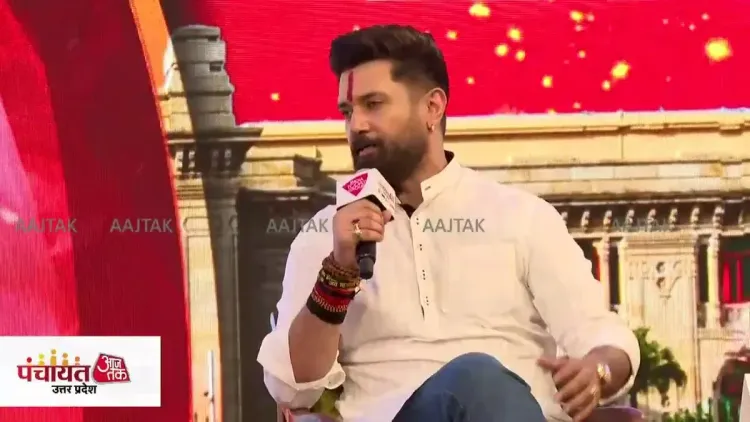
Union Food Processing Minister Chirag Paswan on 15 July 2026 reaffirmed his inclusive social vision, invoking the 'Pandit-Pasi-Paswan' formulation and stating he condemned a Bihar encounter involving a Brahmin family with the same force as any injustice against Dalit communities.
Key Takeaways
Chirag Paswan on 15 July 2026 publicly stated he seeks to be a voice for every caste group, from upper castes to the most marginalised.
He referenced a recent Bihar police encounter in which the victim was from a Pandit (Brahmin) family , saying he condemned it as prominently as any injustice against Pasi or other Dalit communities.
Paswan used the formulation 'Pandit-Pasi-Paswan' to signal that every social group between these two poles is part of his political constituency.
He criticised political actors who deliberately keep communities at opposite ends of the caste spectrum divided for narrow electoral gain.
The remarks align with Paswan's post-2020 commitment to building a multi-caste 'rainbow' coalition beyond the LJP's traditional Paswan community base.
The statements carry significance ahead of the next Bihar assembly election cycle, where caste arithmetic remains decisive.
Union Food Processing Minister Chirag Paswan on Wednesday, 15 July 2026, publicly reaffirmed his commitment to an inclusive social vision, asserting that justice must reach every community — from upper castes to the most marginalised — and that he has consistently raised his voice against injustice regardless of which group is affected.
Context
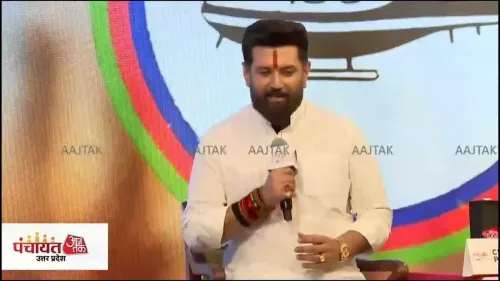
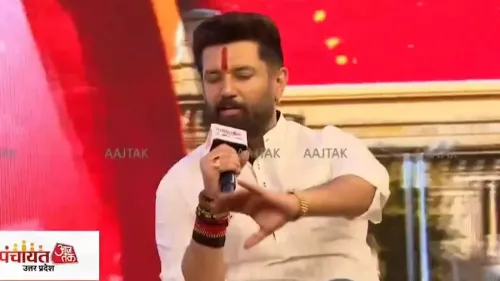
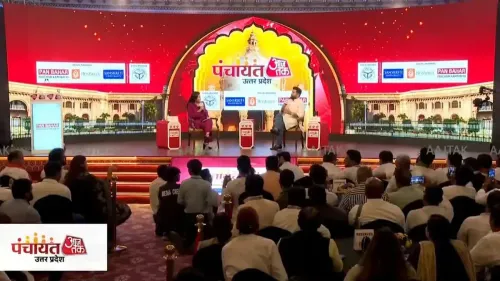
Speaking in what appears to be a public address, Paswan stated — 'पंडित-पासी-पासवान के बीच में समाज का हर एक वर्ग है जिसकी मैं आवाज बनने का प्रयास कर रहा हूँ' ('Between the Pandit, the Pasi and the Paswan, every section of society is there — and I am trying to become the voice of all of them'). He framed this as a rejection of political actors who deliberately keep communities at opposite ends of the caste spectrum divided.
Paswan also referenced a recent police encounter in Bihar, stating that the victim came from a Pandit (Brahmin) family and that he condemned that incident with the same prominence as he would any injustice against the Pasi community. 'I made an equally prominent effort to become a voice,' he said, underlining that his condemnation is not selective.
Policy Backdrop
The Lok Janshakti Party (Ram Vilas), which Paswan leads as national president, was founded by his father Ram Vilas Paswan in 2000 primarily to consolidate support among the Paswan community within a broader social-justice framework. After the 2020 split of the original LJP, Chirag Paswan publicly committed to building what he described as a 'rainbow' social coalition — one that reaches beyond any single caste identity.
Bihar's political landscape has historically been shaped by caste-based mobilisation, with successive governments using categories such as Mahadalit and Extremely Backward Classes to widen their electoral appeal. The NDA, of which the LJP (Ram Vilas) is a constituent, has encouraged its state units to project inclusive messaging, particularly as Bihar approaches its next assembly election cycle.
Stakeholders and Impact
Paswan's remarks are directed at a wide cross-section of Bihar's electorate — upper-caste voters who may feel politically neglected, Dalit communities including the Pasi and Paswan groups, and the broader middle ground of Other Backward Classes. By invoking the 'Pandit-Pasi-Paswan' formulation, he is explicitly signalling that his political identity is not reducible to his own community's interests.
The reference to the Bihar encounter — involving a member of a Pandit family — is notable because leaders aligned with social-justice politics are rarely seen publicly condemning police action in cases where the victim belongs to a dominant-caste group. Paswan's decision to raise it signals an attempt to build credibility as a cross-caste voice. The specific encounter incident referenced in the post could not be independently verified from available records.
What's Next
Paswan's inclusive-coalition rhetoric will be tested in the months ahead as Bihar moves closer to its assembly election season, where caste arithmetic remains the primary determinant of alliance strategy. His ability to translate this messaging into durable multi-caste support — beyond the LJP's traditional Paswan base — will determine whether the 'Pandit-Pasi-Paswan' formulation becomes a lasting political brand or remains campaign-season oratory. Statements on police encounter accountability may also draw scrutiny from civil-society groups and opposition parties in the state.
Point of View
He is trying to establish moral consistency that upper-caste voters, who have historically been sceptical of social-justice parties, might find credible. The move mirrors a broader NDA playbook of projecting inclusive optics while consolidating core Dalit and OBC support. Whether this messaging survives the transactional pressures of seat-sharing negotiations ahead of the Bihar polls will be the real test of its sincerity.
NationPress
14 Oct 2026
Frequently Asked Questions
What did Chirag Paswan say about caste and justice on 15 July 2026?
Chirag Paswan stated that he is trying to be a voice for every section of society — from the Pandit community at one end to the Pasi community at the other — and that he condemns injustice against any group with equal prominence.
What is the 'Pandit-Pasi-Paswan' formulation Chirag Paswan used?
It is a phrase Paswan used to represent the full social spectrum of Bihar — upper castes (Pandits), marginalised communities (Pasis) and his own community (Paswans) — arguing that every group between these poles deserves equal political voice.
Why did Chirag Paswan mention a Bihar police encounter?
Paswan cited a recent encounter in Bihar involving a victim from a Pandit family to demonstrate that his condemnation of injustice is not limited to Dalit communities, but extends equally to upper-caste victims.
What is the Lok Janshakti Party (Ram Vilas)?
The Lok Janshakti Party (Ram Vilas) is a political party led by Chirag Paswan, son of the late Ram Vilas Paswan who founded the original LJP in 2000. It is currently a constituent of the NDA coalition at the national level.
How does Chirag Paswan's inclusive stance relate to Bihar elections?
Bihar's elections are heavily influenced by caste alliances. Paswan's multi-caste messaging is seen as an effort to expand the LJP's base beyond the Paswan community and position himself as a credible leader for a broader coalition ahead of the next state assembly polls.