Chirag Paswan vows to unite exploited communities, hints at alliance uncertainty
Synopsis
Union Minister Chirag Paswan on 15 July 2026 called alliance talks premature while vowing to unite marginalised communities he says rival parties exploit as vote banks and abandon in times of need.
Key Takeaways
Union Food Processing Minister Chirag Paswan posted on X on 15 July 2026 declining to confirm whether or what form an electoral alliance would take.
He pledged to organise communities that other parties treat as 'vote banks' and accused rivals of confusing these groups rather than supporting them.
Paswan committed to bringing 'exploited sections of society' into the development mainstream — language rooted in the LJP(RV) 's founding Dalit-welfare mandate.
The LJP (Ram Vilas) has been part of the BJP -led NDA since 2021 , following the split of the original LJP after Ram Vilas Paswan 's death in October 2020 .
Bihar 's Dalit electorate — especially the Paswan community — is the primary target of this outreach ahead of the next state assembly cycle.
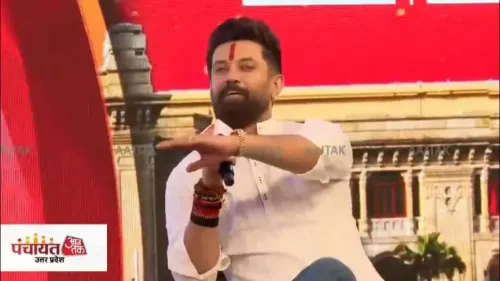
Union Food Processing Minister and Lok Janshakti Party (Ram Vilas) national president Chirag Paswan on Wednesday, 15 July 2026, signalled a renewed political outreach to marginalised communities while leaving the question of future electoral alliances deliberately open-ended in a post on X.
In the post, written in Hindi, Paswan stated: 'गठबंधन का स्वरूप क्या होगा या होगा भी या नहीं, इस पर अभी कुछ कहना जल्दबाजी होगी' — 'It would be premature to say anything right now about what form an alliance will take, or whether one will happen at all.' He added that his focus is on organising those communities that political parties treat merely as vote banks, and that when these sections need support, other parties are busy confusing them rather than standing by them. He concluded by reaffirming his commitment to bringing these 'exploited sections of society' into the development mainstream.
Context
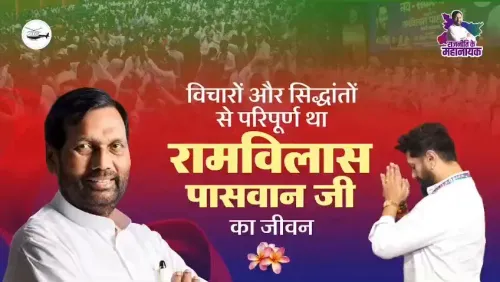
Paswan's remarks arrive against the backdrop of recurring alliance churn in Bihar, where caste-based regional parties have historically jostled for space within larger coalitions, particularly the BJP-led National Democratic Alliance. The LJP(RV) has been part of the NDA since 2021, when the original Lok Janshakti Party split following the death of its founder, Ram Vilas Paswan, in October 2020. Chirag Paswan subsequently consolidated his faction under the LJP (Ram Vilas) banner, positioning it as the authentic custodian of his father's political legacy.
By explicitly declining to confirm whether an alliance will materialise, Paswan is signalling both flexibility and leverage — a posture familiar in Bihar's fluid electoral arithmetic ahead of state assembly contests.
Policy Backdrop
The language of bringing marginalised communities into the 'development mainstream' echoes a rhetorical lineage that runs through both regional Dalit politics and the broader NDA framework. Ram Vilas Paswan built the original LJP on the premise that the Paswan community and allied Dalit groups deserved a distinct political voice, not merely a subordinate role within larger coalitions. Chirag Paswan's post reactivates this framing, contrasting his party's stated solidarity with these communities against what he characterises as deliberate confusion sown by rival parties.
The critique of parties treating communities as 'vote banks' while abandoning them in times of need is a recurring motif in Bihar's political discourse, deployed across the spectrum from the RJD to the JD(U) and the BJP itself.
Stakeholders and Impact
Dalit voters in Bihar — particularly those from the Paswan community — are the primary audience for this messaging. With Bihar assembly elections a recurring focal point in national political calculations, any shift in how LJP(RV) positions itself on alliances carries consequences for seat-sharing negotiations within the NDA as well as for opposition attempts to peel away sections of the Dalit electorate.
Smaller parties and independent community leaders who might otherwise remain unaffiliated could find Paswan's outreach an opening, especially if formal alliance talks with larger parties stall. The post also puts rival parties on notice that LJP(RV) intends to contest any claim to represent these communities.
What's Next
Political observers in Bihar will watch closely for formal announcements on seat-sharing or any organisational activity by LJP(RV) that signals a shift in its relationship with NDA partners. Paswan's deliberate ambiguity on alliance formation suggests that negotiations — if underway — remain at an early or sensitive stage. His emphasis on grassroots community organisation, rather than top-down coalition deals, may indicate a strategy of building bargaining strength before committing to any formal arrangement. How the BJP and JD(U) respond to this positioning will shape the contours of Bihar's next electoral cycle.
Point of View
He simultaneously sharpens LJP(RV)'s distinct identity and warns coalition partners not to take Dalit support for granted. The post fits a broader pattern in which smaller caste-based parties use pre-election periods to re-establish ideological ground before entering seat-sharing talks from a position of strength. Whether this translates into concrete organisational gains or remains rhetorical positioning will depend on the pace of formal alliance negotiations in the months ahead.
NationPress
15 Jul 2026
Frequently Asked Questions
What did Chirag Paswan say about Bihar alliance in July 2026?
Chirag Paswan said on 15 July 2026 that it would be premature to comment on whether an alliance will form or what shape it might take, while focusing his message on uniting marginalised communities.
Which party does Chirag Paswan lead?
Chirag Paswan is the national president of the Lok Janshakti Party (Ram Vilas), a Bihar-based party that has been part of the BJP-led NDA since 2021.
What is Chirag Paswan's position in the Union Cabinet?
Chirag Paswan serves as Union Minister of Food Processing Industries in the NDA government formed after the 2024 general elections.
Who was Ram Vilas Paswan and how is he related to Chirag Paswan?
Ram Vilas Paswan was the founder of the original Lok Janshakti Party and a veteran Union minister who represented Dalit communities until his death in October 2020. Chirag Paswan is his son and political heir.
Why is Chirag Paswan talking about exploited communities and vote banks?
Paswan is appealing to Dalit and marginalised voters in Bihar who he says are treated as vote banks by rival parties but abandoned when they need support, positioning LJP(RV) as their genuine political representative.