CM Sai Backs Cabinet Nod for Semicon 2.0, MPMS and Urea Policy
Synopsis
Chhattisgarh CM Vishnu Deo Sai on 15 July 2026 hailed the Union Cabinet's approval of the Rs 1,27,500 crore Semicon 2.0, the Rs 62,500 crore MPMS, and the National Urea Investment Policy-2026, saying the decisions will accelerate industrial growth and farm welfare in Chhattisgarh.
Key Takeaways
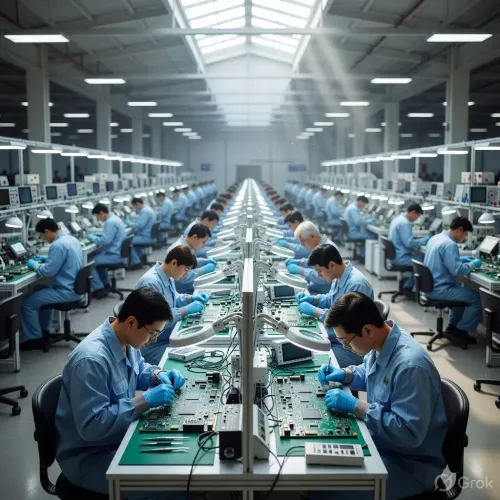
The Union Cabinet approved Semicon 2.0 with an outlay of Rs 1,27,500 crore to strengthen India's semiconductor ecosystem.
The Mobile Phone Manufacturing Scheme (MPMS) carries an outlay of Rs 62,500 crore to promote local manufacturing, R&D and Indian brands.
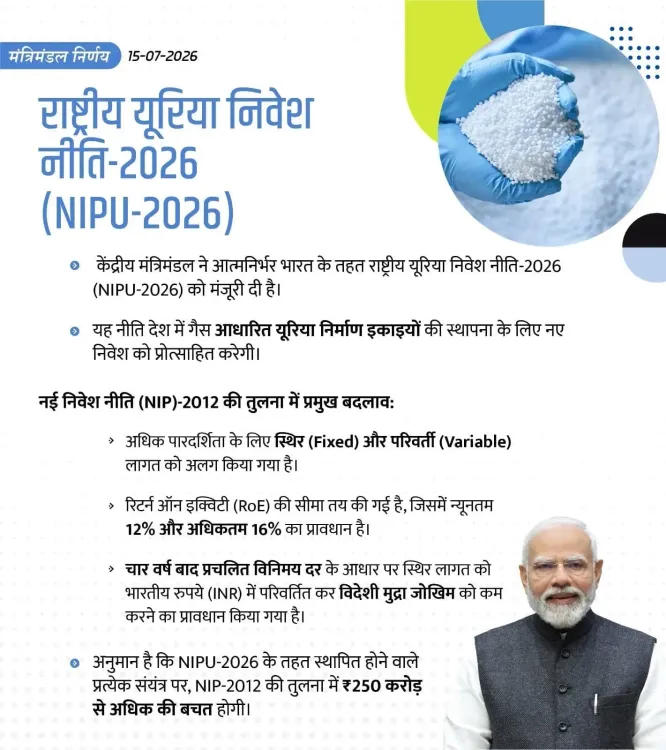
The National Urea Investment Policy-2026 aims to boost domestic urea production and ensure better fertiliser availability for farmers.
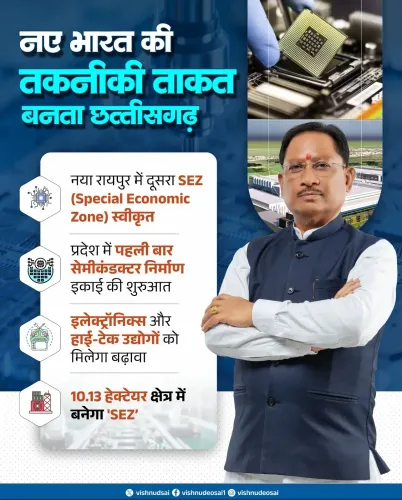
CM Vishnu Deo Sai said the decisions will attract industrial investment in electronics and manufacturing to Chhattisgarh .
The approvals build on earlier central schemes including the PLI for electronics (2020) and the India Semiconductor Mission (2021) .
State-level implementation guidelines and fresh investment proposals in Chhattisgarh will be key indicators of on-ground impact.
Chhattisgarh Chief Minister Vishnu Deo Sai on Wednesday, 15 July 2026 welcomed three landmark decisions by the Union Cabinet, describing the approvals of Semicon 2.0, the National Urea Investment Policy-2026, and the Mobile Phone Manufacturing Scheme (MPMS) as historic steps toward a self-reliant and developed India.
Context
In a post on X, CM Sai called the Cabinet decisions 'aatmanirbhar Bharat aur vikasit Bharat ke sankalp ko nayi gati dene wala aitihasik nirnay' [a historic decision giving new momentum to the resolve of self-reliant India and developed India]. He specifically flagged the direct benefits these schemes would bring to Chhattisgarh — from industrial investment in electronics and manufacturing to stronger agricultural support for the state's farmers.
The post, the first in a series of at least three, was addressed to Prime Minister Narendra Modi, crediting his 'visionary leadership' for the Cabinet approvals.
Policy Backdrop
The Rs 1,27,500 crore Semicon 2.0 scheme is positioned as an expansion of India's semiconductor ecosystem, building on the India Semiconductor Mission approved in 2021. That earlier mission provided incentives for fabrication units; Semicon 2.0 is intended to deepen domestic capacity across the chip design and manufacturing value chain.
The Rs 62,500 crore MPMS continues the trajectory set by the Production Linked Incentive (PLI) scheme for large-scale electronics manufacturing, notified in 2020, by adding a focus on research and development and the promotion of Indian brands alongside global supply-chain integration. The National Urea Investment Policy-2026 follows earlier measures under the 2020 Atmanirbhar Bharat package that sought to revive closed urea plants and attract fresh investment in domestic fertiliser production.
Stakeholders and Impact
Farmers are among the most direct beneficiaries of the urea policy, which aims to improve the availability and affordability of fertilisers — a persistent pressure point for agricultural states like Chhattisgarh, where paddy cultivation dominates the rural economy. CM Sai said the policy would 'empower the state's farmers and further strengthen agricultural development.'
Electronics manufacturers and semiconductor investors stand to benefit from the combined fiscal firepower of Semicon 2.0 and MPMS, which together represent an outlay of nearly Rs 1,90,000 crore. States that move quickly to align their own industrial policies with central scheme guidelines are expected to attract the largest share of new investment and employment.
What's Next
The immediate focus will be on state-level implementation guidelines for both Semicon 2.0 and MPMS, and whether Chhattisgarh can attract fresh investment proposals in electronics and semiconductor ancillaries. CM Sai's public endorsement signals that the state government intends to actively pursue these opportunities. Progress on the National Urea Investment Policy-2026 will be watched by farmer groups and fertiliser industry stakeholders across the country as implementation details emerge.
Point of View
Mobile manufacturing and fertilisers — reflects a deliberate effort to address both strategic industrial gaps and rural welfare in a single policy cycle. For CM Sai, publicly championing all three decisions serves a dual purpose: it reinforces Chhattisgarh's alignment with the Centre's Atmanirbhar Bharat agenda and positions the state as an active claimant for incoming investment flows. The combined outlay of nearly Rs 1,90,000 crore in tech manufacturing alone signals that India is escalating its import-substitution ambitions well beyond the initial PLI framework. Whether states with limited existing electronics infrastructure, like Chhattisgarh, can translate central incentives into ground-level capacity will be the real test of this policy cycle.
NationPress
14 Oct 2026
Frequently Asked Questions
What is Semicon 2.0 and what is its budget?
Semicon 2.0 is a central government scheme with an outlay of Rs 1,27,500 crore designed to expand India's semiconductor manufacturing and design ecosystem, building on the India Semiconductor Mission approved in 2021.
What is the MPMS scheme approved by the Cabinet?
The Mobile Phone Manufacturing Scheme (MPMS) is a Rs 62,500 crore initiative to promote local mobile phone manufacturing, research and development, and the growth of Indian brands, with the goal of making India a global electronics export hub.
How will the National Urea Investment Policy-2026 help farmers?
The National Urea Investment Policy-2026 aims to increase domestic urea production capacity, ensuring better availability and more stable supply of fertilisers for farmers across India, including in agricultural states like Chhattisgarh.
What did Chhattisgarh CM Vishnu Deo Sai say about the Cabinet decisions?
CM Vishnu Deo Sai called the approvals 'historic,' saying they would give new momentum to self-reliant and developed India, and specifically noted that the decisions would attract industrial investment in electronics and manufacturing to Chhattisgarh while empowering the state's farmers.
How do Semicon 2.0 and MPMS relate to earlier government schemes?
Both schemes build on earlier central initiatives — the PLI scheme for large-scale electronics manufacturing (2020) and the India Semiconductor Mission (2021) — escalating fiscal support and broadening the scope to include R&D and Indian brand promotion.