CM Bhagwant Mann: 68,288 Jobs Given on Merit in Punjab
Synopsis
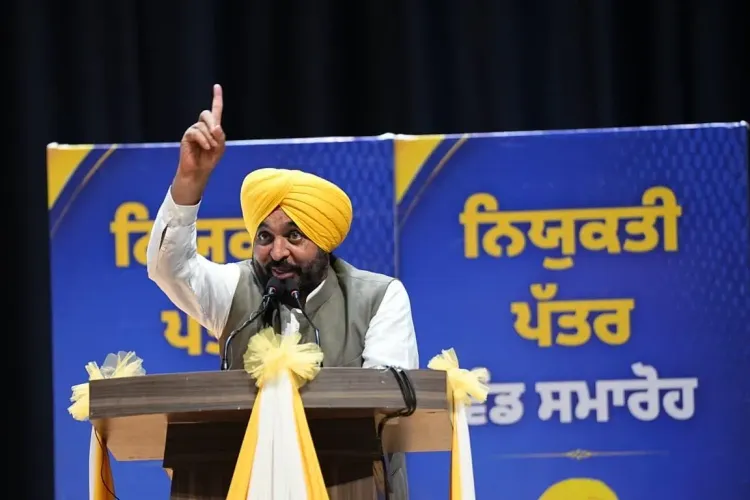
At a Bathinda appointment letter event on June 23, 2026, Punjab CM Bhagwant Mann said his government has given 68,288 merit-based government jobs, announced a 40 km home-posting rule for women employees, and claimed Punjab now ranks first nationally in education.
Key Takeaways
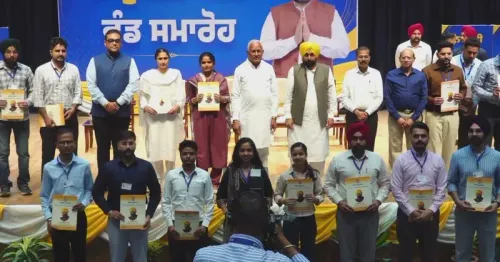
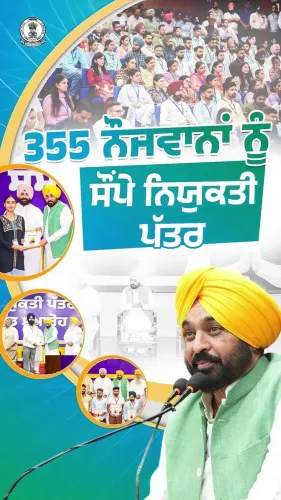
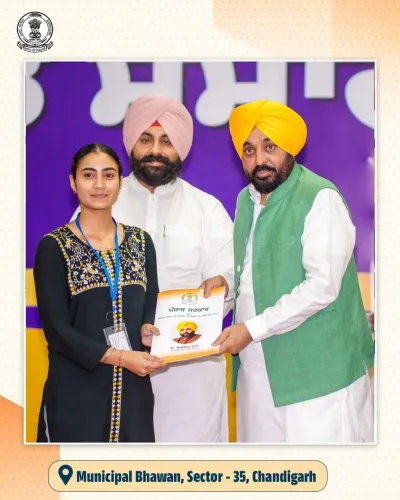
Punjab CM Bhagwant Mann held an appointment letter distribution ceremony in Bathinda on June 23, 2026 .
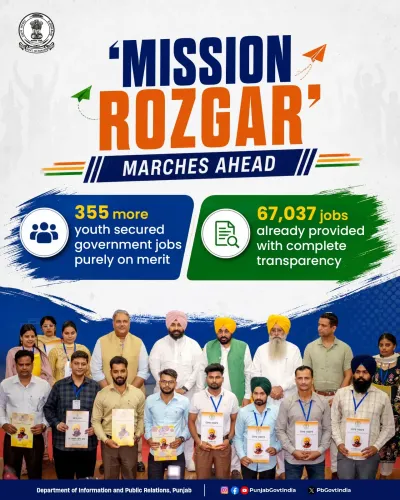
The AAP government claims to have provided 68,288 government jobs on a merit basis since taking office in 2022 , ending bribery and recommendation-based hiring.
A new policy mandates that government employees — especially women — be posted within 40 kilometres of their homes after completing probation.
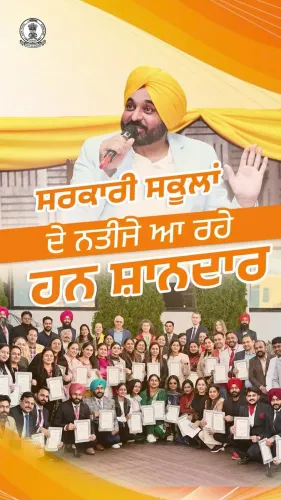
Mann claimed Punjab now ranks first in the country in education following reforms by his government.
The Chief Minister said transparent recruitment has begun reversing youth emigration, with young Punjabis returning from abroad.
The government's stated vision is 'Ranglaa Punjab' — a prosperous state built on equal opportunity, honesty, and public service.
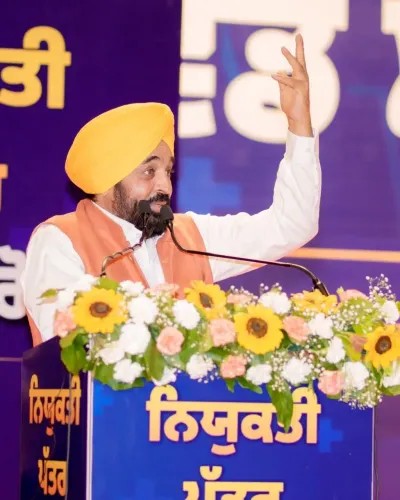
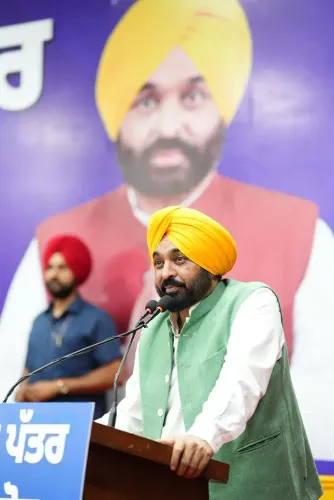
Punjab Chief Minister Bhagwant Mann on Tuesday, June 23, 2026, announced a series of major governance decisions at an appointment letter distribution ceremony in Bathinda, highlighting that his government has provided 68,288 government jobs to youth on a strict merit basis while eliminating bribery and recommendation-based hiring that he said characterised previous administrations.
Context
Addressing the gathering in Bathinda, Mann declared that the era of rishwatkhori ate sifaarish (bribery and recommendations) in government recruitment was over. He stated that transparent hiring had already reversed a long-standing trend of Punjab's youth migrating abroad, with many now returning to the state in search of fair employment opportunities. The event centred on distributing appointment letters directly to new government recruits, a format the Aam Aadmi Party government has used repeatedly to underscore its anti-corruption credentials since coming to power in March 2022.
Policy Backdrop
Since the AAP government assumed office in 2022, it has sought to overhaul Punjab's recruitment ecosystem across departments, replacing discretionary appointments with standardised merit-based processes. The administration has simultaneously pushed reforms in the education sector, with Mann claiming on Tuesday that Punjab now ranks first in the country in education owing to what he described as 'historic reforms.' A significant new policy announced at the event stipulates that government employees — with a specific emphasis on women — will be posted within a 40-kilometre radius of their homes after completing their probation period, with the stated aim of keeping families together.
The 40 km home-posting rule extends a broader AAP emphasis on women-friendly workplace policies, a framework the party had earlier piloted in Delhi. For Punjab, where large distances between postings and home districts have historically deterred women from remaining in government service, the policy is positioned as a structural fix rather than a one-off concession.
Stakeholders and Impact
The primary beneficiaries of Tuesday's announcements are Punjab's youth seeking government employment and women already in or entering public service. By anchoring recruitment to merit and capping posting distances for women, the government is targeting two distinct anxieties: the perception that jobs require connections or cash, and the domestic burden that distant postings place on female employees. Mann framed both as obstacles to realising what he called 'Ranglaa Punjab' — a vision of a prosperous, vibrant Punjab — stating that equal opportunity for every capable young person is the path to that goal.
Punjab's youth diaspora is a politically sensitive constituency. The state has one of India's highest rates of emigration for employment and education. The Chief Minister's assertion that youth are returning from abroad due to transparent recruitment, if borne out by data, would represent a meaningful shift in the state's demographic and economic trajectory.
What's Next
Attention will now turn to the formal implementation orders for the 40 km home-posting policy, including which cadres it covers and whether it applies to transfers as well as fresh postings. Independent verification of Punjab's claimed national education ranking and the cumulative 68,288 appointments figure will also be watched closely by opposition parties and civil society groups. The government's ability to sustain the pace of merit-based recruitment — and to demonstrate that returning diaspora youth are indeed filling these posts — will be a key test of the narrative Mann is building ahead of the next electoral cycle. As he put it, 'hard work, honesty, and public service' remain the central goals of his administration.
Point of View
Quotable number — 68,288 — that is difficult for opponents to rebut without granular counter-data. The 40 km home-posting announcement is shrewd retail politics, addressing a real grievance among women in public service and signalling family-first values to a socially conservative electorate. Mann's framing of returning diaspora youth as proof of policy success is the most ambitious claim and the hardest to verify, but it taps into a deep emotional nerve in a state defined by its emigration story. Taken together, these announcements suggest the AAP is moving early to consolidate its governance record as the electoral horizon draws closer.
NationPress
23 Jun 2026
Frequently Asked Questions
How many government jobs has the Bhagwant Mann government given in Punjab?
According to Chief Minister Bhagwant Mann, the AAP government in Punjab has provided 68,288 government jobs to youth on a merit basis since taking office in March 2022, eliminating the earlier system of bribery and recommendations.
What is the 40 km home posting rule announced by Punjab government?
The Punjab government announced that after completing their probation period, government employees — particularly women — will be posted within a 40-kilometre radius of their homes, so that family bonds are maintained.
What was the Bathinda appointment letter event on June 23 2026?
It was a government ceremony in Bathinda where Punjab CM Bhagwant Mann distributed appointment letters to newly recruited government employees and announced key policy decisions on merit-based hiring and employee postings.
Has Punjab ranked first in education in India under AAP government?
CM Bhagwant Mann claimed on June 23, 2026 that Punjab now ranks first in the country in education due to historic reforms by his government. Independent verification of this ranking is pending.
Why are Punjab youth returning from abroad according to Bhagwant Mann?
Mann stated that the AAP government's transparent, merit-based recruitment policy has made government jobs accessible without bribes or connections, encouraging young Punjabis who had emigrated abroad to return home for employment opportunities.