Jaishankar visits Mongol Refinery site, reviews India-Mongolia project
Synopsis
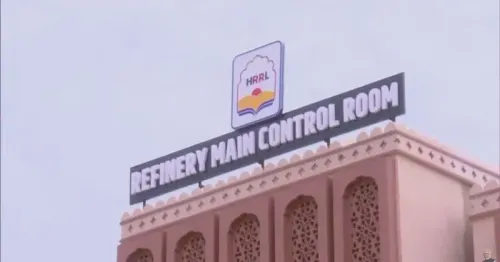
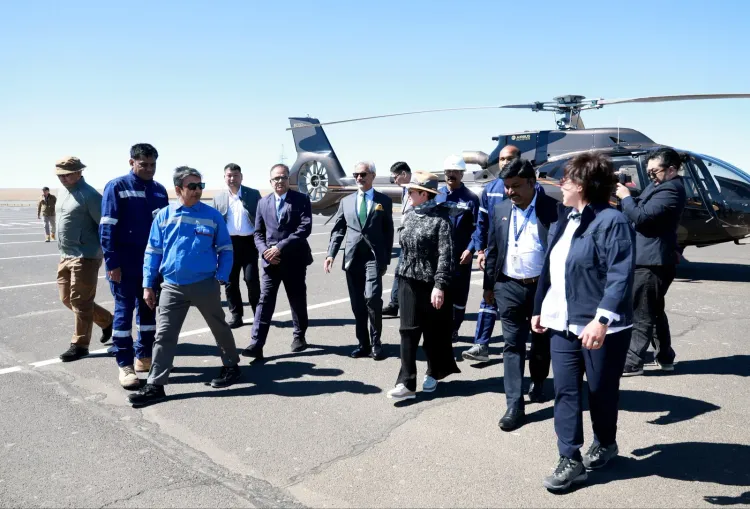
EAM Dr. S. Jaishankar visited the Mongol Refinery Project site on 23 June 2026 with Mongolian Foreign Minister Battsetseg Batmunkh and Industry Minister Gongor Damdinnyam, reviewing progress on the India-funded refinery — Mongolia's first — built under a $1 billion Indian Line of Credit announced in 2015.
Key Takeaways
Jaishankar visited the Mongol Refinery Project site on 23 June 2026 alongside two senior Mongolian ministers.
The refinery is Mongolia's first domestic oil refinery , funded partly through India's $1 billion Line of Credit announced by PM Modi during his 2015 Ulaanbaatar visit .
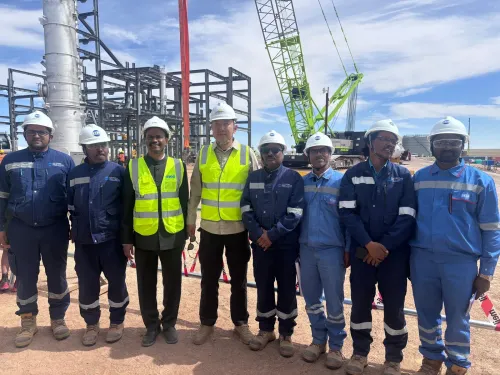
Both Indian and Mongolian workers are employed at the site; Jaishankar thanked them for their 'dedication and commitment under challenging conditions.' The project is a flagship of the India-Mongolia Strategic Partnership elevated in 2015 .
Completion of the refinery would significantly advance Mongolia's energy self-reliance , reducing its dependence on fuel imports from Russia and China .
The site visit signals continued high-level political commitment from both governments to the bilateral friendship project.
Union External Affairs Minister Dr. S. Jaishankar on Tuesday, 23 June 2026, visited the construction site of the Mongol Refinery Project alongside Mongolian Foreign Minister Battsetseg Batmunkh and Industry and Mining Minister Gongor Damdinnyam, reviewing progress on what both governments have described as a landmark bilateral friendship project.
Context
Dr. Jaishankar posted on X that the visit included a detailed review of the status of works under implementation with the various teams involved. He wrote that he 'interacted with Indian and Mongolian workforce at the project site' and 'thanked them for their dedication and commitment in realising such a major project under challenging conditions.'
The Mongol Refinery Project is Mongolia's first domestic oil refinery, being developed with Indian financial and technical support. Its completion would mark a significant step in Mongolia's long-standing goal of reducing dependence on imported refined petroleum products, primarily sourced from Russia and China.
Policy Backdrop
The project traces its origins to Prime Minister Narendra Modi's historic 2015 visit to Ulaanbaatar — the first-ever visit by an Indian Prime Minister to Mongolia — during which India announced a $1 billion Line of Credit for infrastructure and development projects. A portion of that credit line was subsequently earmarked specifically for the refinery.
The two countries elevated their relationship to a Strategic Partnership in 2015, and energy infrastructure has remained a cornerstone of that engagement. India's support for the refinery aligns with its broader strategy of deepening ties with Central and East Asian nations through developmental assistance and capacity building.
The India-Mongolia Joint Committee on economic cooperation has periodically reviewed the refinery's progress, and the site visit by Dr. Jaishankar — accompanied by two senior Mongolian ministers — signals continued high-level political commitment from both sides.
Stakeholders and Impact
The project directly involves Indian contractors and engineers working alongside a Mongolian workforce, making it a tangible example of people-to-people engagement within the bilateral partnership. Dr. Jaishankar's acknowledgement of the workforce's 'dedication and commitment' under 'challenging conditions' underscores the logistical complexity of constructing major energy infrastructure in a landlocked country with extreme weather.
For Mongolia, the refinery represents a step toward energy self-reliance, a strategic priority for a country that imports nearly all of its refined fuel. For India, the project reinforces its credentials as a development partner in the region, distinct from the infrastructure diplomacy pursued by China through its Belt and Road Initiative.
The presence of Minister Gongor Damdinnyam, who oversees Mongolia's energy and mining sector, alongside the foreign minister at the site visit reflects the project's importance at the highest levels of the Mongolian government.
What's Next
Completion milestones for the Mongol Refinery will be closely watched by both governments and the Indian contractors involved. Any follow-up sessions of the India-Mongolia Joint Committee on economic cooperation are expected to place the refinery's commissioning timeline at the top of the agenda.
Dr. Jaishankar's visit to the project site, coming during what appears to be an official engagement in Ulaanbaatar, is likely to generate further diplomatic momentum, with both sides expected to explore additional avenues of cooperation in mining, energy, and connectivity — sectors where Mongolia's resource wealth and India's technical capacity offer complementary strengths.
Point of View
Project-based alternatives to Chinese infrastructure financing in countries that sit within Beijing's immediate neighbourhood. By publicly thanking the joint workforce, Jaishankar also frames the project as a people-to-people endeavour, adding a soft-power dimension to what is fundamentally an energy-security investment. Progress on this refinery will serve as a key benchmark for the India-Mongolia Strategic Partnership as it enters its second decade.
NationPress
22 Sept 2026
Frequently Asked Questions
What is the Mongol Refinery Project?
The Mongol Refinery Project is Mongolia's first domestic oil refinery, being constructed with financial support from India under a $1 billion Line of Credit announced by Prime Minister Narendra Modi during his 2015 visit to Ulaanbaatar.
Why did Jaishankar visit Mongolia in June 2026?
Dr. S. Jaishankar visited Mongolia in June 2026 and inspected the Mongol Refinery Project site alongside Mongolian Foreign Minister Battsetseg Batmunkh and Industry and Mining Minister Gongor Damdinnyam to review construction progress.
What is India's Line of Credit to Mongolia?
India extended a $1 billion Line of Credit to Mongolia in 2015, a portion of which was specifically allocated to the Mongol Refinery Project to support Mongolia's energy infrastructure and self-reliance goals.
What is the India-Mongolia Strategic Partnership?
India and Mongolia elevated their bilateral relationship to a Strategic Partnership in 2015 during PM Modi's visit to Ulaanbaatar, focusing on infrastructure, energy, capacity building, and people-to-people ties.
When will the Mongol Refinery be completed?
The exact completion date of the Mongol Refinery has not been officially announced; Dr. Jaishankar's June 2026 site visit confirmed that construction is making 'steady progress,' with completion milestones expected to be tracked by the India-Mongolia Joint Committee on economic cooperation.