CM Bhagwant Mann Bets Big on Punjab's Hockey Revival
Synopsis
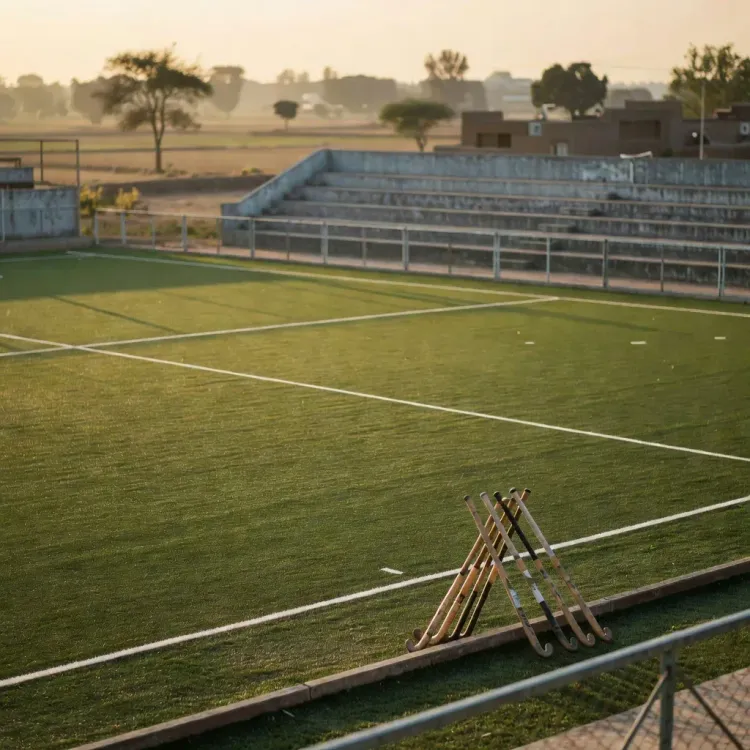
The Chief Minister's Office of Punjab announced a ₹1,744 crore sports budget, six completed hockey astroturfs, two more under construction, and 18 six-a-side grounds — framing CM Bhagwant Mann's government as the architect of a grassroots hockey revival in the state.
Key Takeaways
₹1,744 crore sports budget allocated by the Punjab Government under CM Bhagwant Mann .
Six new hockey astroturfs have been completed across Punjab, with two more under construction .
18 six-a-side hockey grounds established to widen grassroots participation at community level.
The investment targets aspiring athletes in rural and semi-urban Punjab, expanding access beyond elite urban centres.
Punjab's AAP government, in office since March 2022 , has positioned sports infrastructure as a core governance deliverable.
Completion of the two pending astroturfs and measurable national-team selections will be the benchmark for success.
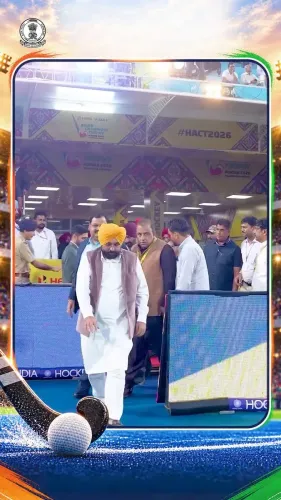
Punjab is not waiting for champions to emerge — it is building the ground beneath their feet. On Tuesday, November 10, 2026, the Chief Minister's Office of Punjab announced a sweeping push to cement the state's status as India's sporting capital, anchored by a dedicated ₹1,744 crore sports budget and a rapid expansion of hockey infrastructure under Chief Minister Bhagwant Singh Mann.
Six astroturfs down, two more on the way
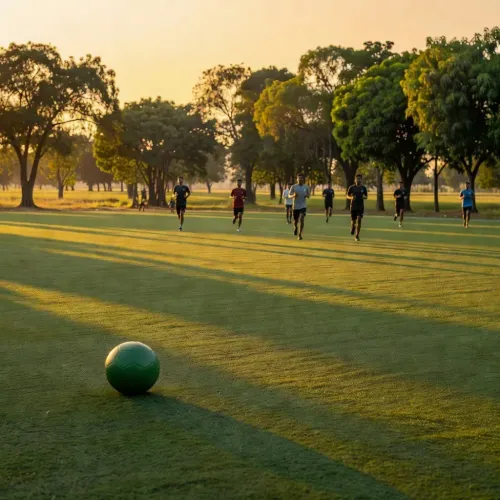
The headline numbers tell a focused story. The state has completed six new hockey astroturfs, with two more currently under construction, giving Punjab a modern playing surface network that few states can match. Alongside those, 18 six-a-side hockey grounds have been established — smaller, community-level pitches designed to pull in young players from towns and villages before they ever reach a full-sized turf.
It is a deliberate pipeline strategy: widen the base at the grassroots, then funnel talent upward toward elite facilities. For a state that has supplied Indian hockey with generations of players, the logic is intuitive — but the scale of investment marks a clear escalation.
Punjab's hockey identity and the pressure to deliver
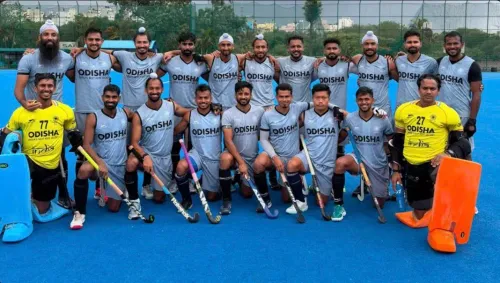
Punjab has historically been the heartland of Indian field hockey, producing national and international players from districts like Jalandhar, Ludhiana, and Hoshiarpur. Earlier state governments invested in academies and training facilities through the 2010s, but the momentum was uneven. The Aam Aadmi Party government, which took office in March 2022 under Mann, has leaned into sports infrastructure as a visible marker of governance delivery — connecting stadium lights and turf ribbons to the broader promise of transformation.
The ₹1,744 crore allocation — if fully deployed — would represent one of the largest state-level sports budgets in Punjab's recent history. The two astroturfs still under construction, and the eventual utilisation rate of the 18 six-a-side grounds, will be the real test of whether the spend translates into athletes on the national radar.
What the numbers mean for aspiring athletes
For a young hockey player in a Punjab village, the nearest astroturf has historically meant a long commute or no access at all. Six-a-side grounds change that calculus — they are cheaper to build, easier to maintain, and close enough to play on after school. The state's bet is that proximity breeds participation, and participation eventually breeds podiums.
The pattern also fits a national push to decentralise elite sports infrastructure beyond metro centres. Punjab's programme — rooted in a sport where it already holds cultural and competitive authority — may offer a replicable model if the athlete-output data follows the construction timeline.
Point of View
A sport with deep cultural roots in the state, Mann's government is playing to a familiar emotional register while trying to generate measurable outcomes in athlete development. The ₹1,744 crore figure, if accurately deployed, signals that sports is no longer a soft-budget line in Chandigarh. The harder question is whether this wave of construction gets paired with coaching, scouting, and competition pathways — the less photogenic work that actually fills a national squad.
NationPress
10 Nov 2026
Frequently Asked Questions
How much has Punjab allocated for its sports budget under Bhagwant Mann?
The Punjab Government has announced a dedicated sports budget of ₹1,744 crore under Chief Minister Bhagwant Mann to fund infrastructure and athlete development.
How many hockey astroturfs has Punjab built?
Punjab has completed six new hockey astroturfs , with two more currently under construction , as part of its sports infrastructure drive.
What are six-a-side hockey grounds in Punjab?
Six-a-side hockey grounds are smaller, community-level pitches suited for grassroots play. Punjab has established 18 such grounds to improve access for young players in towns and villages.
Why is Punjab investing heavily in hockey infrastructure?
Punjab has historically been India's hockey heartland, supplying national and international players for decades. The AAP government is building on that legacy by expanding modern facilities to widen the talent pipeline and compete with better-resourced states.
When did Bhagwant Mann become Chief Minister of Punjab?
Bhagwant Singh Mann became Chief Minister of Punjab in March 2022 , leading the Aam Aadmi Party government that has since emphasised sports and development infrastructure.