Shekhawat Highlights Modi's Diwali-With-Jawans Tradition

Synopsis
Union Minister Gajendra Singh Shekhawat shared a video on X tracing PM Modi's twelve-year tradition of celebrating Diwali with deployed soldiers, from Siachen Glacier in 2014 to Bastar in 2026, calling it an annual gesture of respect and morale-building.
Key Takeaways
Union Minister Gajendra Singh Shekhawat posted a video on November 10, 2026 tracing PM Modi's annual Diwali visits to forward military deployments.
The tradition began in 2014 at Siachen Glacier , the world's highest battlefield at over 6,000 metres altitude.
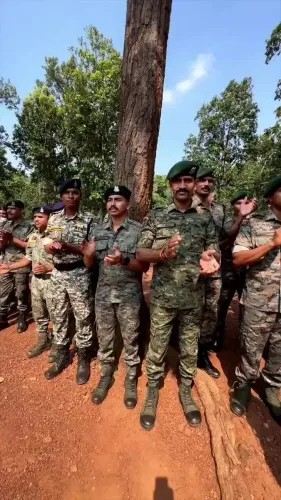
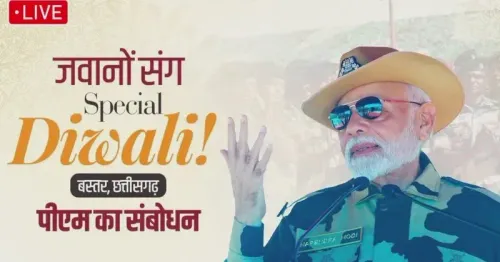
The 2026 visit was to Bastar, Chhattisgarh , a region associated with active counter-insurgency operations.
The twelve-year unbroken sequence spans both high-altitude border zones and internal security theatres.
Shekhawat framed the visits as an expression of personal respect and morale-building for deployed personnel.
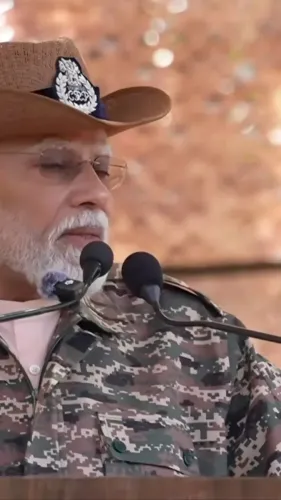
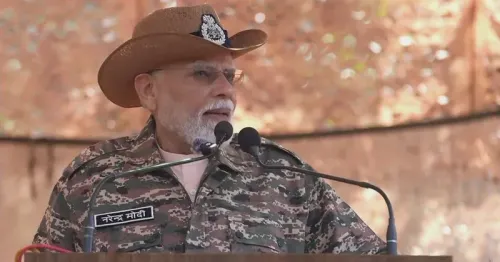
From the frozen heights of Siachen Glacier in 2014 to the dense forests of Bastar in 2026, Prime Minister Narendra Modi has spent every Diwali not in Delhi but on the front lines — a twelve-year tradition that Union Culture and Tourism Minister Gajendra Singh Shekhawat spotlighted on Tuesday, November 10, with a video post on X tracing the full arc of those visits.
Shekhawat's post, written in Hindi, frames the visits as a personal statement by the Prime Minister: 'बॉर्डर से बस्तर तक' — 'From the border to Bastar' — signalling that the tradition spans both external frontiers and internal counter-insurgency theatres. 'From 2014 to 2026, PM Modi has been celebrating Diwali among brave soldiers every year, boosting their morale and expressing respect and affection towards them,' the minister wrote, sharing a video timeline of the visits.
Siachen to Bastar: Twelve Years of Front-Line Diwalis
Siachen Glacier, the world's highest battlefield sitting at over 6,000 metres above sea level, was where the pattern began in 2014. Soldiers posted there endure some of the most extreme conditions of any deployment on the planet — sub-zero temperatures, brutal altitude, and near-total isolation from civilian life. Modi's choice to mark his first Diwali as Prime Minister there sent an unambiguous signal about the importance his government placed on civil-military bonding.
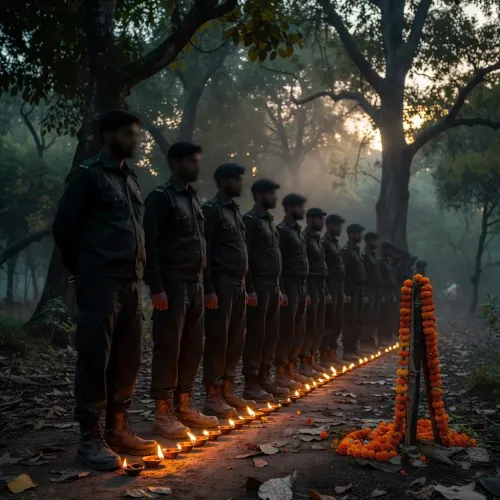
Successive years saw the visits move across the country's most demanding postings — high-altitude border zones, forward areas along contested frontiers, and, by 2026, Bastar in Chhattisgarh, a region long associated with Maoist insurgency and intense security-force operations. The geographical range — from glacier to jungle — underlines that the gesture is not confined to conventional warfare deployments but extends to counter-insurgency personnel as well.
Why This Annual Ritual Has Political and Strategic Weight
Festival visits to forward areas are not entirely new in Indian political history, but the sustained, unbroken nature of this sequence — twelve consecutive years — gives it a qualitatively different character. It has become a fixed expectation rather than a one-off event, which carries its own symbolic freight for serving personnel. For troops in remote postings, the knowledge that the Prime Minister will show up on Diwali rather than attend a ceremonial function in the capital has become a fixture of the annual calendar.
Shekhawat's decision to compile and amplify the full timeline ahead of the festival also reflects the BJP's consistent strategy of foregrounding the government's relationship with the armed forces as a defining political identity — connecting cultural tradition, nationalist sentiment, and institutional respect for the military in a single visual narrative.
Point of View
The tradition signals that the government's solidarity with the armed forces is not selective. For the BJP, compiling and publicising the full twelve-year timeline is also deliberate political brand-building: it embeds the party's identity with military welfare in the public imagination at a moment when defence credibility remains a potent electoral asset.
NationPress
10 Nov 2026
Frequently Asked Questions
Where did PM Modi celebrate his first Diwali with soldiers?
PM Modi celebrated his first Diwali as Prime Minister with soldiers at Siachen Glacier in 2014 , the world's highest battlefield.
Where did PM Modi celebrate Diwali with soldiers in 2026?
According to Union Minister Gajendra Singh Shekhawat's post, PM Modi celebrated Diwali with soldiers in Bastar, Chhattisgarh in 2026 .
How many years has PM Modi been celebrating Diwali with jawans?
PM Modi has been celebrating Diwali with deployed soldiers for twelve consecutive years , from 2014 to 2026 .
Why does PM Modi celebrate Diwali with soldiers?
The visits are described as a gesture to boost the morale of forward-deployed troops and express personal respect and solidarity with them on a major national festival.
Who is Gajendra Singh Shekhawat?
Gajendra Singh Shekhawat is India's Union Minister of Culture and Tourism, a senior BJP leader and Lok Sabha MP from Jodhpur, Rajasthan .