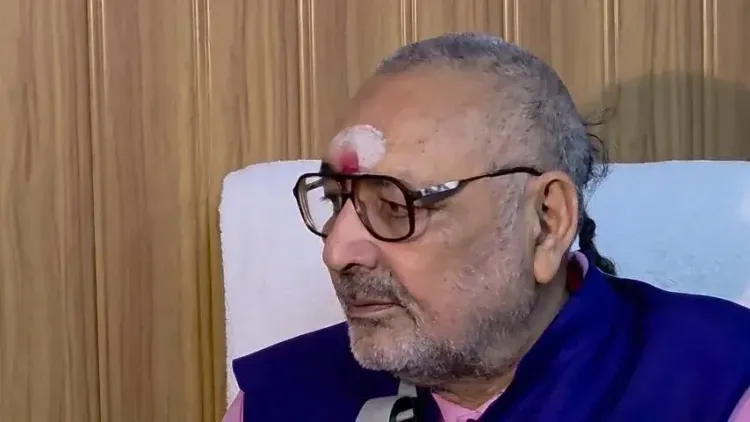
Giriraj Singh hits out at Ram Mandir critics ahead of polls
Synopsis
Union Textiles Minister Giriraj Singh on 10 November 2026 accused Ram Mandir critics of rediscovering Ayodhya ahead of elections, calling their visits 'nautanki' and demanding an apology for alleged firing on Ram devotees in the 1990s.
Key Takeaways
Union Textiles Minister Giriraj Singh posted on X on 10 November 2026 attacking opposition parties over Ayodhya visits.
He accused those who 'questioned the Ram Temple for decades' of suddenly visiting the city only when elections are near.
Singh demanded that those responsible for 'firing on Ram devotees' first seek forgiveness before visiting Ayodhya.
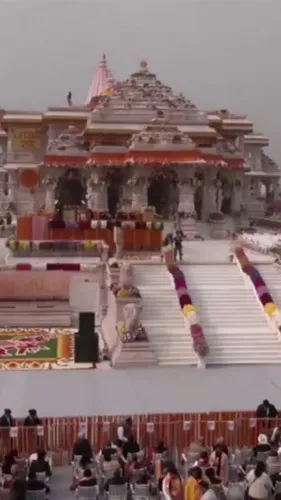
The Ram Temple was consecrated on 22 January 2024 following the Supreme Court's 9 November 2019 verdict awarding the site to the Hindu trust.
Singh's post is consistent with the BJP's long-standing strategy of using the Ram Mandir narrative as a political differentiator ahead of elections.
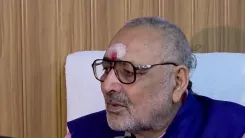
With elections in the air, Union Textiles Minister Giriraj Singh has turned up the political temperature — accusing opposition parties of rediscovering Ayodhya only when votes are at stake, and demanding that those who once ordered firing on Ram devotees seek forgiveness before making any pilgrimage to the temple town.
Posting on X on Tuesday, 10 November 2026, Singh wrote in Hindi: 'चुनाव की आहट क्या लगी, दशकों से राम मंदिर पर सवाल उठाने वालों को अयोध्या का मार्ग याद आ गया!' — 'The moment elections loom, those who questioned the Ram Temple for decades suddenly remember the road to Ayodhya!' He added a pointed demand: those who 'fired upon Ram devotees' must end what he called nautanki (political theatre) and first apologise for that 'crime.'
Decades of dispute, one consecration
The charge Singh is reaching for has deep historical roots. The Ram Janmabhoomi movement convulsed Indian politics through the late 1980s and 1990s, culminating in the demolition of the Babri Masjid on 6 December 1992. During that period, BJP leaders and the broader Sangh Parivar repeatedly accused state governments — particularly Congress-led administrations — of deploying police against kar sevaks (volunteers) who had mobilised in Ayodhya. Those episodes remain bitterly contested, and Singh's reference to 'firing on Ram devotees' invokes that charged memory without naming officials or a specific date. The legal and political arc finally closed — at least symbolically — with the Supreme Court's landmark verdict on 9 November 2019, which awarded the disputed site to the Shri Ram Janmabhoomi Teerth Kshetra Trust, constituted in February 2020. The Pran Pratishtha (consecration) of the new temple was performed on 22 January 2024, an event the BJP has since woven tightly into its electoral narrative.The opposition's Ayodhya visits as BJP's campaign ammunition
Singh's post is a textbook deployment of that narrative. The logic is simple and sharp: if opponents visit Ayodhya only when ballot boxes beckon, their devotion is tactical, not sincere. For the BJP, this framing serves a dual purpose — it reclaims the temple as the party's singular achievement and pre-emptively delegitimises any rival attempt to soften a hard edge on the Hindu-vote front. The post includes a video, the contents of which are not independently described here, but its presence suggests Singh is backing his rhetoric with visual evidence of the opposition's earlier posture on the Ram Mandir question. Singh himself is no peripheral voice in this debate. As a senior BJP leader and Lok Sabha MP from Begusarai, Bihar — a state where both caste arithmetic and Hindu consolidation matter intensely — he has long been among the party's most combative communicators. His demand for a public apology sets a threshold the opposition is unlikely to cross, which is precisely the point: the ask is designed to frame the other side, not to invite a dialogue.Point of View
He raises a bar that forecloses a soft landing for rivals. The framing is part of a broader BJP arc: having delivered the consecration in January 2024, the party now seeks to permanently own the Ram Mandir as a political asset and disqualify challengers as late-arriving opportunists. With Bihar's complex caste-communal arithmetic in the backdrop, Singh — the MP from Begusarai — is signalling that Hindu consolidation remains the party's intended electoral spine.
NationPress
10 Nov 2026
Frequently Asked Questions
Why is Giriraj Singh targeting opposition parties over Ayodhya?
Singh accuses them of visiting Ayodhya only when elections approach, after decades of questioning the Ram Mandir, calling it political theatre rather than genuine devotion.
What is the 'firing on Ram devotees' that Giriraj Singh refers to?
It is a reference to police action against Ram Janmabhoomi movement volunteers, known as kar sevaks, during the 1990s — a charge the BJP has historically levelled at Congress and other state governments of that era.
When was the Ram Temple in Ayodhya consecrated?
The Pran Pratishtha of the Ram Temple in Ayodhya was performed on 22 January 2024 , following the Supreme Court's title-suit verdict in November 2019.
Who is Giriraj Singh?
Giriraj Singh is the Union Textiles Minister in the BJP-led government, a senior party leader, and the Lok Sabha MP from Begusarai in Bihar.
What is the political significance of Ayodhya in Indian elections?
Ayodhya has been a central mobilisation issue for the BJP since the late 1980s; the Ram Temple's construction and consecration are now frequently invoked in campaigns to contrast the party's record with that of its opponents.