CM Bhagwant Mann Invokes Bhagat Singh's Vision for Punjab
Synopsis
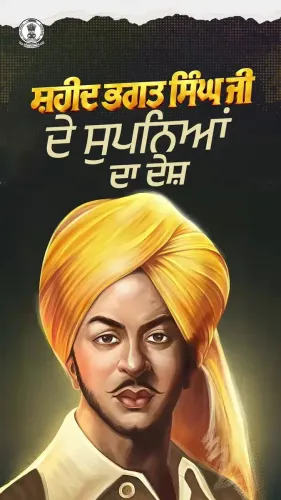
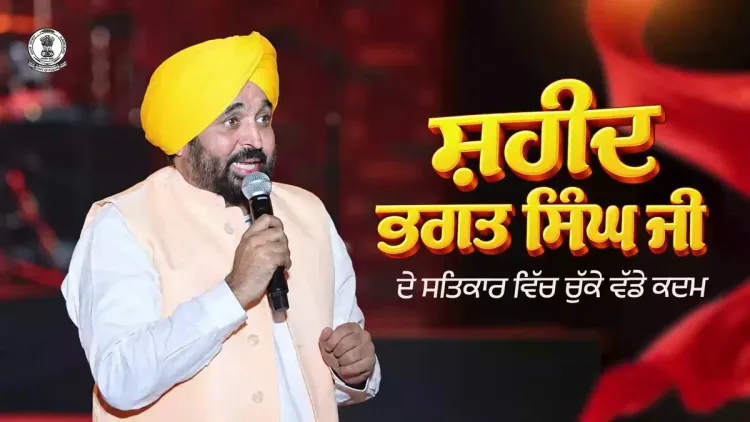
Chief Minister Bhagwant Mann has declared that the Punjab Government is working with firm resolve to fulfil Shaheed-e-Azam Sardar Bhagat Singh's vision of a Punjab rooted in patriotism, equality, justice, and public welfare — a statement issued days after the revolutionary's birth anniversary.
Key Takeaways
CM Bhagwant Mann reaffirmed the Punjab Government's commitment to Bhagat Singh's ideals on 30 September 2026 .
The four pillars cited are patriotism, equality, justice, and public welfare .
The statement came two days after 28 September , Bhagat Singh's birth anniversary.
Sardar Bhagat Singh was executed by British authorities on 23 March 1931 , aged 23.
The Aam Aadmi Party government has consistently linked its welfare agenda to Punjab's freedom-fighter legacy since taking office in March 2022 .
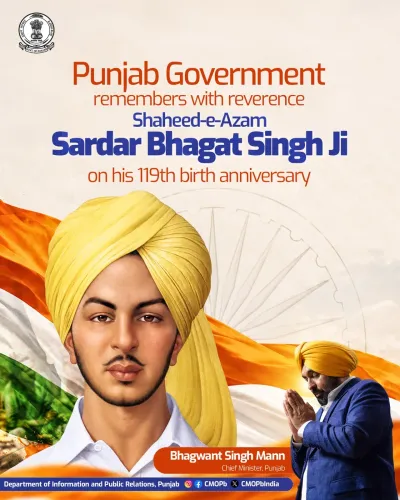
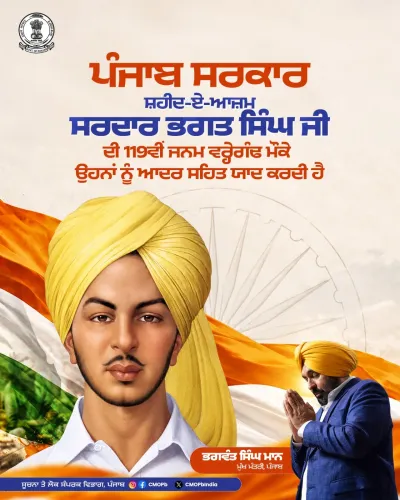
Two days after Punjab marked the birth anniversary of Shaheed-e-Azam Sardar Bhagat Singh, Chief Minister Bhagwant Mann renewed his government's pledge on Wednesday, 30 September 2026 — declaring that the Punjab Government is working with firm resolve to realise the martyred revolutionary's dreams of a Punjab built on patriotism, equality, justice, and public welfare.
The vow in Mann's own words
The Chief Minister's Office of Punjab quoted Mann as saying the government is working with 'ਦ੍ਰਿੜ੍ਹ ਸੰਕਲਪ' — 'firm resolve' — to build a Punjab grounded in the ideals Bhagat Singh lived and died for: patriotism, equality, justice, and public welfare. The invocation came less than 48 hours after 28 September, Bhagat Singh's birth anniversary, a date that routinely anchors political messaging across Punjab's party lines.
Why Bhagat Singh's legacy carries such weight in Punjab politics
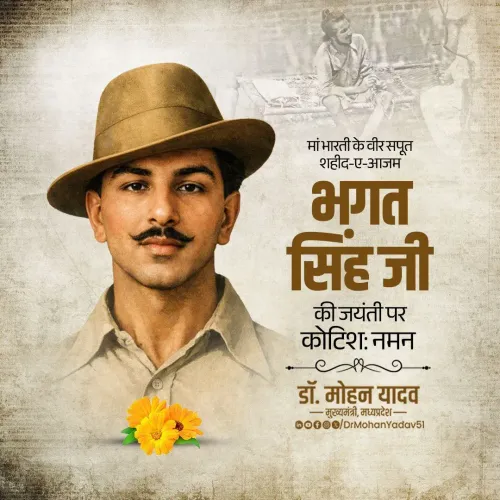
Sardar Bhagat Singh, born in what is now Punjab on 28 September 1907, was executed by British colonial authorities on 23 March 1931 at the age of 23. He remains arguably the most potent symbol of anti-colonial resistance, secular nationalism, and socialist thought in the state — a figure whose name crosses every political boundary. For the Aam Aadmi Party government, tethering its welfare agenda to that legacy is both a statement of intent and a rhetorical anchor: it frames education reform, anti-corruption drives, and social-justice programmes not as partisan policy but as the fulfilment of a freedom fighter's unfinished work.
AAP's governance frame and the Bhagat Singh connection
Bhagwant Mann has led Punjab since March 2022, steering an administration that has consistently presented itself through the lens of Punjab's independence-era legacy. The four pillars Mann cited — patriotism, equality, justice, welfare — map neatly onto Bhagat Singh's documented ideological commitments: nationalist sacrifice, opposition to caste and class hierarchy, and a vision of a state that serves its poorest citizens first. Whether the statement was pegged to a specific programme announcement could not be independently confirmed, but its timing, two days after the birth anniversary, signals a deliberate continuation of commemorative momentum into everyday governance communication.
Point of View
The government attempts to make criticism of those programmes feel like a rejection of the martyred icon himself. The timing, just after the birth anniversary, extends commemorative sentiment into the policy calendar. Longer term, how concretely Punjab's governance outcomes align with the ideals being invoked will determine whether such messaging retains its resonance with voters.
NationPress
30 Sept 2026
Frequently Asked Questions
What did CM Bhagwant Mann say about Bhagat Singh on 30 September 2026?
CM Bhagwant Mann said the Punjab Government is working with firm resolve to realise Bhagat Singh's dreams by building a Punjab founded on patriotism, equality, justice, and public welfare.
When is Bhagat Singh's birth anniversary?
Sardar Bhagat Singh's birth anniversary falls on 28 September. He was born on 28 September 1907 in Punjab.
When was Bhagat Singh executed?
Bhagat Singh was executed by British colonial authorities on 23 March 1931, at the age of 23, along with Rajguru and Sukhdev.
How long has Bhagwant Mann been Chief Minister of Punjab?
Bhagwant Mann has been Chief Minister of Punjab since March 2022, leading the Aam Aadmi Party government in the state.
Why do Punjab leaders frequently invoke Bhagat Singh's name?
Bhagat Singh is Punjab's most revered revolutionary symbol, representing anti-colonial sacrifice, secular nationalism, and social equality — ideals that leaders across all parties cite to lend moral authority to their governance agendas.