CM Bhagwant Mann Launches 154 Aam Aadmi Clinics in Punjab
Synopsis
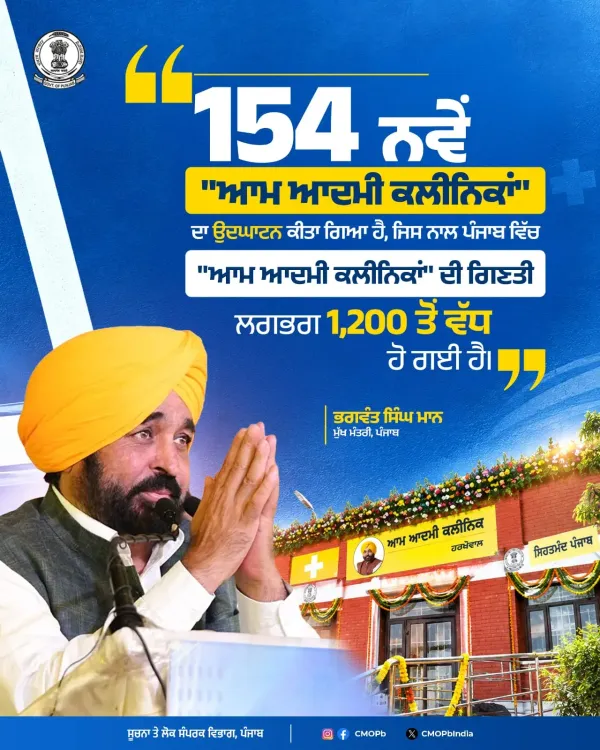
Punjab CM Bhagwant Mann inaugurated 154 new Aam Aadmi Clinics at a state event in village Harkhowal, Hoshiarpur on 16 October 2026, taking the scheme's statewide network past 1,200 clinics and cementing free primary healthcare as the AAP government's flagship welfare offering.
Key Takeaways
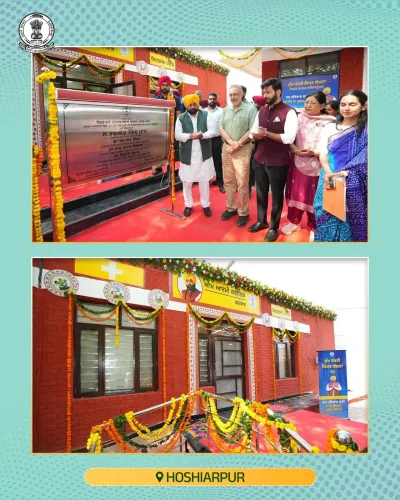
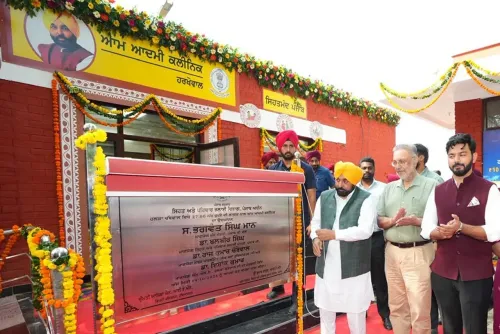
154 new Aam Aadmi Clinics were inaugurated by CM Bhagwant Singh Mann at a state-level event in village Harkhowal, Hoshiarpur .
Punjab's Aam Aadmi Clinic network has now crossed 1,200 total clinics statewide.
The scheme was launched in 2022 after AAP's election victory, modelled on Delhi's Mohalla Clinic programme.
Each clinic provides free consultations, medicines, and basic diagnostics at the community level.
The expansion targets rural and semi-urban populations in districts like Hoshiarpur in the Doaba region.
Sustained staffing, drug supply, and health-outcome data will determine the scheme's long-term impact.
A village in Hoshiarpur just became the address where Punjab's primary healthcare network crossed a landmark threshold. Chief Minister Bhagwant Singh Mann inaugurated 154 new Aam Aadmi Clinics at a state-level ceremony in village Harkhowal, Hoshiarpur, on Friday, 16 October 2026, pushing the scheme's total count to more than 1,200 clinics across the state.
The 1,200-clinic milestone and what it means for Punjab's villages
When the Aam Aadmi Party swept Punjab in the 2022 assembly elections, free neighbourhood-level healthcare was among its central promises. The Aam Aadmi Clinic scheme — modelled directly on Delhi's Mohalla Clinic network — was launched that same year, bringing free consultations, medicines, and basic diagnostics to doorsteps that had long depended on distant district hospitals or expensive private practitioners.
Adding 154 clinics in a single ceremony is not a routine expansion. It signals an acceleration of the rollout, with Hoshiarpur — a largely rural district in the Doaba belt — chosen as the symbolic site. The choice underlines the government's stated focus on reaching semi-urban and rural populations, the constituencies that typically fall through the gap between well-funded urban hospitals and under-resourced primary health centres.
Harkhowal to every corner: how the AAC model works
Each Aam Aadmi Clinic is designed as a first-contact facility — a trained medical officer, a defined basket of free medicines, and rapid diagnostics available without referral paperwork or user fees. The model reduces the pressure on tertiary hospitals by catching and resolving common ailments — fever, diabetes monitoring, blood pressure checks, ante-natal care — at the community level. At over 1,200 operational units, Punjab now runs one of the largest state-government primary care networks in northern India.
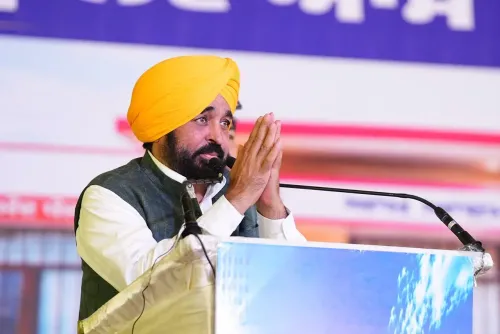
CM Mann, addressing the gathering at Harkhowal, framed the expansion as proof that governance modelled on public welfare delivers at scale — a line that doubles as both a health-policy statement and a political marker ahead of future electoral cycles.
What the next phase of the scheme will determine
The critical test for any clinic network is not its opening-day count but its sustained utilisation and health outcomes. Whether these 154 new facilities are adequately staffed, consistently supplied with medicines, and generating measurable improvements in indicators like infant mortality or controlled hypertension rates will define the scheme's legacy. Budget allocations for recurring operational costs — salaries, drug procurement, equipment maintenance — will be the number to watch in the next Punjab state budget.
For now, the milestone is real and the momentum is visible. Over 1,200 clinics, a state-level launch, a Chief Minister personally presiding — Punjab's AAP government has placed primary healthcare at the centre of its governance narrative, and Harkhowal is the latest pin on that map.
Point of View
200-clinic mark gives CM Mann a credible headline statistic ahead of any future electoral reckoning, but it also raises the policy stakes — a large, underfunded network can quickly become a liability if medicines run out or doctors are absent. The choice of rural Hoshiarpur as the launch venue is deliberate positioning: the Doaba belt has historically leaned toward Congress and the Shiromani Akali Dal, making visible welfare delivery here a strategic as much as a developmental act. The scheme's next chapter will be written not in inauguration speeches but in state budget line items and independent utilisation audits.
NationPress
16 Oct 2026
Frequently Asked Questions
What are Aam Aadmi Clinics in Punjab?
Aam Aadmi Clinics are free primary healthcare centres launched by the Punjab government in 2022, offering consultations, medicines, and basic diagnostic services at the community level with no user fees.
How many Aam Aadmi Clinics are there in Punjab now?
As of 16 October 2026, Punjab has more than 1,200 Aam Aadmi Clinics after CM Bhagwant Mann inaugurated 154 new ones at a state event in Hoshiarpur.
Where was the latest Aam Aadmi Clinic inauguration held?
The state-level inauguration ceremony was held at village Harkhowal in Hoshiarpur district, Punjab, on 16 October 2026.
Are Aam Aadmi Clinics different from Delhi's Mohalla Clinics?
Punjab's Aam Aadmi Clinics are modelled on Delhi's Mohalla Clinic concept — both offer free neighbourhood-level primary care — but operate as Punjab's own state scheme tailored to its rural and semi-urban geography.
Who launched the Aam Aadmi Clinic scheme in Punjab?
The scheme was launched by the AAP-led Punjab government under Chief Minister Bhagwant Singh Mann after the party's 2022 assembly election victory.