CM Bhagwant Mann inaugurates Aam Aadmi Clinics at Harkhowal
Synopsis
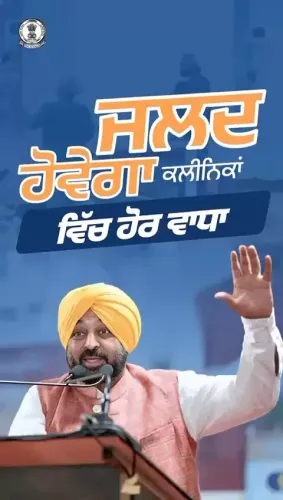
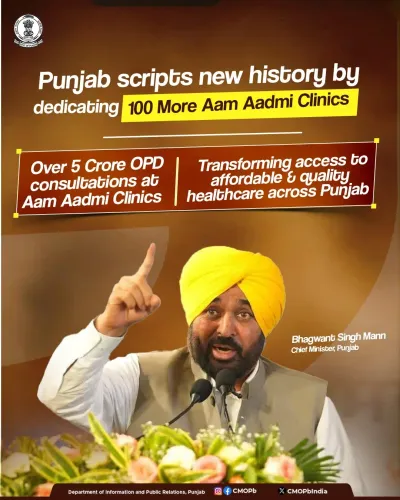
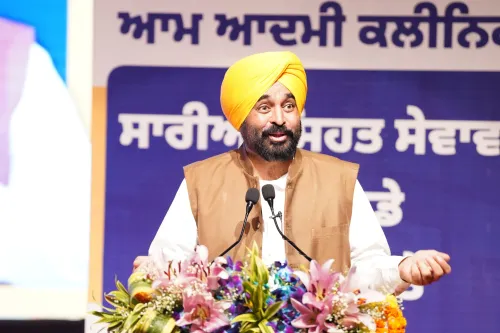
Punjab CM Bhagwant Mann inaugurated Aam Aadmi Clinics at a state-level ceremony in Harkhowal village, Chabbewal, on October 14, 2026 — extending the AAP government's free primary healthcare network, modelled on Delhi's Mohalla Clinics, to rural Punjab.
Key Takeaways
Punjab CM Bhagwant Mann attended the state-level inauguration of Aam Aadmi Clinics on October 14, 2026 .
The event was held at Harkhowal village in the Chabbewal constituency , Hoshiarpur district .
The Aam Aadmi Clinic scheme targets 500 primary health centres across Punjab, offering free consultations, diagnostics, and medicines.
The programme is modelled on Delhi's Mohalla Clinic network and was a flagship pledge of AAP's 2022 Punjab election manifesto.
The inauguration was broadcast live, reflecting AAP's strategy of anchoring major announcements in village-level, grassroots settings.
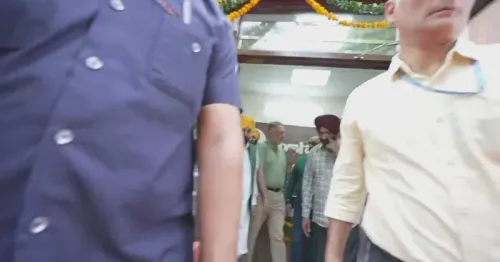
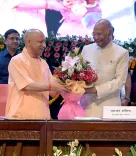
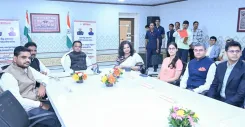
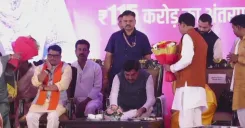
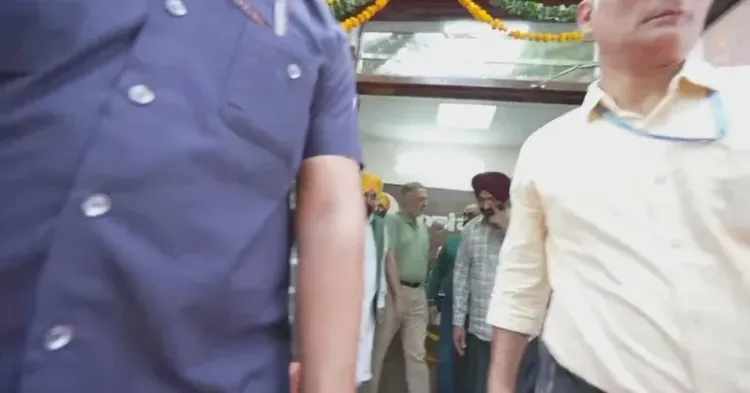
Free healthcare just arrived at Punjab's doorstep — village by village. Punjab Chief Minister Bhagwant Mann joined a state-level inauguration ceremony for Aam Aadmi Clinics on Wednesday, October 14, 2026, streaming live from Harkhowal village in the Chabbewal constituency of Hoshiarpur district.
Harkhowal hosts a state-wide moment
The choice of Harkhowal as the venue for the state-level event is pointed. A small village in Chabbewal — an Aam Aadmi Party-held constituency in rural Hoshiarpur — it now serves as the symbolic launchpad for a programme designed precisely for communities like it: far from district hospitals, reliant on expensive private practitioners, and historically underserved by public primary care.
The live broadcast, shared directly on CM Mann's official account, brought the inauguration to residents statewide — part of a broader AAP communication strategy that has consistently used real-time streaming to anchor flagship announcements in local, village-level settings rather than government auditoriums in Chandigarh.
The Aam Aadmi Clinic promise — and how far it has come
The Aam Aadmi Clinic scheme was among the AAP government's headline pledges following its landslide victory in the 2022 Punjab assembly elections. Modelled on Delhi's Mohalla Clinic network, the programme set out to establish 500 primary health centres across the state — each offering free doctor consultations, free diagnostics, and free medicines, with the explicit goal of cutting the out-of-pocket costs that push rural families toward debt every time illness strikes.
The scheme targets the most stubborn gap in India's public health system: last-mile primary care. A patient in Harkhowal who previously had to travel to Hoshiarpur town for a blood test or a basic prescription can, in principle, access both within walking distance. That is the concrete promise on the table today.
What the rollout means for rural Punjab
AAP's welfare architecture in both Punjab and Delhi has consistently bet on visible, neighbourhood-level infrastructure — clinics, schools, mohalla facilities — as both a governance deliverable and a political signal. The Aam Aadmi Clinic network extends that logic into Punjab's villages, where agricultural distress and inadequate public health access have long intersected with troubling health outcomes.
The question that follows every inauguration is whether the clinics sustain adequate staffing, medicine supply chains, and diagnostic equipment over time — early patient footfall and health-outcome data from the first operational batch will be the real test of whether the model travels as well from Delhi's urban lanes to Punjab's rural belt.
For now, Harkhowal is on the map — not just geographically, but as the site where the state chose to mark a milestone in its most ambitious health programme. That is no small thing for a village that has rarely made headlines.
Point of View
AAP-held constituency signals that the party's governance model is moving from urban showpiece to rural delivery. For the AAP, the Aam Aadmi Clinic network is as much a political argument as a health intervention: proof that a relatively new state government can replicate Delhi's welfare infrastructure at scale. The durability of that argument, however, will depend on whether these clinics remain functional and well-stocked beyond their ribbon-cutting moment — a test that has historically tripped up ambitious primary-care schemes across Indian states. With Punjab's next assembly election on the horizon, the pace and quality of the rollout will face rigorous public scrutiny.
NationPress
14 Oct 2026
Frequently Asked Questions
What are Aam Aadmi Clinics in Punjab?
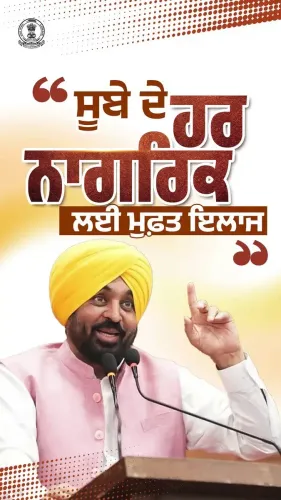
Aam Aadmi Clinics are free primary healthcare centres set up by the Punjab government under CM Bhagwant Mann, offering free doctor consultations, medicines, and diagnostic tests to residents — modelled on Delhi's Mohalla Clinic network.
Where was the Aam Aadmi Clinic state-level inauguration held?
The state-level inauguration event on October 14, 2026 was held at Harkhowal village in the Chabbewal constituency of Hoshiarpur district, Punjab.
How many Aam Aadmi Clinics are planned for Punjab?
The AAP government announced the establishment of 500 Aam Aadmi Clinics across Punjab following its 2022 election victory.
Are Aam Aadmi Clinics really free for patients?
Yes — the scheme provides free doctor consultations, free medicines, and free diagnostic tests, aimed at reducing out-of-pocket healthcare expenditure for rural and low-income residents.
What is the difference between Aam Aadmi Clinics and Mohalla Clinics?
Both are AAP-initiated free primary healthcare models — Mohalla Clinics operate in Delhi's urban neighbourhoods, while Aam Aadmi Clinics are Punjab's adaptation of the same concept, extended to rural villages and smaller towns.