Punjab CMO highlights Aam Aadmi Clinic staff service in Mohali
Synopsis
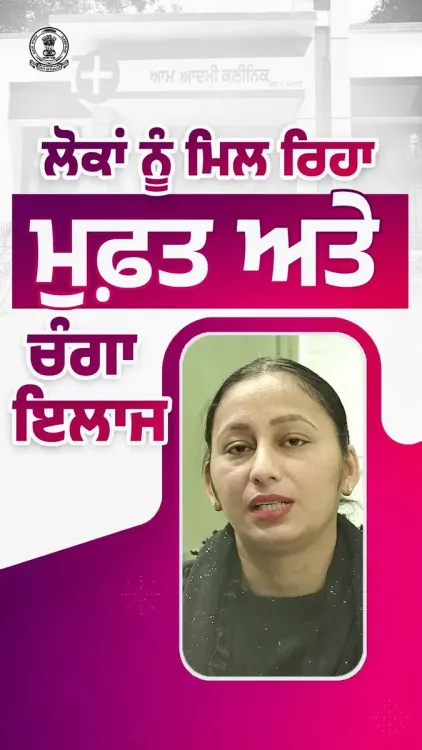
The Chief Minister's Office of Punjab shared a video testimonial from Kamaljit Kaur, a clinic assistant at the Aam Aadmi Clinic in Mohali Phase-1, who praised the state government and affirmed that patients are receiving free, quality treatment with dedication and honesty.
Key Takeaways
The Chief Minister's Office of Punjab shared the testimonial on 5 June 2026 .
Kamaljit Kaur , a clinic assistant at Mohali Phase-1 Aam Aadmi Clinic , said services are delivered with 'complete dedication and honesty'.
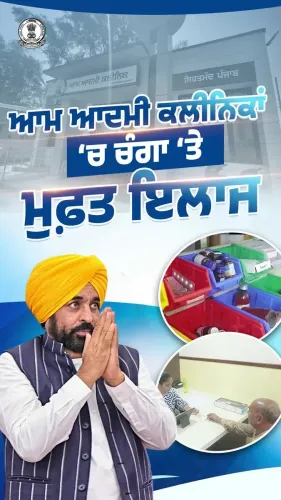
Patients at Aam Aadmi Clinics receive free treatment and medicines under the state scheme.
The Aam Aadmi Clinics network was launched in 2022 by the AAP-led Punjab government, modelled on Delhi's mohalla clinics.
The scheme targets reduction of out-of-pocket healthcare expenditure for citizens across urban and rural Punjab .
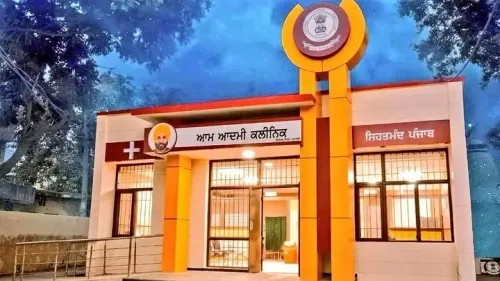
The Chief Minister's Office of Punjab on Friday, 5 June 2026 shared a testimonial from a frontline healthcare worker at the Aam Aadmi Clinic in Mohali Phase-1, underscoring the state government's claim that its free primary-care network is delivering quality service to ordinary citizens.
Context
Kamaljit Kaur, a clinic assistant posted at the Aam Aadmi Clinic in Mohali Phase-1, thanked the Punjab government and stated that services at the clinics are being delivered 'puri tandahi ate imaandaari naal' ('with complete dedication and honesty'). She added that patients are receiving free and quality treatment at these centres. The video testimonial was shared on the official CMO Punjab account to highlight the on-ground functioning of the scheme.
Policy Backdrop
The Aam Aadmi Clinics scheme was launched by the Aam Aadmi Party-led Punjab government in 2022, modelled on the mohalla clinic concept pioneered in Delhi. The initiative is designed to provide free primary healthcare — including basic diagnostics and medicines — at the neighbourhood level, with the stated aim of reducing out-of-pocket expenditure for low- and middle-income households. Successive state budgets since 2022 have earmarked funds for expanding the network across both urban and rural Punjab.
The clinics are staffed by medical officers and clinic assistants, with frontline workers like Kamaljit Kaur playing a central role in patient intake, record-keeping, and basic care coordination. Official channels have periodically featured staff feedback as part of the government's communication strategy around the scheme's performance.
Stakeholders and Impact
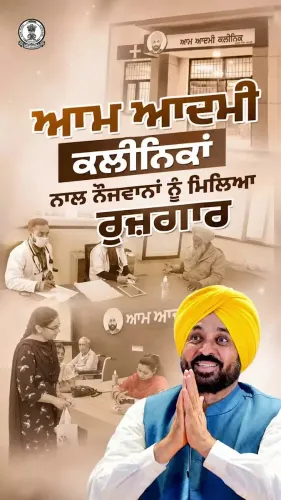
The primary beneficiaries of the Aam Aadmi Clinics are common citizens who previously relied on overcrowded government hospitals or expensive private practitioners for routine care. By positioning clinics at the mohalla level, the scheme aims to bring first-contact healthcare within walking distance of urban and peri-urban residents in districts such as Mohali. Frontline staff, including clinic assistants, represent a layer of semi-skilled healthcare employment created directly by the programme.
Testimonials from clinic workers serve a dual purpose: they function as quality-assurance signals for the administration and as public-communication tools reinforcing the government's health-delivery narrative ahead of periodic budget and policy reviews.
What's Next
Observers tracking Punjab's health infrastructure will watch for official utilisation data, medicine-availability audits, and any new expansion targets announced in upcoming state budget sessions. The government's ability to sustain staffing levels, medicine supply chains, and diagnostic capacity across its growing clinic network will be the key measure of whether frontline workers' accounts of quality service translate into consistent outcomes at scale.
Point of View
Particularly as the Aam Aadmi Clinics model faces scrutiny over scalability and supply-chain reliability. Such communication serves both a domestic political purpose — reinforcing the party's 'common man' governance identity — and an administrative one, signalling accountability to the public. The focus on a clinic assistant rather than a doctor or senior official is deliberate: it humanises the programme and speaks directly to the workforce that sustains it. Whether these narratives are backed by independently verified utilisation and quality data remains the central question for policy watchers.
NationPress
21 Oct 2026
Frequently Asked Questions
What is an Aam Aadmi Clinic in Punjab?
An Aam Aadmi Clinic is a free primary healthcare centre set up by the AAP-led Punjab government starting in 2022 to provide basic diagnostics and medicines at the neighbourhood level, reducing out-of-pocket costs for citizens.
Where is the Aam Aadmi Clinic mentioned in the CMO Punjab post?
The clinic featured in the post is located in Mohali Phase-1 , an urban area in Punjab.
Who is Kamaljit Kaur in the Punjab CMO post?
Kamaljit Kaur is a clinic assistant working at the Aam Aadmi Clinic in Mohali Phase-1 who thanked the Punjab government and stated that patients receive free and quality treatment at the clinic.
Are Aam Aadmi Clinics in Punjab free for patients?
Yes, Aam Aadmi Clinics in Punjab offer free consultations, basic diagnostics, and medicines to patients as part of the state government's primary healthcare initiative.
When did Punjab launch the Aam Aadmi Clinic scheme?
The Punjab government launched the Aam Aadmi Clinics scheme in 2022 , modelled on the mohalla clinic concept from Delhi.