Punjab CM Office Highlights Aam Aadmi Clinics' Free Healthcare Push
Synopsis
The Chief Minister's Office of Punjab has spotlighted Aam Aadmi Clinics, the state government's free neighbourhood healthcare initiative, noting high patient turnout and significant employment generation for medically qualified youth under the Bhagwant Mann-led AAP government.
Key Takeaways
The Chief Minister's Office of Punjab posted on 30 May 2026 highlighting the Aam Aadmi Clinics initiative.
The clinics offer free consultations, diagnostics, and medicines close to residential areas across Punjab .
The government states that a large number of residents are actively using the clinics for treatment.
The programme has generated significant employment for educated youth with medical qualifications.
The model replicates the Mohalla Clinic template pioneered by the Aam Aadmi Party in Delhi from 2015 .
Future focus areas include potential integration with Ayushman Bharat and state health missions.
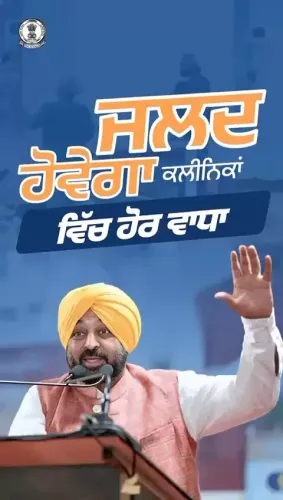
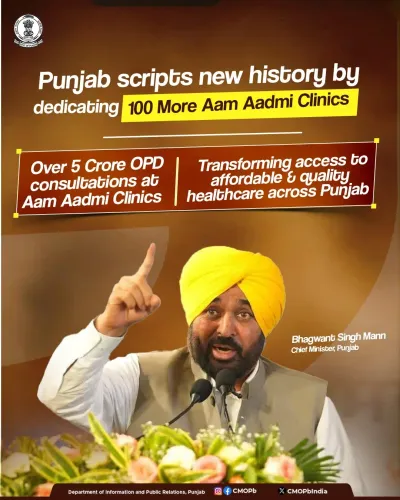
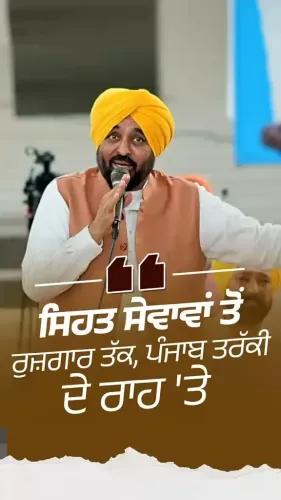
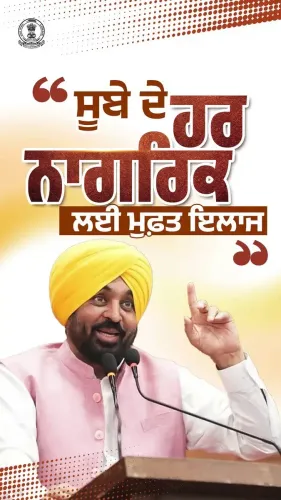
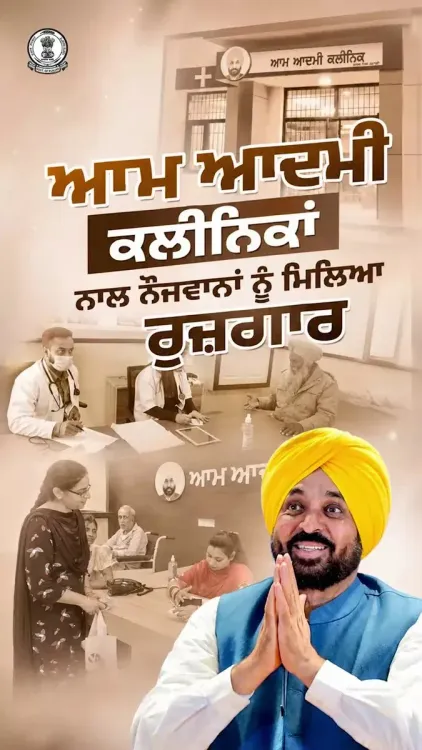
The Chief Minister's Office of Punjab on Saturday, 30 May 2026 highlighted the state government's rollout of Aam Aadmi Clinics, underscoring that the neighbourhood-level facilities are delivering free healthcare to large numbers of residents while simultaneously generating employment for medically qualified youth.
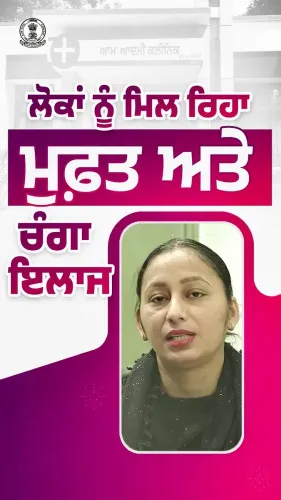
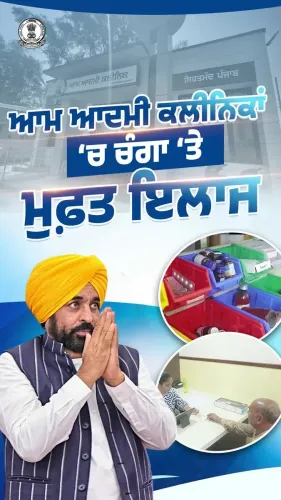
The post, shared in Punjabi, states: 'ਪੰਜਾਬ ਸਰਕਾਰ ਵੱਲੋਂ ਆਮ ਆਦਮੀ ਕਲੀਨਿਕਾਂ ਦਾ ਨਿਰਮਾਣ ਕੀਤਾ ਗਿਆ' ['The Punjab government has constructed Aam Aadmi Clinics']. It adds that 'a large number of people are getting treatment' at these centres and that the initiative has provided 'a large number of jobs' to educated youth in the medical field.
Context
The Aam Aadmi Party government led by Chief Minister Bhagwant Mann came to power in Punjab in March 2022 with a central campaign promise of replicating the free primary-care model it had pioneered in Delhi. The Delhi variant, known as Mohalla Clinics, was launched from 2015 and became the party's flagship health-policy identity nationally. Punjab's Aam Aadmi Clinics are the direct state-level extension of that model, designed to bring consultations, basic diagnostics, and medicines within walking distance of residential neighbourhoods.Policy Backdrop
The clinics sit within a broader national push to strengthen primary healthcare and reduce out-of-pocket expenditure, which remains a significant driver of household poverty in India. By positioning facilities close to homes, the Punjab government aims to reduce the burden on district and tertiary hospitals while ensuring that common ailments are addressed early. The post also draws attention to a secondary dividend: absorbing unemployed medical graduates — including doctors, pharmacists, and paramedics — into a government-supported network, addressing a persistent mismatch between the supply of trained health workers and available public-sector positions in the state.Stakeholders and Impact
The primary beneficiaries are Punjab's residents, particularly in semi-urban and rural pockets where private healthcare costs are prohibitive. Free consultations and medicines at neighbourhood clinics directly lower out-of-pocket health expenditure for low- and middle-income families. A secondary group of stakeholders is medically qualified youth — including MBBS graduates, nurses, and allied health professionals — who have found employment through the clinic network. The dual emphasis on service delivery and job creation has been a consistent communication theme for the Aam Aadmi Party government across both Delhi and Punjab.What's Next
Policy watchers will track whether Punjab's state budget allocations support further expansion of the clinic network and whether the facilities are integrated with national schemes such as Ayushman Bharat or existing state health missions. The degree to which the clinics reduce patient load at district hospitals will be a key performance indicator for the programme. A credible audit of employment numbers and patient footfall would also strengthen the government's case for scaling the model further.Point of View
Reinforcing the Aam Aadmi Party's core brand promise of free, accessible public services ahead of what remains a competitive political landscape in Punjab. By coupling healthcare delivery with job creation for medical graduates, the government is addressing two voter anxieties — health costs and youth unemployment — within a single policy narrative. This mirrors the AAP's proven Delhi playbook, suggesting the party views the clinic model as a transferable and politically durable asset. The real test, however, lies in independent verification of patient volumes and employment figures, which will determine whether the initiative is a structural shift in Punjab's health infrastructure or primarily a communications exercise.
NationPress
14 Oct 2026
Frequently Asked Questions
What are Aam Aadmi Clinics in Punjab?
Aam Aadmi Clinics are free neighbourhood-level primary healthcare centres set up by the Punjab government to provide consultations, basic diagnostics, and medicines to residents close to their homes, modelled on the Mohalla Clinic concept from Delhi.
Who launched the Aam Aadmi Clinics in Punjab?
The clinics were launched by the Aam Aadmi Party government led by Chief Minister Bhagwant Mann, which came to power in Punjab in March 2022.
Are the Aam Aadmi Clinics in Punjab really free?
Yes, according to the Punjab government, services at Aam Aadmi Clinics — including consultations, basic tests, and medicines — are provided free of charge to residents.
How do Aam Aadmi Clinics help with employment in Punjab?
The clinics have created jobs for medically qualified youth, including doctors, pharmacists, and paramedics, helping address unemployment among medical graduates in the state.
What is the difference between Mohalla Clinics and Aam Aadmi Clinics?
Mohalla Clinics are the free primary healthcare centres run in Delhi by the AAP government since 2015; Aam Aadmi Clinics are the Punjab equivalent, launched after 2022 on the same model of neighbourhood-level free care.