Punjab CMO Spotlights Free Care at Sirhind Aam Aadmi Clinic
Synopsis
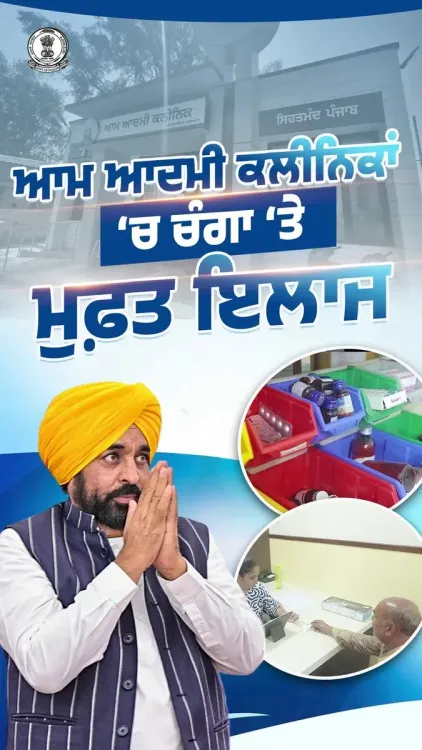
The Chief Minister's Office of Punjab spotlighted the Aam Aadmi Clinic at Sirhind, sharing pharmacist Diksha's account that patients receive free and quality health services. The post reinforces the state's push to expand its Delhi-modelled primary care network into smaller towns under Chief Minister Bhagwant Mann's administration.
Key Takeaways
The Chief Minister's Office of Punjab posted on 3 June 2026 about free health services at the Aam Aadmi Clinic in Sirhind.
Pharmacist Diksha said patients at the clinic are provided free and quality healthcare.
The Aam Aadmi Clinics scheme has been rolled out across Punjab districts since late 2022.
The model is adapted from Delhi's Mohalla Clinics launched in 2015.
Sirhind lies in Fatehgarh Sahib district and is among smaller towns covered by the network.
The post carried the hashtags #CMOPunjab and the Punjabi handle of the office.
The Chief Minister's Office of Punjab on 3 June 2026 highlighted the delivery of free primary healthcare at the state-run Aam Aadmi Clinic in Sirhind, sharing a first-person account from a pharmacist on duty. The post is part of the office's ongoing communication push around the Aam Aadmi Clinics network, a flagship initiative of the ruling administration aimed at strengthening last-mile public health delivery.
Context
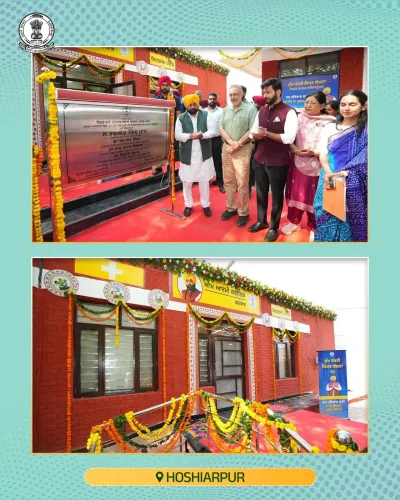
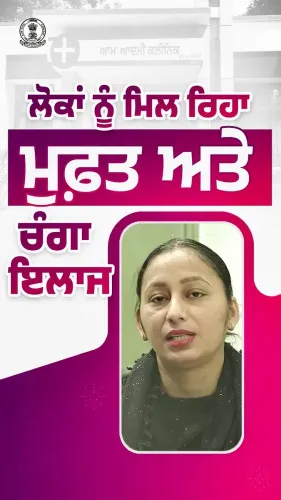
In the post, the Chief Minister's Office stated that the Punjab Government is continuously working to provide better and free health services to people across the state. It featured Diksha, a pharmacist at the Aam Aadmi Clinic, Sirhind, who said that patients visiting the clinic are being provided 'mufat ate miyari sihat sevavan' (free and quality health services).
The message, carrying the hashtags #CMOPunjab and the Punjabi handle of the Chief Minister's Office, was accompanied by a short video walkthrough of the facility. It is one in a steady stream of clinic-level testimonials the office has used to publicise the scheme's reach to towns outside the major cities.
Policy backdrop
The Aam Aadmi Clinics programme was formally rolled out across Punjab districts from late 2022, after the Aam Aadmi Party came to power under Chief Minister Bhagwant Mann in March 2022. The model is adapted directly from the Mohalla Clinics launched in Delhi in 2015, which offered free consultations, a defined basket of diagnostic tests and essential medicines at neighbourhood level.
In Punjab, the clinics are positioned as the first point of contact for primary care, intended to ease pressure on district hospitals and reduce out-of-pocket spending in a state where private healthcare has long dominated outpatient visits. Pharmacists, staff nurses and medical officers form the core team at each centre, with medicines and tests ring-fenced in the state health budget.
Stakeholders and impact
The principal beneficiaries are patients in semi-urban and rural pockets such as Sirhind, a historic town in Fatehgarh Sahib district, where access to free outpatient consultations and basic diagnostics had earlier required travel to larger centres. By foregrounding a frontline pharmacist rather than a political figure, the post seeks to underline service delivery on the ground.
For health workers, the clinics have created a fresh tier of public employment, with pharmacists, technicians and clinical staff hired specifically for the network. For the state exchequer, the scheme represents a recurring commitment on salaries, drug procurement and diagnostics that must be sustained through annual allocations.
For the ruling party, the clinics double as a political showcase: a tangible welfare deliverable that can be pointed to in both Punjab and other states where the party is expanding its footprint. Communications from the Chief Minister's Office have consistently linked the scheme to a wider promise of free, dignified public services.
What's next
Attention will turn to the next phase of district-wise expansion of the Aam Aadmi Clinics network and to fresh allocations for medicines, diagnostics and staffing in the upcoming state budget cycle. Footfall data, prescription patterns and the share of patients shifting from private outpatient care to these clinics will be the key indicators of whether the model is deepening beyond its initial rollout.
As the administration heads further into its term, the political durability of the scheme will hinge on consistency of supplies and staff retention at clinics like the one in Sirhind — the everyday test by which voters are likely to judge the promise of free and quality care.
Point of View
Much as Delhi's Mohalla Clinics functioned for the party in earlier campaigns. The choice of Sirhind, a smaller town, also indicates an intent to project reach beyond the urban belt. The real test, however, will be in sustained drug supply, diagnostics availability and staff retention over successive budget cycles.
NationPress
17 Oct 2026
Frequently Asked Questions
What is the Aam Aadmi Clinic scheme in Punjab?
It is a network of state-run primary health centres offering free consultations, diagnostics and medicines to patients in Punjab. The scheme was rolled out across districts from late 2022 under the Bhagwant Mann government and is modelled on Delhi's Mohalla Clinics.
Where is the Aam Aadmi Clinic in Sirhind located?
The clinic is in Sirhind, a historic town in Fatehgarh Sahib district of Punjab. It is one of several Aam Aadmi Clinics operating across the state to provide free outpatient care.
Are services at Aam Aadmi Clinics in Punjab really free?
Yes, the Punjab government provides consultations, a defined basket of diagnostic tests and essential medicines free of cost at these clinics. The Chief Minister's Office reiterated this in its post citing pharmacist Diksha at the Sirhind clinic.
Who runs the Aam Aadmi Clinics in Punjab?
The clinics are run by the Punjab government's health department under the administration led by Chief Minister Bhagwant Mann. Each clinic is staffed by medical officers, pharmacists and support personnel.
How is the Punjab Aam Aadmi Clinic different from Delhi's Mohalla Clinic?
Both share the same core idea of free neighbourhood primary care, but Punjab's version has been adapted to the state's mix of urban and rural settings. The Punjab rollout began in late 2022, while Delhi's Mohalla Clinics were launched in 2015.