CM Sukhu Pledges Uninterrupted Aid, New Schemes for Kaza

Synopsis
Chief Minister Thakur Sukhvinder Singh Sukhu has pledged uninterrupted welfare assistance and new development schemes for Kaza, the remote high-altitude headquarters of Spiti subdivision in Himachal Pradesh, signing off with the traditional Spitian greeting 'Jule'.
Key Takeaways
CM Sukhu pledged that existing welfare assistance to Kaza will continue without interruption.
New schemes for development and public welfare in Kaza are promised by the state government.
The message was posted by the Chief Minister's Office of Himachal Pradesh on October 14, 2026 .
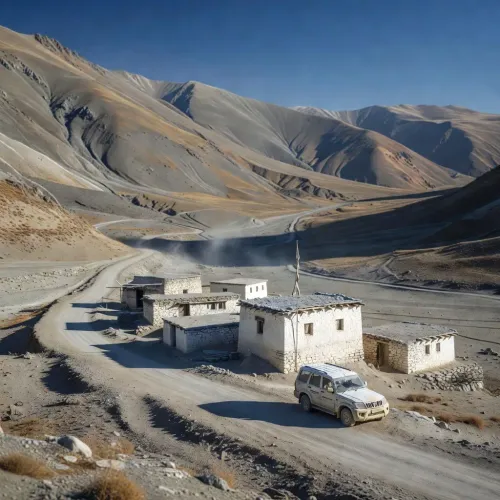
Kaza is the headquarters of Spiti subdivision in Lahaul and Spiti district , one of India's most remote high-altitude regions.
Sukhu closed his message with 'Jule' , the traditional Spitian greeting, signalling cultural solidarity with the community.
Sukhu has led the Congress government in Himachal Pradesh since December 2022 .
High in the Spiti Valley, where roads freeze over for months and connectivity is a daily struggle, Chief Minister Thakur Sukhvinder Singh Sukhu has renewed his government's commitment to Kaza — promising that existing welfare assistance will continue without interruption and that new schemes for development and public welfare are on their way.
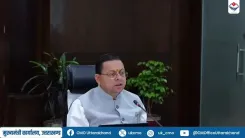
Posting on Wednesday, October 14, 2026, the Chief Minister's Office of Himachal Pradesh shared Sukhu's message in Hindi, closing with the Spitian greeting 'Jule' — a gesture of warmth and solidarity with a community that sits at one of India's most remote frontiers. The message was direct: 'यह सहायता निर्बाध रूप से जारी रहेगी' — 'this assistance will continue uninterrupted' — followed by a pledge to bring fresh initiatives for Kaza's growth and the welfare of its people.
Kaza's place at the edge of the state's reach
Kaza, the headquarters of the Spiti subdivision in Lahaul and Spiti district, sits at roughly 3,800 metres above sea level. Cut off by snow for large parts of the year, its residents have historically had limited access to services that citizens elsewhere take for granted — roads, healthcare, education, and economic opportunity. Its Tibetan Buddhist heritage draws tourists in summer, but the economic base remains thin and government support is not a comfort — it is a lifeline.
Successive Himachal Pradesh administrations, regardless of party, have made targeted promises to high-altitude tribal regions like Spiti, recognising that standard development templates do not fit terrain this extreme. Sukhu's Congress government, in office since December 2022, continues that pattern — but the explicit pledge of continuity and the promise of new schemes signals that Kaza is being treated as an active policy priority rather than a footnote.
The politics of the word 'Jule'
The Chief Minister's choice to sign off with 'Jule' — the traditional Spitian greeting used for hello, goodbye, and gratitude — is small but deliberate. It is the kind of cultural signal that says: we see you, we know your world. In a region that can feel distant from the corridors of Shimla, that acknowledgement matters. For residents of Kaza and the wider Spiti Valley, the question will be how quickly the words translate into budgets and boots on the ground.
Frequently Asked Questions
What did CM Sukhu announce for Kaza?
Chief Minister Sukhvinder Singh Sukhu announced that existing welfare assistance to Kaza will continue uninterrupted, and pledged that new schemes for development and public welfare in the area will be introduced.
Where is Kaza located in Himachal Pradesh?
Kaza is the headquarters of the Spiti subdivision in Lahaul and Spiti district, a remote high-altitude area in Himachal Pradesh situated at approximately 3,800 metres above sea level.
What does 'Jule' mean?
'Jule' is the traditional greeting of the Spiti and Lahaul region, used to say hello, goodbye, and thank you. CM Sukhu used it to close his message as a gesture of cultural solidarity with the local community.
Who is the Chief Minister of Himachal Pradesh in 2026?
Thakur Sukhvinder Singh Sukhu of the Indian National Congress is the Chief Minister of Himachal Pradesh, having held the post since December 2022.
Why does the Himachal Pradesh government focus on Spiti Valley development?
Spiti Valley is one of India's most geographically isolated high-altitude regions, facing severe connectivity, infrastructure, and livelihood challenges. Successive state governments have introduced targeted welfare and development schemes for the area, recognising that standard approaches do not suit such extreme terrain.