Jaishankar meets Canada FM Anand in New Delhi, reviews Strategic Partnership
Synopsis
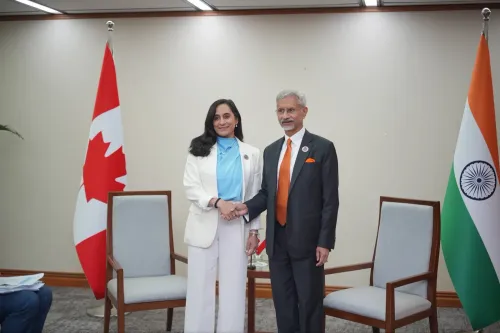
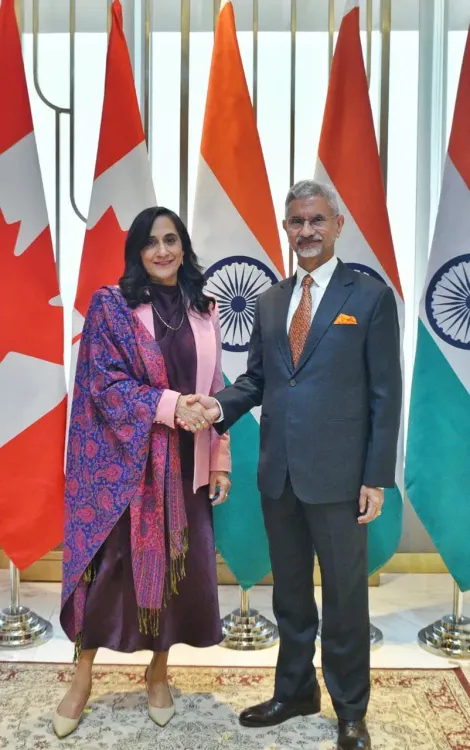
EAM Dr. S. Jaishankar met Canadian FM Anita Anand in New Delhi on 14 October 2026, reviewing the India-Canada Strategic Partnership across trade, investment, education, energy, defence and people-to-people ties, while also exchanging views on regional and global developments.
Key Takeaways
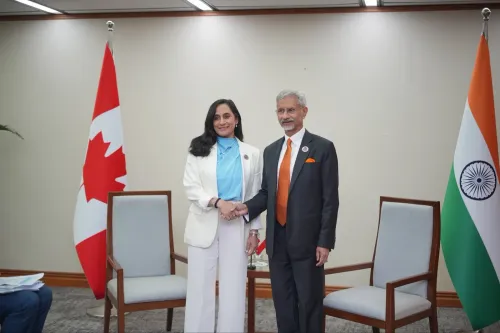
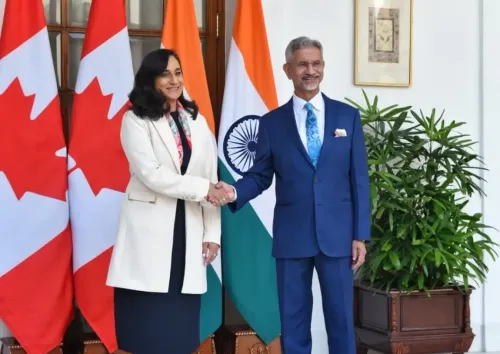
Jaishankar met Canadian Foreign Minister Anita Anand in New Delhi on 14 October 2026 .
The two sides reviewed the India-Canada Strategic Partnership across trade, investment, education, energy, defence and people-to-people exchanges.
They also exchanged views on 'key regional and global developments,' signalling coordination beyond the bilateral agenda.
The Strategic Partnership was established during PM Modi's 2015 visit to Ottawa .
Canada is a significant G7 partner for India, underpinned by a large Indian-origin diaspora and shared democratic values.
Jaishankar cited guidance from leadership and 'sustained engagement across government and industry' as drivers of the partnership's progress.
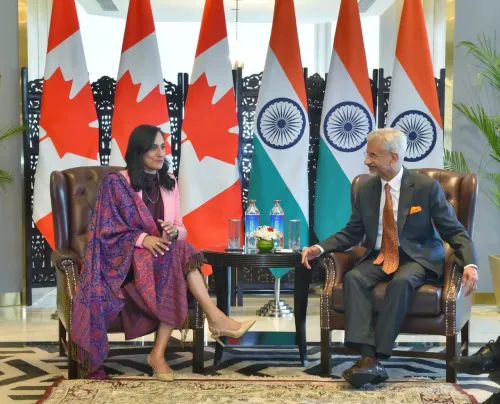
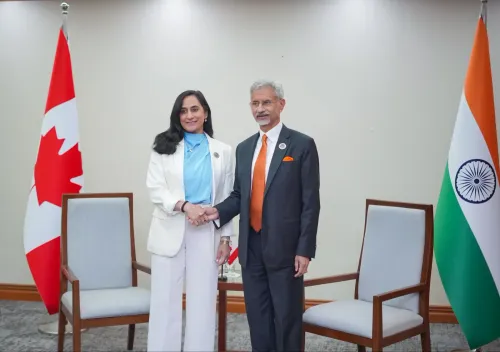
Two foreign ministers, one table in New Delhi, and an agenda stretching from trade corridors to defence ties — Union External Affairs Minister Dr. S. Jaishankar sat down with Canadian Foreign Minister Anita Anand on Wednesday, 14 October 2026 for a wide-ranging review of the India-Canada Strategic Partnership.
What the two ministers put on the table
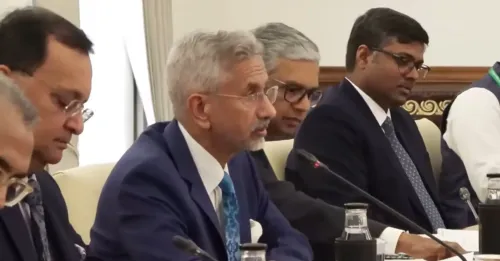
Jaishankar said the two sides 'reviewed progress in ties across trade and investment, education, energy, defence and people-to-people exchanges' — a formulation that signals a structured, deliverable-tracking conversation rather than a ceremonial call. They also 'exchanged views on key regional and global developments,' pointing to coordination on the geopolitical pressures that both countries, as democracies with broad international footprints, have a stake in managing together.
The meeting, by Jaishankar's own framing, is explicitly 'guided by our leadership' — a line that ties the engagement back to the political direction set at the top, not just bureaucratic momentum.
A partnership with roots in Modi's 2015 Ottawa visit
India and Canada elevated their bilateral relationship to a Strategic Partnership during Prime Minister Narendra Modi's 2015 visit to Ottawa — a framework that brought trade, defence, energy and diaspora ties under a single umbrella. Canada is one of the few G7 nations with a large, politically active Indian-origin community, making people-to-people linkages both a diplomatic asset and a domestic political reality in Ottawa. That community counts in the millions and has long served as a bridge for bilateral education and business flows.
India's multi-alignment foreign policy actively seeks regular ministerial-level reviews with strategic partners — not just to take stock, but to generate concrete deliverables that justify the partnership label. Wednesday's meeting follows that well-worn pattern.
Why this meeting lands when it does
High-level India-Canada engagement has had its turbulences. A structured, warmly-framed ministerial sit-down in the Indian capital — with both flags displayed and a full five-domain agenda — sends a deliberate signal of sustained engagement and forward momentum. Business communities on both sides, defence establishments tracking procurement and training cooperation, and the vast Indian diaspora in Canada will be watching for the follow-through: announcements on trade frameworks, defence cooperation milestones, or the setting of a next engagement date, possibly at a multilateral forum.
When two foreign ministers meet with this breadth of agenda and emerge with language about 'advancing' a Strategic Partnership, the real story is in the specifics that follow. The next steps matter as much as the handshake.
Point of View
Multi-domain reviews — a cornerstone of New Delhi's multi-alignment doctrine. After a period of diplomatic friction between India and Canada, a warm, agenda-rich encounter in the Indian capital carries a restoration signal as much as a routine stock-taking. The explicit mention of leadership guidance and the five-sector agenda suggest both governments are pushing for tangible deliverables, not just optics. Watch whether a trade-framework update or defence-cooperation milestone emerges from the follow-up engagement at the next multilateral forum.
NationPress
14 Oct 2026
Frequently Asked Questions
Why did Anita Anand visit India in October 2026?
Canadian Foreign Minister Anita Anand met EAM Dr. S. Jaishankar in New Delhi on 14 October 2026 to review the India-Canada Strategic Partnership, covering trade, investment, education, energy, defence and people-to-people ties, as well as regional and global issues.
What is the India-Canada Strategic Partnership?
The India-Canada Strategic Partnership is a bilateral framework established when PM Narendra Modi visited Ottawa in 2015. It provides a structured umbrella for cooperation across trade, defence, energy and people-to-people exchanges.
What did Jaishankar and Anita Anand discuss?
They reviewed progress in bilateral ties across trade and investment, education, energy, defence and people-to-people exchanges, and also exchanged views on key regional and global developments.
How important is Canada to India's foreign policy?
Canada is an important G7 partner for India, sharing democratic values and hosting one of the world's largest Indian-origin diaspora communities, making people-to-people and economic linkages especially significant.
What are the next steps after the Jaishankar-Anand meeting?
Analysts will watch for follow-through on trade or defence deliverables and the scheduling of the next high-level engagement, likely at a multilateral forum where both India and Canada participate.