Khattar meets Delhi CM Rekha Gupta on capital development
Synopsis
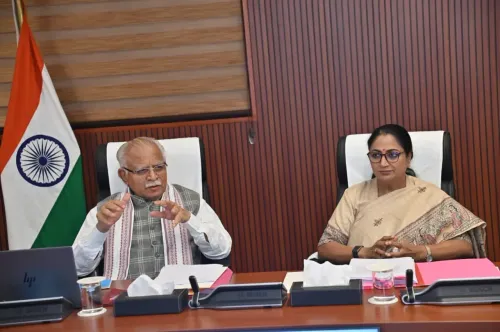
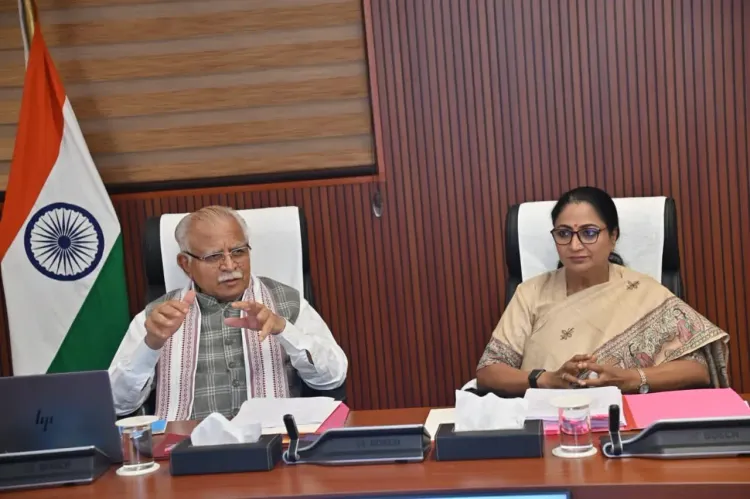
Union Minister Manohar Lal Khattar met Delhi CM Rekha Gupta on October 14, 2026, for detailed talks on the capital's holistic development, public welfare, and civic amenities, anchored in PM Modi's Viksit Bharat vision for 2047.
Key Takeaways
Union Minister Manohar Lal Khattar met Delhi CM Rekha Gupta on October 14, 2026 for wide-ranging governance discussions.
Topics covered included holistic development, public welfare, and civic facilities for the national capital.
The meeting was framed around PM Narendra Modi's Viksit Bharat vision targeting a developed India by 2047 .
Khattar's dual portfolio of Power and Housing and Urban Affairs gives the meeting direct policy relevance for Delhi's infrastructure.
BJP control of both the central government and Delhi's CM office has enabled closer ministerial-state coordination on capital projects.
No specific project announcements were made public from the meeting; follow-up decisions are expected.
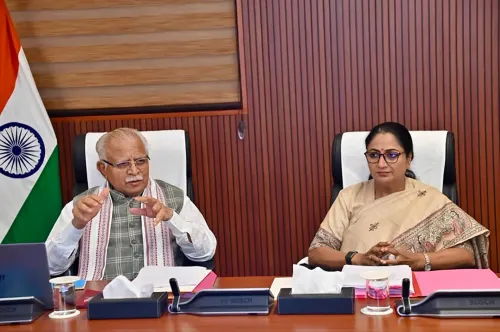
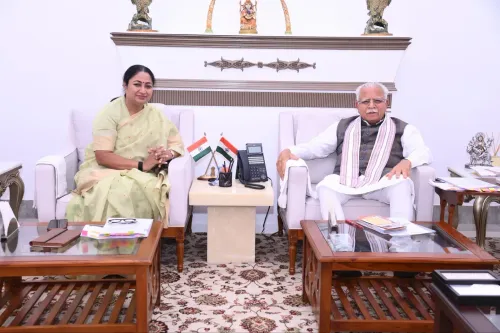
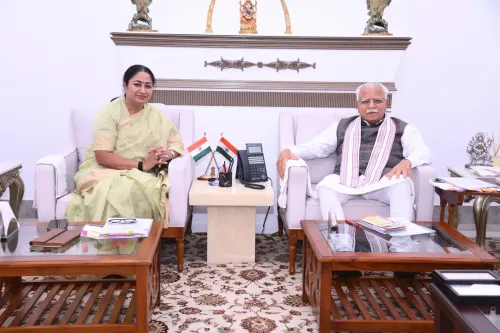
With Delhi's civic future on the table, Union Power and Housing Minister Manohar Lal Khattar sat down with Delhi Chief Minister Rekha Gupta on Wednesday, October 14, 2026, for a wide-ranging discussion on the national capital's development, public welfare, and citizen amenities.
Khattar shared details of the meeting on X, writing in Hindi that the two leaders held an extensive discussion — 'समग्र विकास, जनकल्याण एवं नागरिक सुविधाओं से जुड़े विभिन्न महत्वपूर्ण विषयों पर विस्तृत चर्चा' ('a detailed discussion on various important subjects related to holistic development, public welfare, and civic facilities'). He framed the engagement squarely within Prime Minister Narendra Modi's Viksit Bharat (Developed India) vision — the long-horizon roadmap targeting a fully developed India by 2047.
A BJP-aligned centre and capital in lockstep
The meeting is a signal of how governance conversations in Delhi have shifted since the BJP controls both the central government and the Delhi Chief Minister's office. Such direct ministerial-CM engagement was far less routine when the national capital and the Union government were held by rival parties. Now, the alignment opens faster channels for integrating Delhi's civic projects with centrally sponsored schemes — particularly in power infrastructure and urban housing, both of which fall under Khattar's ministry.
Khattar's dual portfolio — Power and Housing and Urban Affairs — makes his involvement in Delhi's development more than ceremonial. The city's ageing power distribution network and persistent urban infrastructure gaps are areas where central-state coordination can directly translate into on-ground improvements for residents.
Viksit Bharat as the governing frame
By explicitly invoking PM Modi's Viksit Bharat vision, both leaders are signalling that Delhi's development agenda is being treated as a national showcase — not just a municipal exercise. The capital, as India's most visible city, carries outsized symbolic weight in any government's infrastructure narrative. Making Delhi a 'प्रगति, सुशासन और समृद्धि का अग्रणी केंद्र' ('leading centre of progress, good governance, and prosperity'), as Khattar put it, is as much a political statement as a policy one.
No specific project decisions or announcements emerged from the meeting in Khattar's post — the immediate watch is whether follow-up joint announcements on power, housing, or civic infrastructure materialise in the days ahead.
Delhi's 20-million-plus residents are the ultimate scorekeepers of whether this conversation produces concrete delivery — and both leaders know it.
Point of View
The friction that historically paralysed central-state coordination in the capital has given way to a more integrated policy pipeline. Khattar's Housing and Urban Affairs portfolio makes him a direct lever for channelling central funds into Delhi's civic gaps. By anchoring the discussion in the Viksit Bharat 2047 frame, both leaders are positioning Delhi's transformation as a flagship proof-of-concept for the broader national narrative — raising the stakes for visible delivery on the ground.
NationPress
14 Oct 2026
Frequently Asked Questions
Why did Manohar Lal Khattar meet Delhi CM Rekha Gupta?
The two leaders met on October 14, 2026, to hold detailed discussions on Delhi's holistic development, public welfare, and civic amenities, aligned with PM Modi's Viksit Bharat vision.
What is the Viksit Bharat vision referenced in Khattar's post?
Viksit Bharat is PM Narendra Modi's vision for India to achieve the status of a fully developed nation by 2047, with a strong emphasis on urban governance, infrastructure, and economic growth.
What ministries does Manohar Lal Khattar currently hold?
Manohar Lal Khattar is the Union Minister of Power and Housing and Urban Affairs, making him directly relevant to Delhi's energy and urban infrastructure agenda.
Who is Rekha Gupta and what is her role?
Rekha Gupta is the Chief Minister of Delhi, representing the BJP at the state level, which has enabled closer coordination with the BJP-led central government on capital development projects.
What decisions came out of the Khattar-Rekha Gupta meeting?
No specific project decisions were announced publicly from the October 14 meeting; follow-up announcements on joint civic infrastructure or power-sector projects are expected.