CM Rekha Gupta Meets Union Minister Khattar on Delhi Development
Synopsis
Delhi Chief Minister Rekha Gupta met Union Minister Manohar Lal Khattar on June 9, 2026, seeking his guidance on Delhi's development and public welfare. The courtesy meeting covered topics under Housing and Urban Affairs and Energy, ministries critical to Delhi's infrastructure and housing programmes.
Key Takeaways
Delhi CM Rekha Gupta held a courtesy meeting with Union Minister Manohar Lal Khattar on June 9, 2026 .
The discussion focused on Delhi's development and public welfare across multiple subjects.
Khattar holds charge of the Ministry of Housing and Urban Affairs and the Ministry of Energy , both directly relevant to Delhi's governance.
The Ministry of Housing and Urban Affairs administers PMAY-Urban and AMRUT , flagship schemes with significant implications for Delhi.
No specific outcomes or new policy announcements have been made public following the meeting.
Any follow-up on fund releases or project approvals under central urban schemes for Delhi will be closely watched.
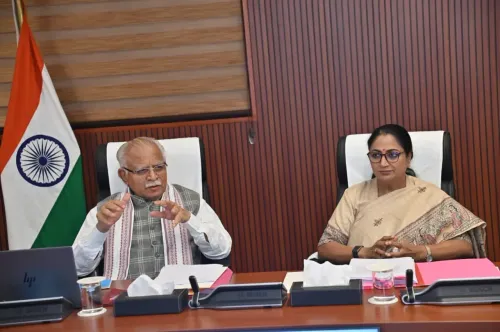
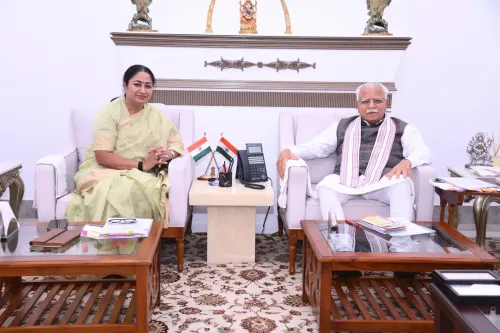
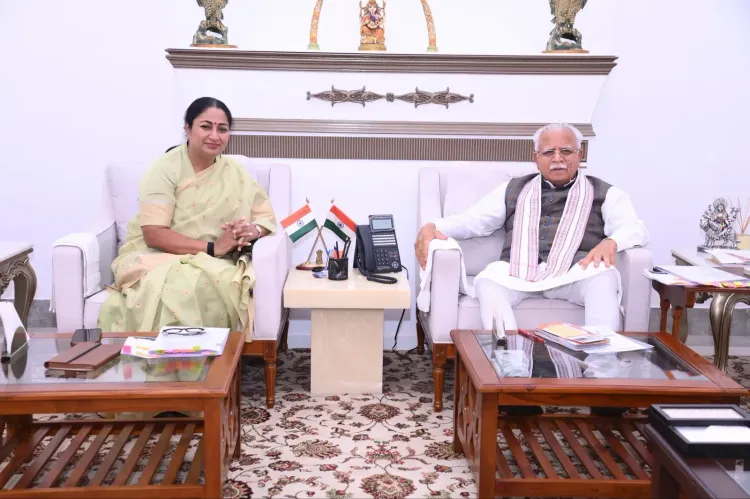
Delhi Chief Minister Rekha Gupta called on Union Minister for Housing and Urban Affairs and Energy Manohar Lal Khattar on Tuesday, June 9, 2026, seeking his guidance on matters related to Delhi's development and public welfare.
Context
Gupta described the meeting as a courtesy call — shishṭāchār bheṇṭ (courtesy visit) — during which she received what she termed 'invaluable guidance' on various subjects linked to Delhi's development and the interests of its residents. The post, shared on the evening of June 9, tagged @mlkhattar and was accompanied by two photographs from the meeting.
The meeting reflects a recurring pattern of engagement between Delhi's elected government and central ministries, particularly given the National Capital Territory's unique constitutional status, where multiple functions — including land, services, and power distribution — involve overlapping central and state jurisdiction.
Policy Backdrop
Manohar Lal Khattar was inducted into the Union Cabinet in June 2024 with charge of the Ministry of Housing and Urban Affairs and the Ministry of Energy. Before that, he served as Haryana Chief Minister from 2014 to 2024, making him a senior figure within the BJP's governance structure.
The Ministry of Housing and Urban Affairs administers flagship national programmes such as PMAY-Urban (Pradhan Mantri Awas Yojana – Urban), launched in 2015, which extends housing support across states and union territories including Delhi. The ministry also oversees AMRUT (Atal Mission for Rejuvenation and Urban Transformation), a key urban infrastructure scheme. Coordination between Delhi's government and this ministry is critical for the city's share of central funds and scheme implementation.
Energy is the second portfolio held by Khattar, and Delhi's power sector — shaped by a mix of state-regulated distribution companies and centrally determined tariff frameworks — makes the ministry a natural counterpart for the Delhi government on electricity infrastructure and supply matters.
Stakeholders and Impact
Delhi's residents stand as the primary stakeholders in any outcomes from such central-state consultations. Decisions on housing scheme allocations, urban infrastructure funding, and power sector investments directly affect the quality of civic life in the capital.
Urban local bodies in Delhi, including the Municipal Corporation of Delhi (MCD), are also key implementers of centrally sponsored urban schemes and would be affected by any follow-up directions arising from the meeting. For BJP-governed Delhi, alignment with the central government opens channels for faster clearances and fund releases under national urban programmes.
What's Next
No specific outcomes or agenda items from the meeting have been officially announced. Observers will watch for any follow-up notifications regarding project approvals, fund releases, or scheme extensions under central urban programmes for Delhi.
Such consultations between state-level BJP leaders and Union ministers have increasingly become a working mechanism for translating national scheme frameworks into city-level action. Whether Tuesday's meeting yields concrete announcements on housing targets, energy infrastructure, or urban development funding will become clearer in the days ahead.
Point of View
Where central agencies retain significant authority over land and services, such engagements carry practical weight beyond protocol. The timing — early in Gupta's tenure as Chief Minister — suggests an effort to establish working channels with key Union ministries before the next budget and scheme-allocation cycle. The dual portfolio of Housing and Energy that Khattar holds makes him an unusually influential interlocutor for Delhi's immediate infrastructure priorities.
NationPress
23 Oct 2026
Frequently Asked Questions
Why did Delhi CM Rekha Gupta meet Manohar Lal Khattar?
CM Rekha Gupta met Union Minister Manohar Lal Khattar on June 9, 2026, for a courtesy call to seek his guidance on subjects related to Delhi's development and public welfare, including areas under his Housing and Urban Affairs and Energy portfolios.
What ministry does Manohar Lal Khattar head?
Manohar Lal Khattar is the Union Minister for Housing and Urban Affairs and Energy. He was inducted into the Union Cabinet in June 2024 after serving as Haryana Chief Minister from 2014 to 2024.
What central schemes for Delhi fall under the Ministry of Housing and Urban Affairs?
The Ministry of Housing and Urban Affairs administers PMAY-Urban (Pradhan Mantri Awas Yojana – Urban) and AMRUT, both of which have significant components in Delhi covering affordable housing and urban infrastructure.
What was the outcome of the Rekha Gupta and Khattar meeting?
No specific outcomes or new policy announcements have been made public following the June 9, 2026 meeting. Follow-up developments, if any, are expected in the form of project approvals or fund releases under central urban schemes.
Why does Delhi need to coordinate with the central government on development?
Delhi is a National Capital Territory with a unique constitutional arrangement where functions such as land, services, and power involve overlapping jurisdiction between the elected state government and central agencies, making regular coordination with Union ministries essential.