Cabinet Clears 78-Day PLB Bonus for 11.4 Lakh Railway Staff
Synopsis
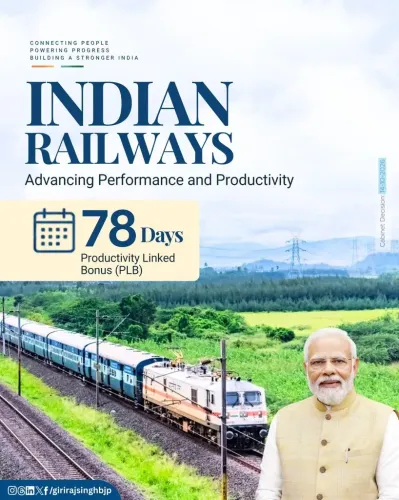
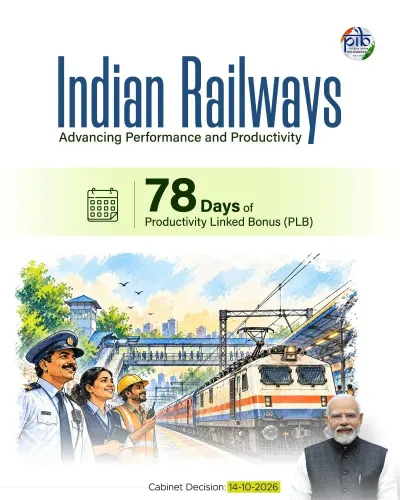
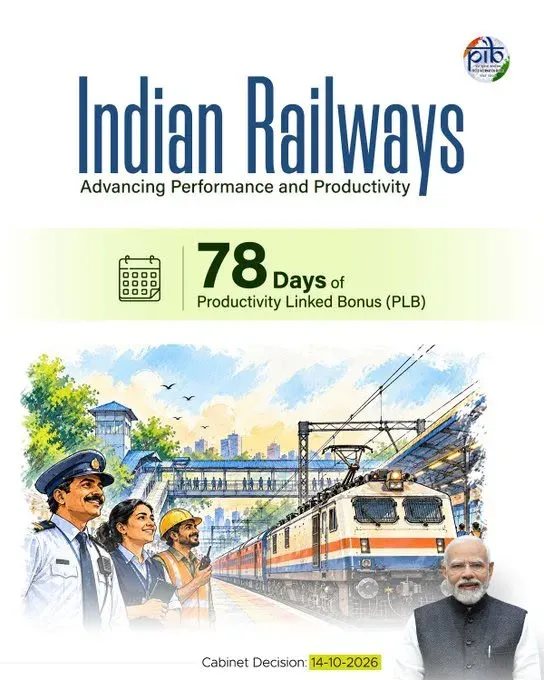
The Union Cabinet chaired by PM Narendra Modi has approved a 78-day Productivity Linked Bonus for over 11.4 lakh railway employees, totalling ₹2,009.61 crore. Each eligible worker receives up to ₹17,951, with Petroleum Minister Hardeep Singh Puri hailing the move as recognition of the railway workforce's dedication.
Key Takeaways
The Union Cabinet approved a Productivity Linked Bonus (PLB) of 78 days for railway employees on October 14, 2026 .
A total of 11,40,770 railway employees are covered under the Cabinet decision.
The total financial outgo is ₹2,009.61 crore .
Each eligible non-gazetted employee will receive a maximum bonus of ₹17,951 .
The PLB scheme has been a recurring annual Cabinet fixture across multiple governments, linked to operational performance of the railways.
Disbursement timing coincides with the festive season, amplifying its household-level economic impact.
Just ahead of the festive season, over 11 lakh railway workers received a concrete signal of recognition from the Centre: the Union Cabinet, chaired by Prime Minister Narendra Modi, approved a Productivity Linked Bonus (PLB) of 78 days for 11,40,770 railway employees — a payout totalling ₹2,009.61 crore. Union Petroleum Minister Hardeep Singh Puri shared the decision on Wednesday, October 14, 2026, underlining it as a mark of respect for the workforce that keeps India's rail network — and by extension, its economy — moving.
What the ₹2,009.61 Crore Payout Means for Each Employee
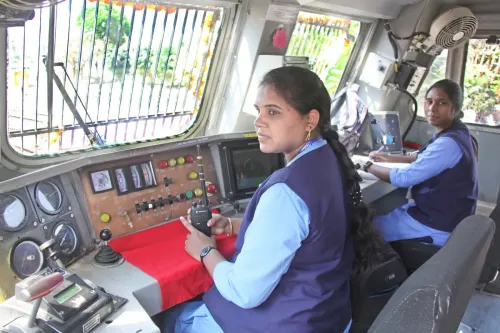
The Cabinet decision sets a maximum individual payout of ₹17,951 per eligible non-gazetted railway employee. This is not a flat transfer — the Productivity Linked Bonus, as the name signals, is calibrated to recognise operational performance, not merely seniority or tenure. For a workforce spread across locomotive cabins, station platforms, maintenance yards, and administrative offices across the country, the approval translates to a direct and immediate cash benefit before the festive months.
Puri quoted the Hindi framing from the Cabinet communiqué: the decision is described as a symbol of respect — 'परिश्रम, समर्पण और राष्ट्र निर्माण में योगदान' (hard work, dedication, and contribution to nation-building). The language is deliberate: it positions the railway worker not as a beneficiary of welfare, but as a stakeholder in national infrastructure.
PLB's Long Track Record in Indian Railway Governance
Indian Railways is one of India's largest employers, and the Productivity Linked Bonus has been a fixture of its annual governance calendar across successive administrations. Each year, the Union Cabinet takes up the PLB quantum afresh, and the number of approved 'days' — along with the total outgo — becomes a reliable indicator of how the government is reading railway performance for that cycle.
The 78-day PLB approved this cycle continues this practice without any structural change to the scheme's eligibility architecture. What shifts year to year is the quantum and the total outlay, reflecting headcount changes and wage-structure updates. The scheme covers non-gazetted employees — the workers who, in practice, run daily operations on the ground.
Why Railways Stay Central to the Festive Bonus Calendar
Cabinet approvals of PLB for railway staff consistently coincide with the pre-festive window — a timing that carries both practical and political weight. Practically, the disbursement augments household spending during Dussehra and Diwali, a period when consumer demand peaks. Politically, it allows the government to signal its sensitivity to the organised public-sector workforce ahead of the festive mood.
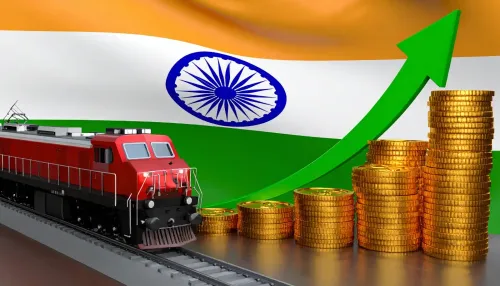
With ₹2,009.61 crore flowing to over a million households, the macro-level consumption nudge is real, even if modest relative to the broader economy. The railway employee base, distributed across every state and most districts, means the spending ripples will be felt in small towns and semi-urban markets as much as in major cities.
The next marker to watch: the speed and completeness of actual disbursement, and whether the Cabinet revisits the PLB quantum or eligibility criteria when the next cycle comes up for approval.
Point of View
With the 78-day quantum and the festive-season timing, reflects both institutional continuity and a deliberate electoral arithmetic: the railway workforce is geographically dispersed enough to carry political salience in nearly every constituency. The framing by Petroleum Minister Hardeep Singh Puri — invoking nation-building rather than mere welfare — signals an effort to recast public-sector bonuses as earned recognition rather than state largesse, a subtle but consistent shift in the government's communication posture on labour welfare.
NationPress
14 Oct 2026
Frequently Asked Questions
What is the PLB bonus approved for railway employees in 2026?
The Union Cabinet approved a Productivity Linked Bonus equivalent to 78 days of wages for eligible railway employees, with a maximum payout of ₹17,951 per worker and a total outgo of ₹2,009.61 crore.
How many railway employees will receive the PLB bonus?
A total of 11,40,770 railway employees are covered under the Cabinet-approved PLB decision announced on October 14, 2026.
What is Productivity Linked Bonus in Indian Railways?
Productivity Linked Bonus is an annual performance-based bonus paid to eligible non-gazetted railway employees, subject to Union Cabinet approval each year. It is linked to the operational performance of Indian Railways rather than being a fixed entitlement.
When will the PLB bonus be disbursed to railway employees?
The Cabinet has approved the disbursement, but the exact timeline for individual payments will depend on the Railways administration. Historically, PLB payouts are timed to coincide with the festive season.
Why did Hardeep Singh Puri post about the railway PLB bonus?
As a senior Union Cabinet minister and BJP leader, Hardeep Singh Puri shared the Cabinet decision on social media to highlight the government's recognition of railway workers' contributions to national infrastructure and development.