Giriraj Singh flags India-Russia labour mobility push

Synopsis
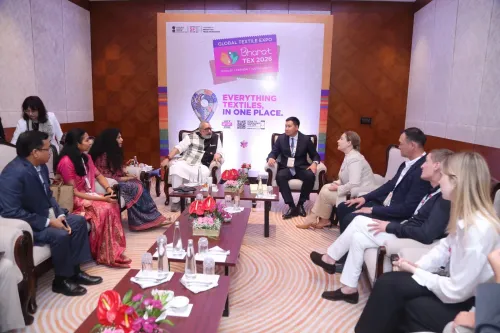
Union Textiles Minister Giriraj Singh has highlighted the strengthening of a legal temporary employment pathway for Indian workers in Russia, framing it as a significant new dimension of deepening India-Russia economic and strategic ties.
Key Takeaways
Giriraj Singh , Union Textiles Minister and BJP MP from Begusarai, Bihar , posted on 14 October 2026 about India-Russia labour mobility.
He described a legal pathway for temporary employment in Russia as 'an important step toward new opportunities' for Indian workers.
Russia faces demographic-driven labour shortages; India seeks diversified overseas employment markets for its workforce.
A formalised bilateral labour corridor — typically via an MoU or joint working group — would provide worker protections absent in informal migration routes.
The post signals policy momentum ahead of a potential formal agreement at an upcoming India-Russia bilateral meeting .
Bihar , one of India's top labour out-migration states, has a direct stake in expanded overseas employment channels.
A new front is opening in the India-Russia relationship — and this time, it is not about defence hardware or crude oil. Union Textiles Minister Giriraj Singh on Wednesday, 14 October 2026, pointed to the strengthening of a legal pathway for Indian workers to take up temporary employment in Russia, calling it a significant step toward new opportunities for the Indian workforce.
Posting in Hindi, the minister wrote: 'Bharat aur Russia ke mazboot hote sambandh sahyog ke naye avsar khol rahe hain' — 'The strengthening ties between India and Russia are opening new avenues of cooperation.' He described the consolidation of a legal route for temporary employment as 'an important step in the direction of new opportunities for our workers' and said the partnership was giving 'new strength to economic ties between the two nations.'
Why Russia needs Indian workers — and why India is listening
The framing is deliberate. Russia faces well-documented demographic pressures — a shrinking working-age population and acute labour shortages in sectors from construction to manufacturing. India, for its part, has consistently sought to diversify the overseas employment markets available to its large, mobile workforce, which already powers remittance flows from the Gulf, Southeast Asia, and beyond.
The India-Russia strategic partnership has historically rested on three pillars: defence procurement, energy trade (particularly oil and nuclear cooperation), and diplomatic alignment at multilateral forums. Labour mobility has been a quieter, incremental addition — but the demographic math on the Russian side and the employment ambitions on the Indian side make it a logical next chapter.
Formalising the flow — what a legal route actually means
The minister's emphasis on a 'legal pathway' is the operative phrase here. Unregulated or informal migration exposes workers to exploitation, wage theft, and legal vulnerability. A formalised bilateral framework — typically an MoU on labour mobility or a joint working group mechanism — creates defined contracts, worker protections, grievance channels, and government-to-government oversight. For Indian migrant workers, the difference between a legal corridor and an informal one can be the difference between a protected job and a crisis.
Whether a specific new agreement has been signed or whether this signals an intent ahead of an upcoming bilateral meeting is not yet confirmed. The minister's post reads as a directional signal — a public articulation of policy momentum — rather than the announcement of a concluded deal.
Giriraj Singh's stake in the labour agenda
As Union Textiles Minister, Giriraj Singh's portfolio connects directly to employment generation and workforce policy. Begusarai, his Lok Sabha constituency in Bihar, is one of India's states with the highest rates of labour out-migration — giving him a constituency-level reason to champion overseas employment avenues beyond his ministerial brief. The comment lands as both strategic foreign policy commentary and a signal to a voting base that their employment horizons are expanding.
If an MoU or a formal joint mechanism follows at the next India-Russia bilateral engagement, Wednesday's post will read as the advance signal. Watch that space.
Point of View
He elevates what might otherwise be a niche workers'-rights issue into a headline foreign-policy achievement. For the BJP, expanding legal overseas employment channels is simultaneously a diplomatic win and a welfare narrative aimed at constituencies like Bihar with high labour out-migration rates. The next test is whether this directional signal converts into a concrete, enforceable MoU with worker-protection provisions — or remains aspirational messaging.
NationPress
14 Oct 2026
Frequently Asked Questions
What did Giriraj Singh say about Indian workers going to Russia?
Giriraj Singh said the strengthening of a legal route for temporary employment in Russia is an important step toward new opportunities for Indian workers, and that it adds new strength to economic ties between the two countries.
Is there a new India-Russia agreement on labour mobility in 2026?
The minister's post signals policy momentum toward formalising a legal temporary employment pathway, but a specific concluded MoU or formal agreement has not yet been officially confirmed as of this report.
Why does Russia need Indian workers?
Russia faces significant demographic pressures — a shrinking working-age population and labour shortages in sectors like construction and manufacturing — making it receptive to formalised labour inflows from countries like India.
What is the difference between a legal labour corridor and informal migration?
A legal bilateral labour corridor — typically established via an MoU — provides Indian workers with defined contracts, wage protections, grievance channels, and government oversight, unlike informal migration which leaves workers legally vulnerable.
Why is Bihar particularly interested in overseas employment opportunities?
Bihar is one of India's states with the highest rates of labour out-migration, making expanded legal overseas employment channels a matter of direct economic importance for millions of workers and their families in the state.